
Euler's Eyes
2026-10-26
The life of Arthur Cayley
Timeline
- 1821Born on 16 August in Richmond, near London, during a visit of his parents to England.
- 1829The family, who lived in St Petersburg, returns to England for good.
- 1835Enters King’s College School in London.
- 1838Enters Trinity College, Cambridge.
- 1842Senior Wrangler, first in the mathematics examination, and first Smith’s Prize. Elected a Fellow of Trinity.
- 1846Leaves Cambridge and begins studying law at Lincoln’s Inn.
- 1849Becomes a lawyer. For fourteen years he drafts property deeds.
- 1850Meets James Joseph Sylvester.
- 1854Defines abstract groups.
- 1858Publishes the memoir on the theory of matrices.
- 1863Becomes the first Sadleirian Professor of Pure Mathematics at Cambridge. Marries Susan Moline.
- 1882Lectures at Johns Hopkins University in Baltimore. Receives the Copley Medal.
- 1889His Collected Mathematical Papers begin to appear. Publishes the formula for trees.
- 1895Dies on 26 January in Cambridge, aged 73.
- He is born on 16 August 1821, during a visit of his parents to England.
- He spends his first eight years in the city where his father, Henry Cayley, is a merchant.
- The family lives in Blackheath. At King’s College School in London, his mathematics master advises that he should go to Cambridge.
- He studies at Trinity, is Senior Wrangler in 1842 and stays four years as a fellow, publishing dozens of papers.
- A lawyer specialising in property deeds. He meets Sylvester and, in his spare time, writes some 250 papers, among them the memoir on matrices.
- At Sylvester’s invitation, he spends half a year lecturing at Johns Hopkins University.
- First Sadleirian Professor of Pure Mathematics. He dies in Cambridge on 26 January 1895.
- 1821 · Richmond
- 1821–1829 · St Petersburg
- 1835–1838 · King's College School
- 1838–1846 · Trinity College
- 1846–1863 · Lincoln's Inn
- 1882 · Baltimore
- 1863–1895 · Cambridge
A Russian childhood
Arthur Cayley was born on 16 August 1821 in Richmond, Surrey, almost by chance: his parents were visiting England. The family lived in St Petersburg, where his father, Henry Cayley, was a merchant, as other Cayleys had been before him. Arthur spent his first eight years there. In 1829 the family came back for good and settled in Blackheath, near London.
The boy liked doing huge calculations in his head for fun. At fourteen he entered King’s College School in London, and his mathematics master quickly realised what he had on his hands. The father wanted his son to go into the family business, but the master persuaded him otherwise: the boy had to go to Cambridge.
Cambridge
In 1838, at seventeen, Cayley entered Trinity College, Newton’s college. The mathematics course ended with an examination famous for its difficulty, the Mathematical Tripos, and the student placed first received the title of Senior Wrangler. In January 1842 Cayley was Senior Wrangler and also won the first Smith’s Prize, the university’s other great competition.
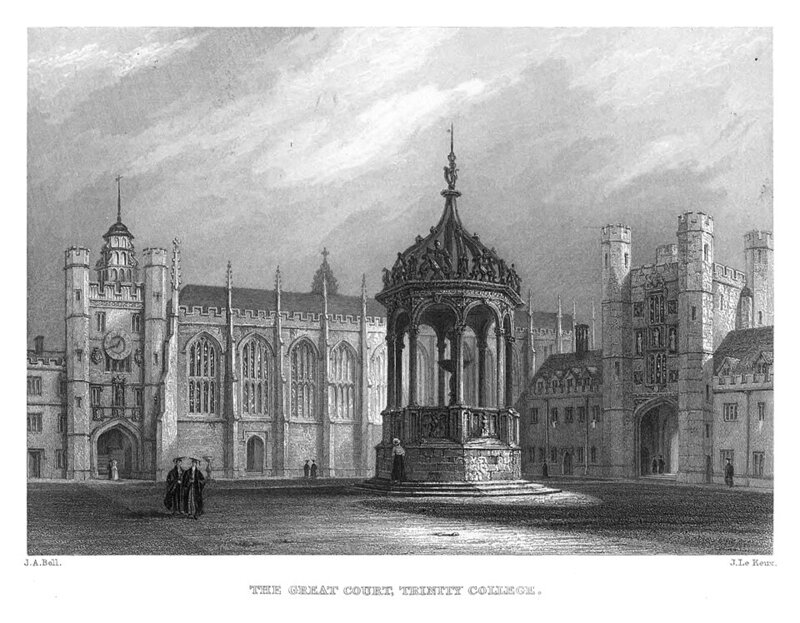
Elected a Fellow of Trinity, he spent four years teaching a few pupils and writing. While still a student he had published his first paper, in the Cambridge Mathematical Journal; in those four years he published more than twenty, on determinants, curves, elliptic functions and what would become the theory of invariants. But the fellowship came with a condition: to keep it, one had to be ordained in the Church of England. Cayley would not. In 1846 he left Cambridge.
Fourteen years as a lawyer
He went to London to study law at Lincoln’s Inn, one of the city’s four Inns of Court, and in 1849 he was called to the bar. He specialised in conveyancing: drafting deeds for the purchase, sale and inheritance of property, painstaking and well-paid work. He was very good at it. But he turned away more clients than he accepted, so as to have time for mathematics.
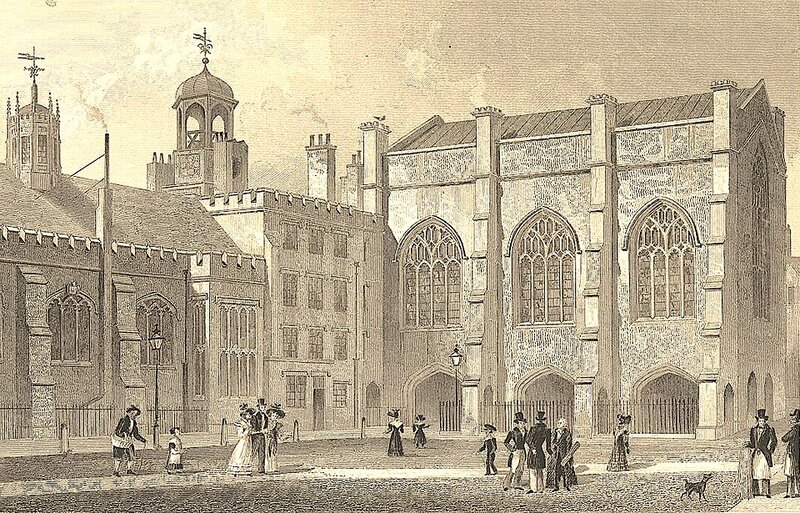
The figures are astonishing. In his fourteen years at the bar Cayley published about 250 papers. Among them are the definition of abstract groups, of 1854, the memoir on matrices, of 1858, and the series of memoirs on quantics, algebraic forms, which would lead to projective geometry as the foundation of measurement.
Sylvester
In 1850 Cayley met another mathematician studying law to earn a living: James Joseph Sylvester, seven years older, who worked as an actuary for an insurance company. Sylvester was Cayley’s opposite: explosive, poetic, disorganised, full of enthusiasm. The two became friends for life. They are said to have walked together through the courtyards of the courts, discussing mathematics between one case and the next.
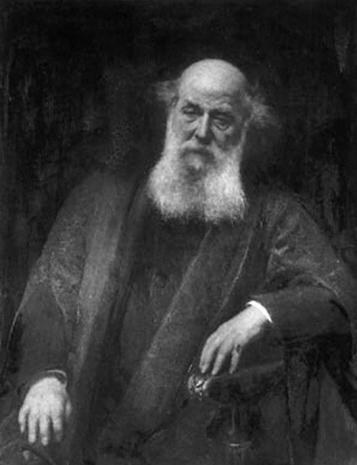
Together they built the theory of invariants: the study of the expressions that do not change when the variables of a polynomial are replaced by linear combinations of them. The simplest example is the discriminant $b^2 - 4ac$ of $ax^2 + bxy + cy^2$, which only gets multiplied by a factor when one changes coordinates. Sylvester invented much of the vocabulary, words such as invariant, covariant, discriminant, matrix; Cayley did much of the calculation. In their day they were called “the invariant twins”.
Professor at Cambridge
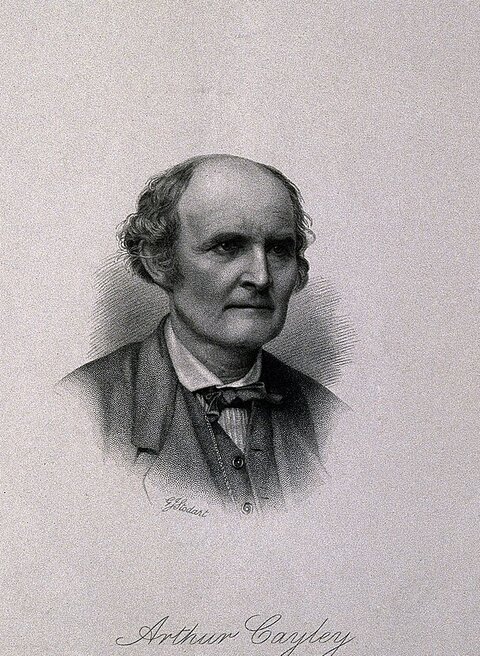
In 1863 the University of Cambridge created, with money from an old bequest by Lady Mary Sadleir, a chair of pure mathematics, and Cayley was the first to hold it. The salary was much smaller than what he earned as a lawyer. He accepted without hesitation. In the same year he married Susan Moline, and the couple had two children, Henry and Mary.
At Cambridge Cayley was a kind and untheatrical teacher who lectured on whatever he was researching, to a handful of students. He was also a public figure in the university: he took part in the reforms that modernised the teaching of mathematics and supported the entry of women into higher education, at a time when they could sit the Cambridge examinations but were not awarded degrees. In the holidays he climbed mountains in the Alps, painted watercolours and read novels in French, German, Italian and Greek.
Baltimore
In 1876 Sylvester went to the United States as the first professor of mathematics at the newly founded Johns Hopkins University in Baltimore. In 1882 he invited his friend, and Cayley spent January to May giving a course on Abelian and theta functions. That same year the Royal Society gave him the Copley Medal, its highest honour. In 1883 Cayley presided over the annual meeting of the British Association for the Advancement of Science, in Southport, and devoted his opening address to the nature of mathematics and its relation to the physical world.
The last years
In the 1880s the University of Cambridge decided to collect all of Cayley’s papers. The first volume appeared in 1889, and he himself edited the first seven. His last years were marked by a long and painful illness, which he bore, his colleagues say, with calm. Cayley died in Cambridge on 26 January 1895, aged seventy-three.
Exercise: Cayley's ages
Cayley was born on 16 August 1821. How old was he when he was Senior Wrangler, in January 1842, when he became a professor, in June 1863, and when he died, on 26 January 1895?
In January 1842 he had not yet had his birthday: $1842 - 1821 - 1 = 20$ years. In June 1863, not yet either: $1863 - 1821 - 1 = 41$ years. In January 1895: $1895 - 1821 - 1 = 73$ years.
Exercise: the pace of work
Cayley published his first paper in 1841 and the last appeared after his death, in 1895. If the 966 papers were spread evenly over those years, how many would there be per year? And in the fourteen years at the bar, with some 250 papers?
From 1841 to 1895 is $55$ years, counting both ends: $966 / 55 \approx 17.6$ papers a year, or one and a half a month. In the years at the bar, $250 / 14 \approx 17.9$ a year: the pace was practically the same, although he was working all day at something else.
Sources: Andrew Russell Forsyth, “Arthur Cayley”, obituary in Proceedings of the Royal Society 58 (1895), reprinted in vol. 8 of the Collected Mathematical Papers · Cayley biography, MacTutor · Tony Crilly, Arthur Cayley: Mathematician Laureate of the Victorian Age (2006) · Karen Hunger Parshall, James Joseph Sylvester: Jewish Mathematician in a Victorian World (2006).