
Euler's Eyes
2022-08-14
Demo
In previous posts we defined porpositions, theorems, corollaries, among others. To demonstrate theorems, it means that the given proposition is a tautology, in which we obtain through the truth tables. Below, we present some methods for demonstrating results.
Deductive method
The deductive method is obtained through the use of definitions and other pre-established results. For this, we use the implications $(\Rightarrow)$ and logical bi-implications $(\Leftrightarrow)$.

Example 1: With the following statements, we will show whether it is a theorem or not. For this, the following hypotheses are:
- $H_1$: time is money.
- $H_2$: bum has a lot of time.
And the thesis:
- $T$: Tramp has a lot of money.
Is the proposition $H_1 \wedge H_2 \Rightarrow T$ a theorem?

Let’s suppose:
- $p$: “have time”.
- $q$: “have money”.
- $r$: “being a bum”.

With:
- $H_1$: $p\wedge q$ (having time and having money).
- $H_2$: $q\rightarrow r$ (having money implies being a bum).
- $T$: $r\rightarrow q$ (being a bum implies having money).
With this, we can write the proposition:
$$H_1 \wedge H_2 \Rightarrow T$$Hypothesis 1 and hypothesis 2 imply Thesis.
How is the tautology valid:
$$(p\rightarrow q)\wedge (r \rightarrow p) \Rightarrow (r \rightarrow q)$$(having time implies having money) and (being a bum implies having time) implies (being a bum implies having money).

Therefore, the given proposition is a theorem.
From a practical point of view this result may not make sense, but depending on the statements used, we can reach an absurdity.
Example 2: With the following statements, we will show whether it is a theorem or not. For this, the following hypotheses are:
- $H_1$: I think, therefore I am.
- $H_2$: stones don’t think.
And the thesis:
- $T$: stones do not exist.
Is the proposition $H_1 \wedge H_2 \Rightarrow T$ a theorem?
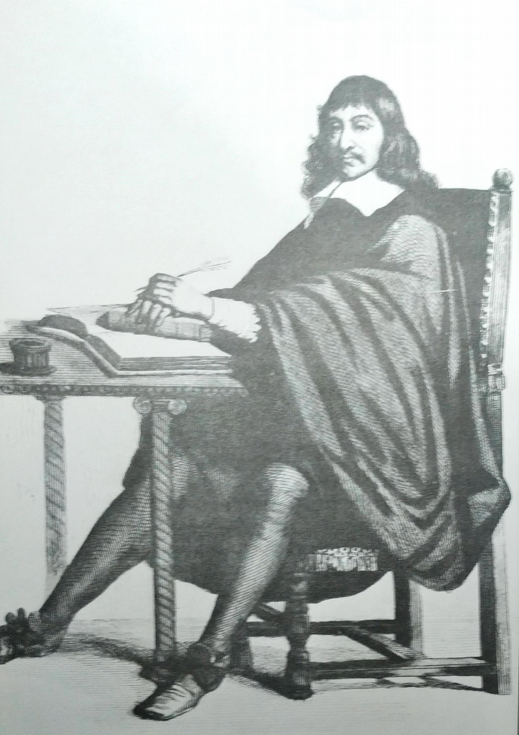
Let’s suppose:
- $p$: “think”.
- $q$: “exist”.

With:
- $H_1$: $p\rightarrow q$ (thinking implies existing).
- $H_2$: $\sim p$ (don’t think).
- $T$: $\sim q$ (does not exist).
With this, we can write the proposition:
$$H_1 \wedge H_2 \Rightarrow T$$Hypothesis 1 and hypothesis 2 imply Thesis.
As it is not a tautology:
$$(p\rightarrow q)\wedge (\sim p) \Rightarrow (\sim q)$$(thinking implies existing) and (not thinking) implies (not existing).
Therefore, the given proposition is not a theorem.
This last result is not even a result, as it is not even a theorem. With this, absurdity is natural.
Demonstration Methods
In this section, we will show how to prove a theorem $p\Rightarrow q$. Most income statements fall into one of the following three methods:
- Direct Method.
- Contraposition method.
- Method by Contradiction (
Reduction ad absurdum).
Direct Method
This method is obtained from the deductive method, with the assumption that proposition $p$ is true and the consequence, proposition $q$ is a logical equivalence. Therefore, the objective is to deduce that $q$ is true.

Example 3: If $x$ is an even integer, then $x^2$ is an even integer.
Demonstration:
To construct this result, we assume the proposition $p$ is true, that is, $x$ is an even integer.
As a consequence, we have that $x$ is divisible by 2 (see post on even numbers).
By definition, $x$ is a multiple of 2.
Therefore, there exists $n\in \mathbb{Z}$ such that $x = 2n$.
When we square both sides of the equality, we have:
$$x^2 = (2n)^2 = 4n^2 = 2(2n^2)=2m, \qquad \text{para algum } m\in \mathbb{Z}$$Therefore, $x^2$ is an even integer.
$\square$
Contraposition method
The contraposition method is obtained with logical equivalence:
$$p \rightarrow q \Longleftrightarrow ~ \sim q \rightarrow \sim p$$More specifically, to demonstrate the theorem:
$$p \Rightarrow q$$Let us simply demonstrate using the direct method:
$$\sim q \Rightarrow \sim p$$
Example 4: If $x$ is an integer such that $x^2$ is odd, then $x$ is an odd integer.
Demonstration:
Let $p$ and $q$ be the propositions:
- $p$: $x^2$ is an odd integer.
- $q$: $x$ is an odd integer.
and we want to prove the implication of $p \Rightarrow q$. In this case, the direct method does not apply, because when we assume that $x^2$ is an odd integer, there is $n\in \mathbb{Z}$ such that $x^2 = 2n+1$.
With this, we cannot deduce that there is an $m\in \mathbb{Z}$ such as $x = 2m+1$.
Instead, let’s use logical equivalence.
Let us suppose the proposition $\sim q: $ $x$ is not odd true, that is, $x$ is even.
From the example of the direct method, we have that this result implies that $\sim p:$ $x^2$ is not odd, that is, $x^2$ is even.
Therefore, $p \Rightarrow q$.
$\square$
Method by Contradiction
The contradiction method is obtained with logical equivalence:
$$p \rightarrow q \Longleftrightarrow ~ (p \wedge \sim q) \rightarrow \sim p$$More specifically, to demonstrate the theorem:
$$p \Rightarrow q$$Let us simply demonstrate:
$$(p \wedge \sim q) \rightarrow \sim p$$and we arrive at an absurdity, because if $p$ is true and we conclude that $\sim p$ is also true. In this case we arrive at a result
$$p \wedge \sim p$$true, which is a contradiction.

Example 5: If $x$ is an integer such that $x^2$ is even, then $x$ is an even integer.
Demonstration:
Let $p$ and $q$ be the propositions:
- $p$: $x^2$ is an even integer.
- $q$: $x$ is an even integer.
and we want to prove the implication of $p \Rightarrow q$.
By the direct method, we assume that $(p \wedge \sim q)$ is true, that is,
- $x^2$ is even integer.
- $x$ is an odd integer.
From this, we get that $x=2n+1$ for some $n \in \mathbb{Z}$.
When we square both sides of the equality, we have:
$$x^2 = (2n+1)^2 = 4n^2 + 4n + 1 = 2(2n^2 + 2n) + 1 = 2m+1$$for some $m\in \mathbb{Z}$
This implies $\Longrightarrow$ that $x^2$ is an odd integer ($\sim p$). Therefore, we reach an absurdity, as we assume $x^2$ even.
In this way, we summarize some techniques for demonstrating results.