
Euler's Eyes
2022-09-25
Introduction to Logarithm Table
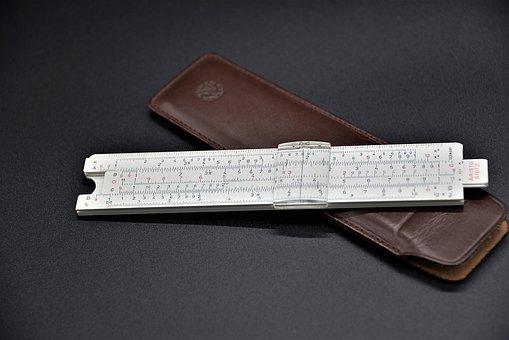
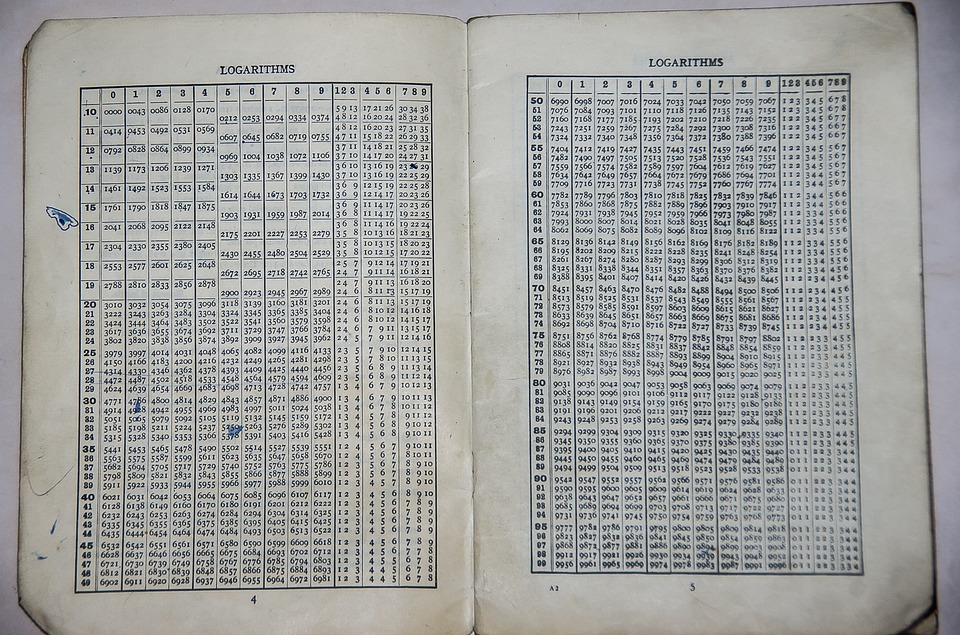
A tool that served as a calculator in the Middle Ages, today serves as a horror story for children. The logarithm is one of the most famous works, so much so that it is treated as Mirabilis Abreviatio, that is, a semiotically active language.
In this post we need concepts of potentiation seen in other topics covered. If you have questions, check the other posts.
John Napier - the Baron of Merchiston
| John Napier - the Baron of Merchiston |
|---|
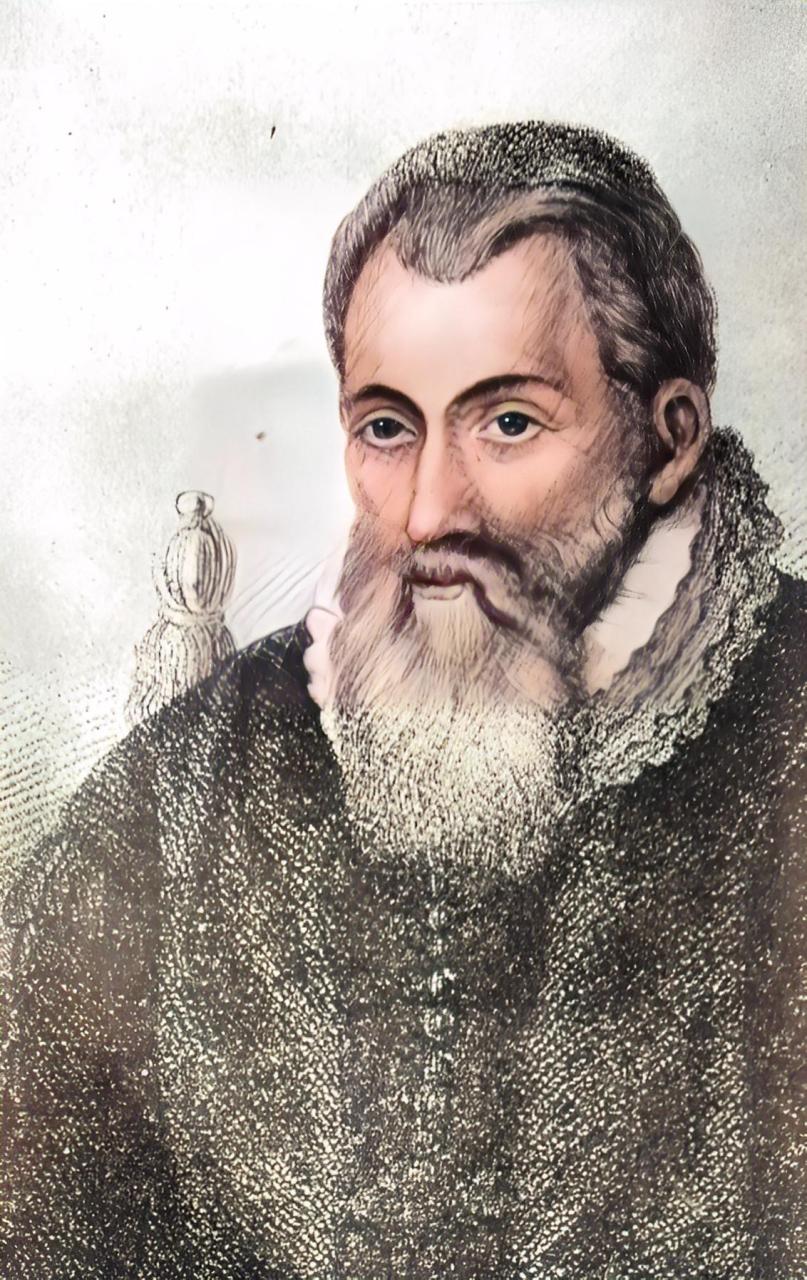 |
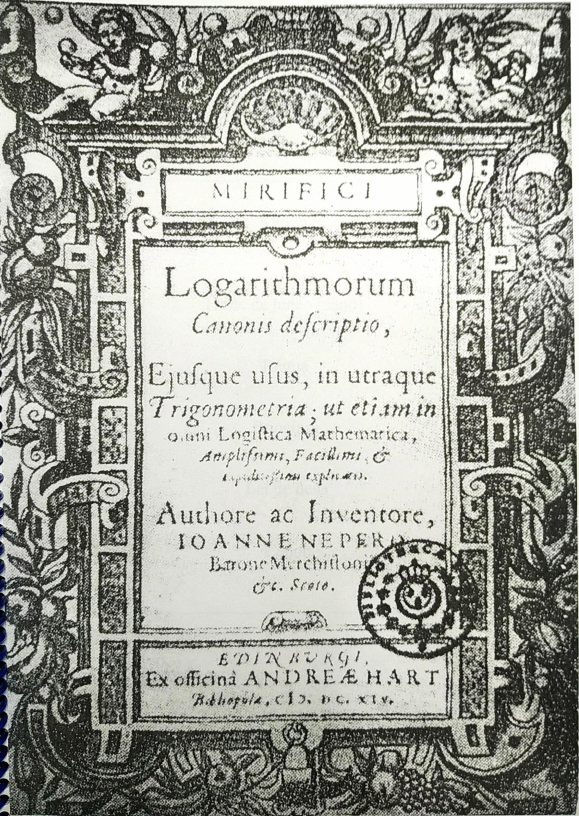
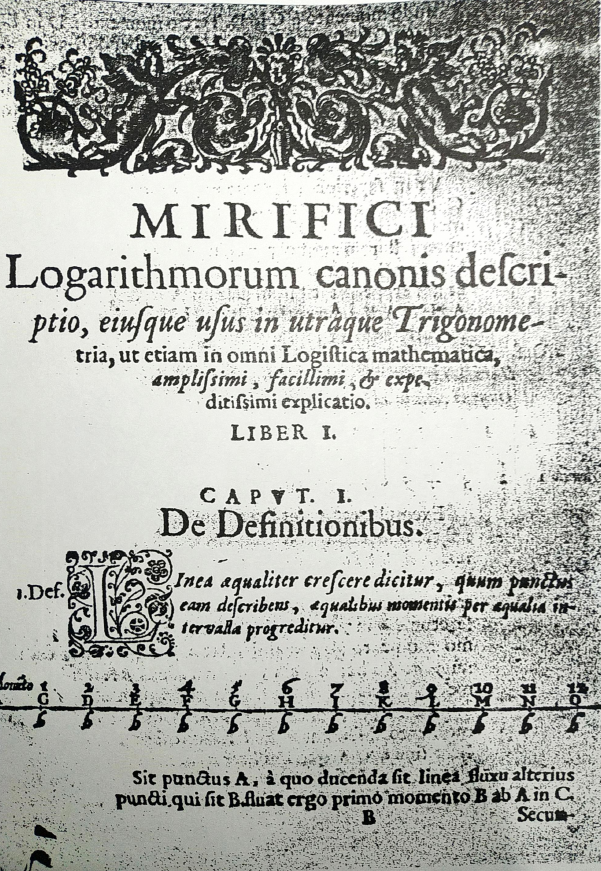
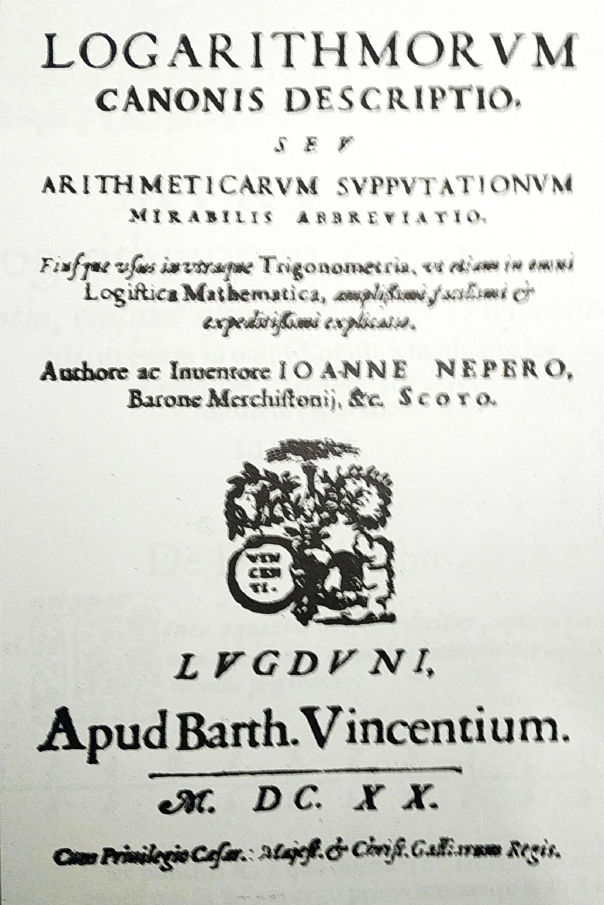
This work is due to John Napier, the Baron of Merchiston, in his work Mirifici Logarithmorum Canonis Descriptio (1614), which can be translated as A Wonderful Description of the Evolution of the Laws of God. To escape church sanctions, the work was again translated into A wonderful description of the laws of evolution of numbers.
Years later Leonhard Euler honored Naiper with the Naperian logarithm. However, the irrational number $e$ was named after Napier, but $e$ comes from Euler.

John Napier with his Mirifici Logarithmorum Canonis Descriptio, had a total of 57 pages of theory and 90 pages of tables of numbers related to natural logarithms.
| Mirifici | Work by John Napier |
|---|---|
|
|
Most used Latin terms
Now, let’s expose the most used term in Latin, which is Kánon.
KÁNON
Reed stem (pipe)
Ruler
Principle
Law of God Canon
Other terms widely used in mathematics are:
Logos: Evolution, discourse, reason.
Atitmós: number, quantity.
$$+ \quad \text{Abundante}$$$$- \quad \text{Defectivo}$$
$$= \quad \text{Aequalis}$$
Prologus - Pro (before) et logos (speech)
Complicated accounts at the time were solved using sequences of numbers. Next, we look at the sequences.
$$2 \qquad 4 \qquad 8 \qquad \dots $$$$1 \qquad 2 \qquad 3 \qquad \dots $$
From this, we have:
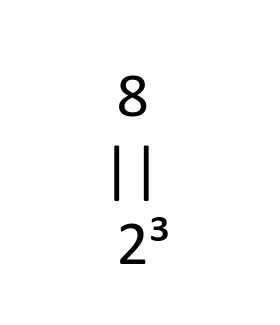
$$2 \qquad 4 \qquad 8 \qquad \dots $$$$|| \qquad || \qquad || \qquad \quad ~~$$
$$2^1 \qquad 2^2 \qquad 2^3 \qquad \dots $$
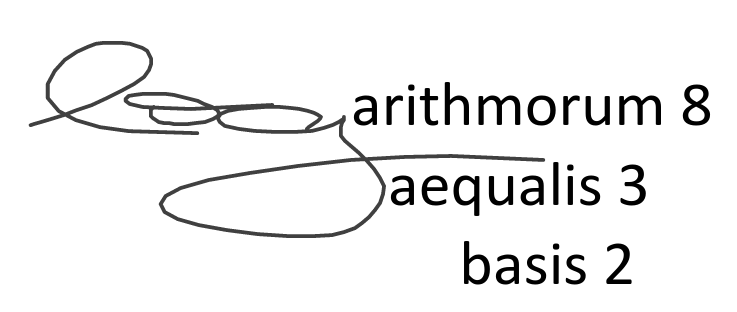
Abbreviated mirabilis (semiotics)
| Given | Reading |
|---|---|
|
|
Kepler’s suggestion
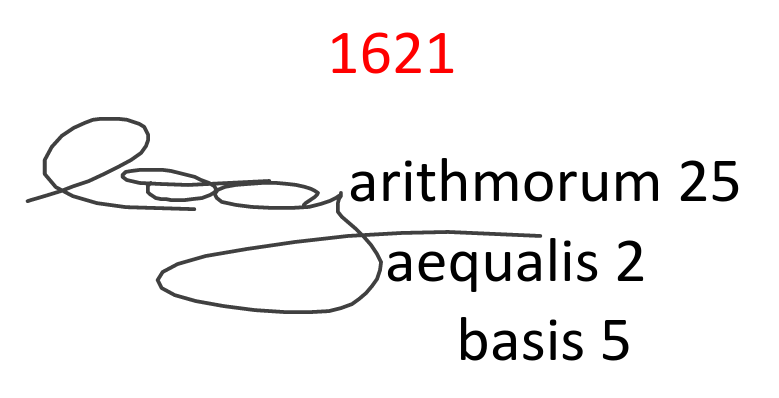
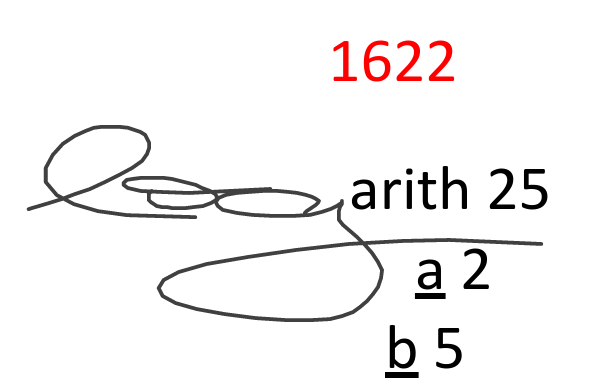
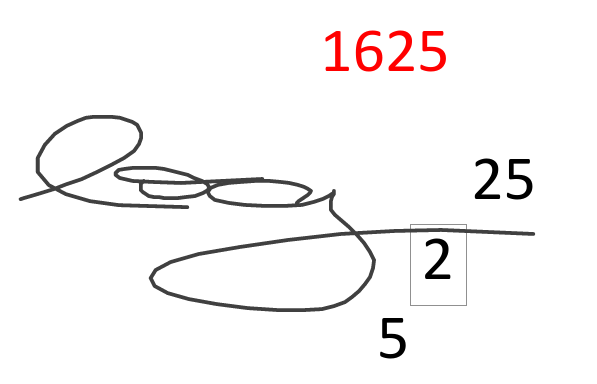
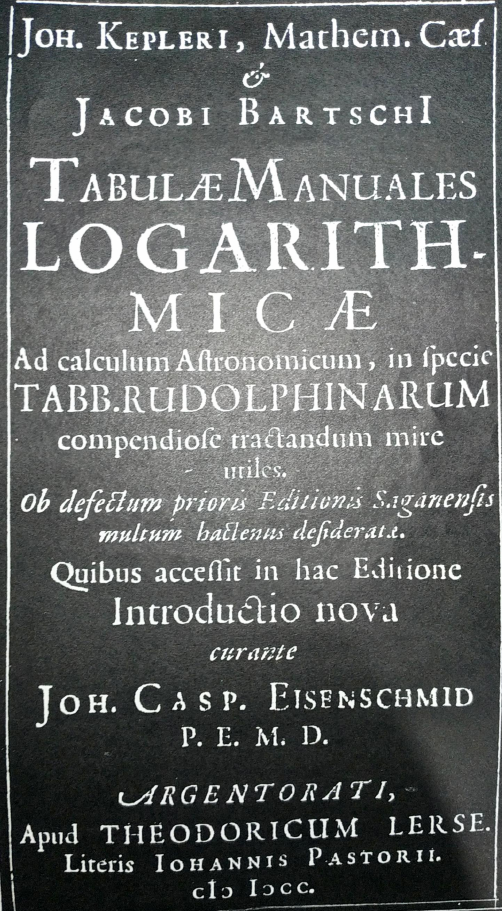
Kepler was the first to apply John Napier’s concepts and he came up with the idea of simplifying the notation, according to historical sequence.
| Year 1621 | Year 1622 | Year 1625 |
|---|---|---|
|
|
|
| Logarithm Quote | Excerpt from the Work |
|---|---|
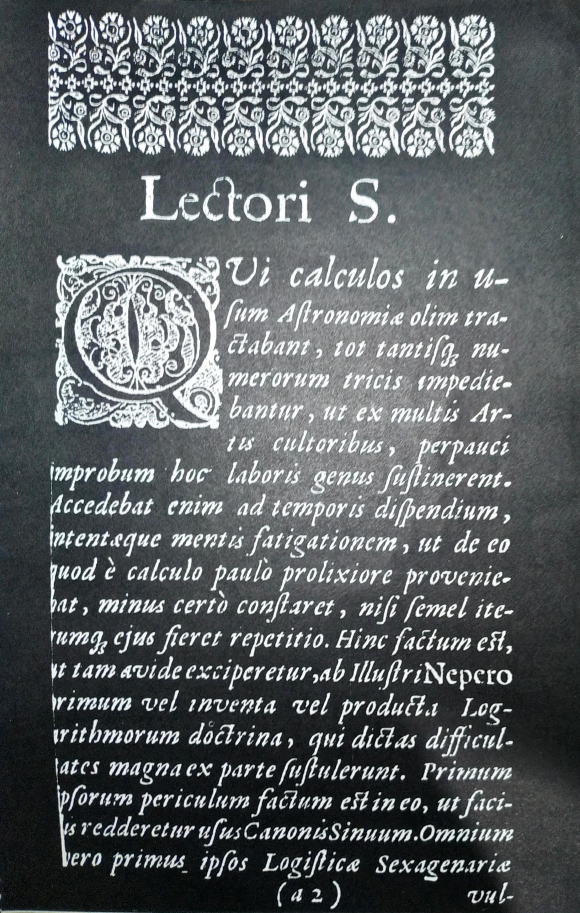
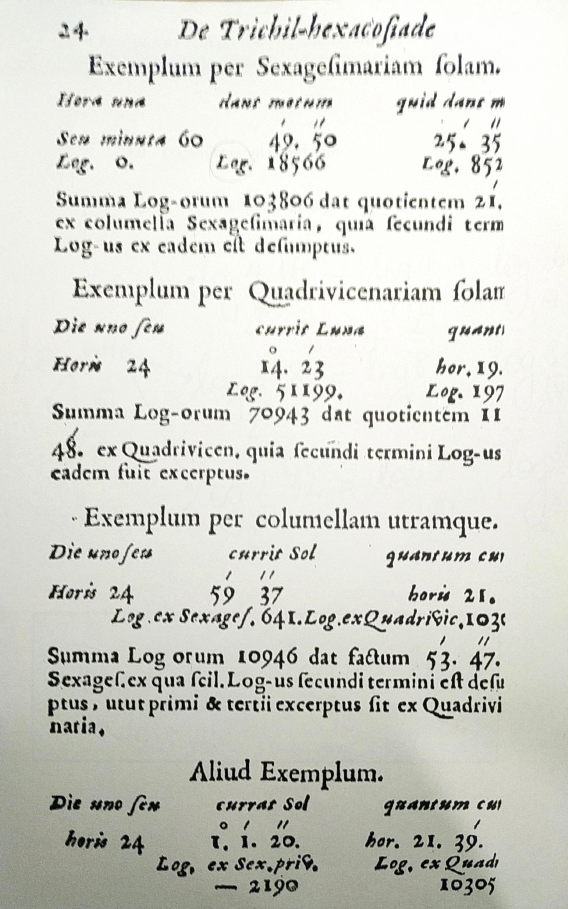
|
|
Until now, we have talked about the beginning and history of the logarithm. Wait for the next posts.