
Euler's Eyes
2022-10-30
Peano axioms
When talking about natural numbers, an axiomatic definition for natural numbers is necessary. To do this, we will show how to define the basic operations for natural numbers.
Peano axioms
Initially we will axiomatically define the set $\mathbb{N}$ of natural numbers. To describe such properties, we will use the symbols 0 (zero) and s (successor).
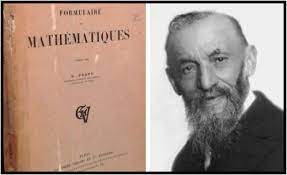
- (a) $0 \in \mathbb{N};$
- Zero belongs to the set of natural numbers.
- (b) $\forall n \in \mathbb{N}\quad s(n) \in \mathbb{N};$
- For every number belonging to the set of naturals, the successor belongs to the natural ones.
- (c) $\forall n \in \mathbb{N}\quad s(n) \neq 0;$
- For every number belonging to the set of natural numbers, the successor is different from zero.
- (d) $\forall m,n \in \mathbb{N}\quad s(n)=s(m) \Rightarrow n=m;$
- For every two pairs of numbers belonging to the natural set, such that the successors are equal, this implies that these numbers are equal.
- (e) Let $P(x)$ be a property on elements of $\mathbb{N}.$ Apply:
- (i) $P(0);$
- (ii) $\forall n \in \mathbb{N}, \quad P(n)\Rightarrow P(s(n))$ Then it is valid $P(n)$ for all $n \in \mathbb{N}.$
The axiom $(e)$ is known as the principle of induction. The set $\\{0, 1, 2, \dots\\}$ satisfies the above properties if we interpret the symbol $s(n)$ as $n + 1.$ To note that the principle of induction holds in such a set, suppose that it does not hold. Then there is $n$ the smallest such that is not worth P(n).
Note that $n$ cannot be $0$ since we have it to be worth $P(0).$
We then know that $n = m + 1$ for some $m \in \\{0, 1, 2, \dots\\}.$
As $m < n,$ we have that it is worth $P(m).$
Therefore, it is worth $P(s(m)).$ But $P(s(m)) = P(m + 1) = P(n)$, contradiction.
Propositions
Proposition 1. We have that $s(n) \neq n$ for all $n \in \mathbb{N}.$
Demo.
Let’s prove this by induction. In other words, to conclude what we want, we just need to show, using the principle of induction, the formula $P(x)$ is valid for all $x \in \mathbb{N},$ where $P(x)$ is $s(x) \neq x.$
To show this by induction, we need to show that $P(0)$ is worth and that if $P(n)$ is worth $P(s(n)).$
Note that $0 \neq s(0)$ as $0 \in \mathbb{N}$ (by (a)) and therefore $s(0) \neq 0$ by (c). Now let $n \in \mathbb{N}$ be such that $n \neq s(n).$
Suppose $s(n) = s(s(n)).$
By (d), we have $n = s(n)$, contrary to our hypothesis.
$\square$
Proposition 2. If $n \in \mathbb{N}$ and $n \neq 0,$
then there exists $m \in \mathbb{N}$ such that $n = s(m).$
Demo.
To show this result, we will show it by induction. THE
For the formula $P(x)$ for all $x \in \mathbb{N}$ where $P(x)$ is the formula
$$x \neq 0 \quad\Longrightarrow\quad \text{existe} ~m~ \text{tal que} \quad x = s(m)$$Note that
$$0 \neq 0 \Rightarrow \exists m,\quad 0 = s(m)$$simply because it is not valid $0 \neq 0$ (it does not matter that the right side of the implication is not valid either).
Now suppose that for some
$$n \in \mathbb{N}, \quad n \neq 0 \Rightarrow \exists m \quad n = s(m).$$Suppose $s(n) \neq 0.$ Consider $m = n.$
Note that, then $s(n) = s(m)$ as we wanted.
$\square$
Successor of a natural number

Example: the successor of 3 is 4
$$s(3)=4$$
| Numeral | Successor |
|---|---|
| $1$ | $s(1)=2$ |
| $2$ | $s(2)=3$ |
| $3$ | $s(3)=4$ |
| $4$ | $s(4)=5$ |
The pair of numbers 1 and 2 $(1,2)$ are consecutive numbers.
Children, as well as Egyptian adults or people of antiquity, added sums with the concept of successors. For example, given $a=7$ and $b=6$ the sum obtained per successor is given by:
Therefore, $7+6=13$ in the Arabic decimal system.
These are the concepts of Peano’s axioms. Wait for the next posts.