
Euler's Eyes
2026-10-10
The life of René Descartes
Timeline
- 1596Born on March 31, in La Haye, in the Touraine region, France.
- 1607Enter the Jesuit school of La Flèche, one of the best in Europe.
- 1616He graduated in Law from the University of Poitiers.
- 1618He joins the army of Maurice of Nassau, in the Netherlands, and meets Isaac Beeckman.
- 1619On the night of 10 November, he has three dreams that he decides to follow as a mission.
- 1628He moves to the Netherlands, where he lives for about 20 years.
- 1633He gave up publishing The World upon learning of Galileo’s conviction.
- 1637Publishes the Method Discourse, with the appendix Geometry.
- 1641Publishes the Meditations on First Philosophy.
- 1643He begins exchanging letters with Princess Elisabeth of Bohemia.
- 1649He goes to Stockholm, at the invitation of Queen Christina of Sweden.
- 1650Dies in 11 February, in Stockholm.
- Born in a small town in Touraine, now called Descartes in his honour.
- He studies at the Jesuit college of La Flèche, one of the best in Europe, and is allowed to stay in bed in the mornings.
- He graduates in law from the University of Poitiers.
- He joins the army of Maurice of Nassau and meets Isaac Beeckman, who challenges him with problems in physics and mathematics.
- On a winter night, in a room heated by a stove, he has the three dreams he decides to follow as a mission.
- He lives for about twenty years in the United Provinces, moving house many times. In Leiden he publishes the Discourse on Method (1637), with La Géométrie.
- He goes at the invitation of Queen Christina, who wants lessons at five in the morning. He dies of pneumonia on 11 February 1650.
The life of Descartes
Childhood and the school of La Flèche
René Descartes was born in a small town in France that today is named, in honor of him, Descartes. His mother died when he was just over a year old, and he was raised by his grandmother. He was a child with fragile health.
At the age of 11 he entered the Jesuit school of La Flèche. For the sake of health, he gained a permit special: I could stay in bed until late in the morning. Descartes maintained the habit throughout his life and He said he was lying down, thinking calmly, that he had the best ideas. He left school enchanted with mathematics, “because of the certainty and evidence of its reasons”, and disappointed with the rest: he thought that the other disciplines were built on uncertain foundations.
The soldier and the three dreams
After studying law, Descartes decided to “study the great book of the world” and enlisted as a volunteer in the army of Maurice of Nassau, in the Netherlands. There he met scientist Isaac Beeckman, which made him once again interested in mathematics and physics problems.
On 10 November 1619, in the southern German winter, Descartes spent the day locked in a room warmed by a stove, thinking. That night he had three dreams that he interpreted as a call: build all knowledge on a foundation as secure as that of mathematics.
Netherlands: twenty years of work
In 1628 Descartes moved to Holland, a country more tolerant of new ideas, and changed addresses often to be left alone. I was almost finishing a great physics book, The World, when he learned in 1633 that Galileo had been condemned by the Inquisition for arguing that the Earth rotates around the Sun. As the book defended the same idea, he gave up publishing it. The World just came out in 1664, after the author’s death.
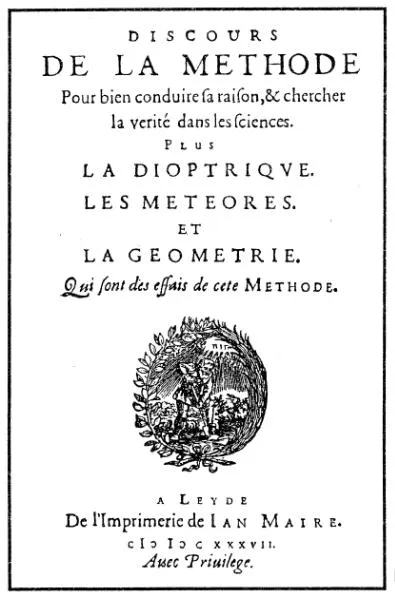
In 1637 he published, without giving his own name, the Discourse on the Method, written in French and not in Latin, so that anyone could read it. The book had three appendices that showed the method in action: The Dioptric (about light and lenses), The Meteors (about weather and the rainbow) and Geometry, where analytical geometry is born.
His daughter Francine was born in Holland, in 1635. She died of scarlet fever at the age of five, and Descartes said this was the greatest pain of his life.
The method and “I think, therefore I am”
The Discourse on Method proposes four rules for thinking well. They are still a great script to solve math problems:
The four rules of the method (click to see the next one)
- Evidence: only accept as true what is clear and indisputable.
- Analysis: divide each difficulty into as many parts as necessary.
- Order: start with the simplest and gradually work your way up to the most complex.
- Review: make enumerations so complete that there is certainty that nothing has been forgotten.
To find a first indisputable truth, Descartes decided to doubt everything: the senses, which sometimes they cheat, and even in mathematics, because an “evil genius” could cheat you in the math. But, while doubting, someone is doubting. And to doubt is to think. Hence the most famous phrase in philosophy: “I think, therefore I am” (Cogito, ergo sum, in the Latin version).
Sweden: the last winter
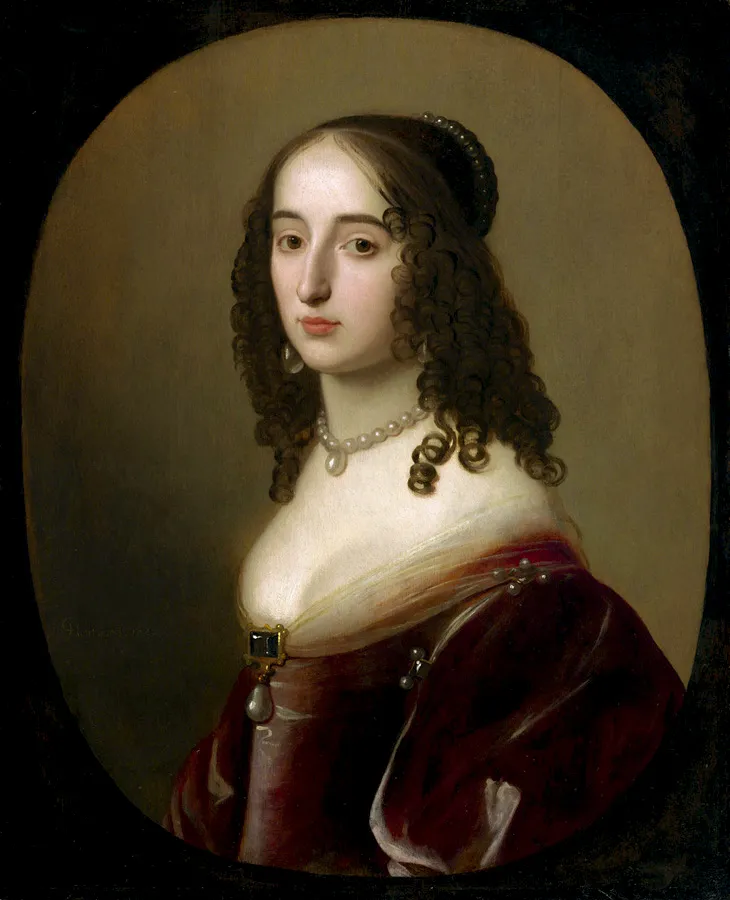
Descartes had a long exchange of letters with Princess Elisabeth of Bohemia, one of his sharper readers. In one of these letters, from 1643, appears the circle theorem that we will see forward.
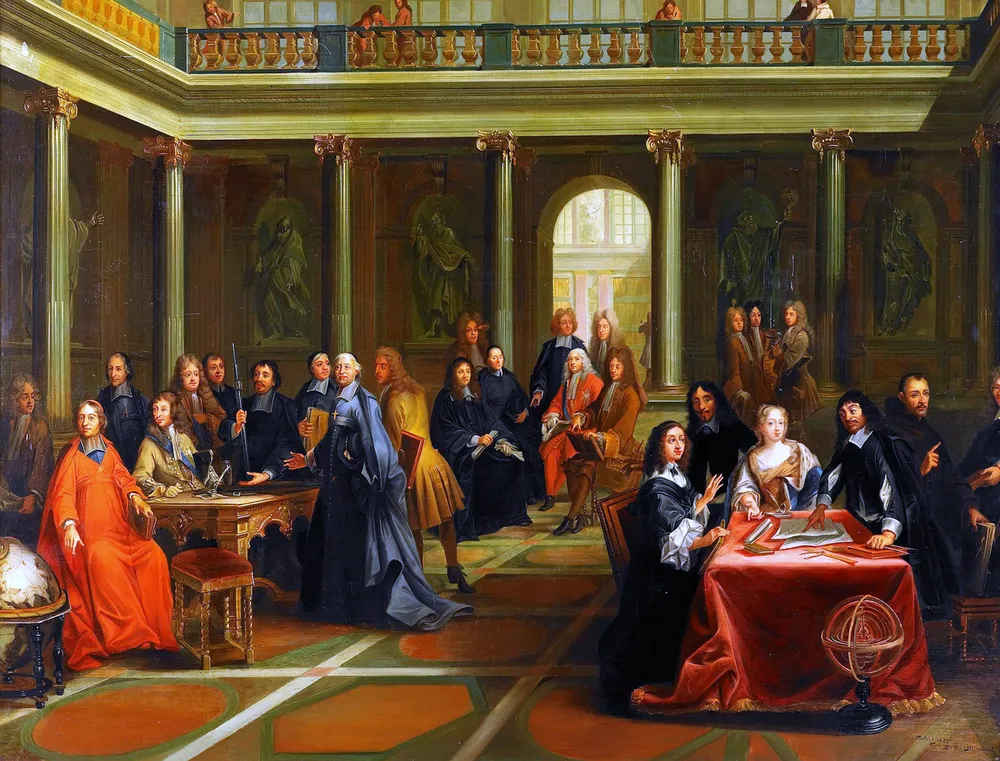
In 1649 Queen Christina of Sweden invited him to teach philosophy in Stockholm. Classes were at five in the morning, in the Swedish winter, for the man who spent his life waking up late. Few months Then he caught pneumonia and died in 11 February 1650, at 53 years old. A hypothesis Modern and controversial theory suggests that he was poisoned, but the accepted explanation remains the pneumonia.
All topics by René Descartes · Coordinates: geometry becomes algebra →