
Euler's Eyes
2026-10-11
Primitive propositions
If point, line and plane are not defined, someone needs to tell the rules of the game. These rules are the postulates.
Who discovered
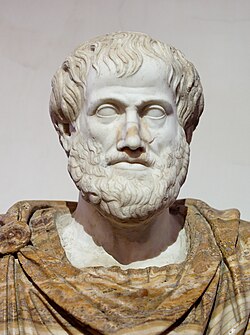
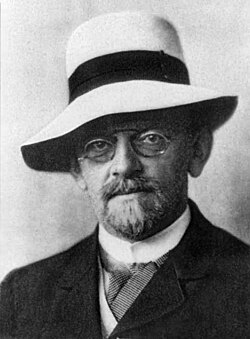
The idea of starting a theory with statements accepted without proof is Greek. Aristotle (4th century BC) already discussed why every demonstrative science needs initial principles, and Euclid put this into practice in The Elements, opening the work with five postulates — the first says that it is possible to draw a straight line from one point to another. In 1899, David Hilbert completed the list with about twenty axioms, including rules that Euclid used without stating.

The story
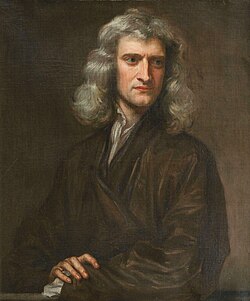
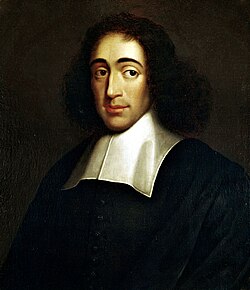
Euclid’s method was a success for more than twenty centuries: every The Elements theorem is deduced from previous postulates or theorems. That’s why the work was used as a textbook until the 20th century and became a model for other areas — Newton organized the Principia and Spinoza wrote his Ethics “in the manner of the geometers”.
In the 19th century, mathematicians realized that some proofs of The Elements depended on facts “seen” in the drawing, without being in the postulates. Hilbert reorganized everything into groups—incidence, order, congruence, parallels, and continuity—and the postulates of this chapter (existence, determination, and inclusion) are versions of his axioms of incidence.
In everyday life
- Three-legged table doesn’t wobble. Three non-collinear points determine a plane: that’s why camera tripods and milking stools stand firm on any floor.
- Mason’s line. Two nails and a stretched string are enough to mark the alignment of a wall — two points determine a straight line.
- Rules of a game. Nobody proves that the bishop moves diagonally; It’s a rule of chess. The postulates work the same way: they are the accepted rules, and the rest is a consequence.
Sources: Euclid (MacTutor) · Elements, postulate 1 · Hilbert (MacTutor).
Theory and constructions
Geometric propositions (properties, statements) are accepted through demonstrations. primitive propositions — called postulates or axioms — are accepted without proof.
We begin Plane Geometry with some postulates that relate point, straight line and plane.

PostuladoExistence postulate
- On a straight line, as well as outside it, there are infinite points.
- In a plane there are infinite points.
The expression “infinite points” means “as many points as we want”.
To indicate that a point is or is not on a straight line we use the symbols $\in$ (belongs) and $\notin$ (does not belong). In the figure below, $A$, $B$ and $P$ are in $r$; $R$, $S$ and $M$ are not:
$$A \in r,\quad B \in r,\quad P \in r \qquad\text{e}\qquad R \notin r,\quad S \notin r,\quad M \notin r.$$Two-point and point-and-line positions
Given two points $A$ and $B$, there are only two possibilities: either they are coincident ($A = B$: it is a single point with two names) or they are distinct ($A \neq B$).
Given a point $P$ and a line $r$, there are also two possibilities: either $P$ is in $r$ ($P \in r$, the line passes through $P$) or $P$ is not in $r$ ($P \notin r$).
DefiniçãoCollinear points
Collinear points are points that belong to the same straight line.
Drag the point $P$ in the figure below. When it is on the straight line, $A$, $B$ and $P$ are collinear. Outside of it, the three points determine a plane — the subject of the next postulate.
PostuladoDetermination postulate
a) The straight line. Two distinct points determine a single straight line that passes through them.
$$A \neq B,\ A \in r,\ B \in r \ \Longrightarrow\ r = \overleftrightarrow{AB}$$b) From the plane. Three non-collinear points determine a single plane that passes through them. We indicate this plan by $(A, B, C)$.
The expression “two coincident straight lines” is equivalent to “a single straight line”. That’s why the postulate also says: if two straight lines have two distinct points in common, they coincide.
The following figure is a laboratory of this postulate. Click on the grid to create points and see how many distinct lines they determine. With $n$ points, without three collinears, each pair of points gives a different straight line: they are $\dfrac{n(n-1)}{2}$ straight lines. When three or more points are aligned, they determine a single straight line and the total decreases.
PostuladoInclusion postulate
If a straight line has two distinct points in a plane, then it is contained in that plane:
$$A \neq B,\ r = \overleftrightarrow{AB},\ A \in \alpha,\ B \in \alpha \ \Longrightarrow\ r \subset \alpha$$DefiniçãoCoplanar points and figures
- Coplanar points are points that belong to the same plane.
- Figure is any set of points.
- Flat figure is a figure that has all its points on the same plane.
Plane Geometry studies plane figures.