
Euler's Eyes
2022-11-25
Basic Concepts of Statistics
Mathematics works with deterministic values, this means that if x is equal to 10, it is 10 and that’s it. Statistics work with random variables. For example, if you measure the same item several days in a row, the measurement will not be the same. Many factors can influence daily measurement, such as your body temperature, environment, measuring instrument, among others.

Population and Sample Concept
In statistics, some concepts are fundamental to understanding what this science is, which is widely used in everyday life. Below we present two of them:
Population: set of elements, which have at least one characteristic in common. This characteristic correctly defines the elements of the population.

Sample: a subset of elements of a population, which are representative for studying the population’s characteristic of interest.
The problem
In statistics, to be objective, a management problem or motivation for the application of statistical study is necessary.

The next step is where to extract this information from. An experiment is usually carried out or this information already exists somewhere, such as a database.

Data collection
An important point is the quality of collecting this information. Several problems can occur during the data collection process, which can seriously compromise the proposed solutions. We can prevent some problems from occurring by observing facts such as:
-
Data should not be collected without first clearly defining the problem or situation.
-
Measurement systems must be evaluated and have sufficient measurement capacity;
-
Calculations and readings must be done very carefully to avoid distortions;

Basic analysis flow
Next, we present the Statistical Analysis flow.

Data classification
A summary of the data classification is presented in the following flow:

With this, we will define each of them.
Qualitative data
Qualitative data represents a characteristic of quality. For example, we can classify a product into:
- good,
- reasonable or
- bad.
Qualitative data can be divided into two types:
Nominal qualitative data: the order of the characteristics does not matter;
Example: Sex of a group of people:
- Masculine
- Feminine
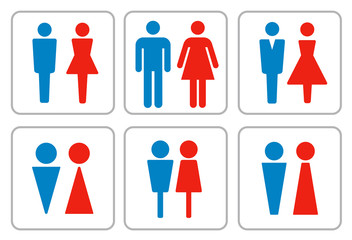
Ordinal qualitative data: the order of the characteristics matters.
Example: Level of education of a group of people matters for evaluating the information and they are:
- Elementary Education
- High School
- Incomplete Higher Education
- Complete Higher Education
- Postgraduate

Quantitative data
In this case, the observed characteristic takes on numerical values that can be classified as “discrete” or “continuous”.
Discrete quantitative data: Discrete quantitative data takes on values within a set of specified numbers. In the mathematical world, natural numbers.
Example: the number of products produced by a machine in a given period of time can be $\mathbb{N} = \\{0,1,2,3,4,\dots\\}$

Continuous quantitative data: Continuous quantitative data takes values over a continuous range of numbers. In the mathematical world, real numbers.
In general, this type of data comes from measurements of a quality characteristic of a part or product.
Example when we measure the diameters of part shafts, we obtain continuous quantitative data.

This is a small introduction to the concepts of statistics, wait for the next posts.