Euler's Eyes
2026-10-11
Rectangle, rhombus and square
Diagonals tell a lot about a quadrilateral. In the rectangle, they are equal; in the rhombus, perpendicular; in the square, both.
Who discovered
The most famous document on the diagonal of the square is the Babylonian tablet YBC 7289, from around 1800–1600 BC, today at Yale University. It shows a square with diagonals and a value of $\sqrt{2}$ with an error of less than one millionth. The properties of the diagonals of the rectangle and the rhombus follow from the theorems on parallelograms of The Elements of Euclid.

The story
The number written on the tablet, in base 60, is 1;24,51,10, that is, $1 + \tfrac{24}{60} + \tfrac{51}{60^2} + \tfrac{10}{60^3} \approx 1{,}414213$. No one knows for sure how the scribes calculated it; one hypothesis is that they used a method of successive approximations that today goes by the name Heron.
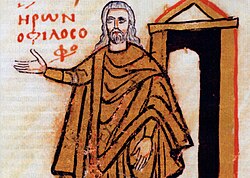
The Greeks later discovered that the diagonal and side of a square have no common measure — the first known proof that $\sqrt{2}$ is not a fraction. This discovery, attributed to the Pythagoreans, changed the way we think about numbers and lengths.
In everyday life
- Check the square. Bricklayers and carpenters measure the two diagonals of a shape, a door or a painting: if they are the same, the parallelogram is a rectangle.
- Fencing and railings. The wire mesh forms diamonds; perpendicular diagonals allow the canvas to stretch without tearing.
- Kites. The crossed sticks of a kite are perpendicular diagonals.
- A4 paper. The ratio between the sides is $\sqrt{2}$, the same as the diagonal of the square: folded in half, the sheet maintains its shape.
Sources: YBC 7289 and the root of 2 (MacTutor) · Elements, proposition I.34.
Theory and constructions
In addition to the properties of the parallelogram, each one has its characteristic property.
TeoremaRectangle: congruent diagonals
a) In every rectangle the diagonals are congruent.
b) Reciprocal: every parallelogram that has congruent diagonals is a rectangle.
TeoremaRhombus: perpendicular diagonals
a) Every rhombus has perpendicular diagonals.
b) Reciprocal: every parallelogram that has perpendicular diagonals is a rhombus.
View the demos
Rectangle. In a rectangle (parallelogram), $BC = AD$; with $\hat{A} \equiv \hat{B}$ and $\overline{AB}$ common, by LAL, $\triangle ABC \equiv \triangle BAD$ and $AC = BD$. Conversely, LLL gives $\triangle ABC \equiv \triangle BAD$, therefore $\hat{A} \equiv \hat{B}$; but $\hat{A}$ and $\hat{B}$ are collaterals (supplements), so both are straight — and so are opposites.
Rhombus. In a rhombus (parallelogram), the diagonals bisect each other at $M$. By LLL, the four triangles $AMB$, $AMD$, $CMB$, $CMD$ are congruent, and the angles in $M$ are congruent and supplementary: right. In the reciprocal, LAL gives the four congruent triangles, and $AB = AD = BC = CD$.
Square. Every square is a rectangle and also a rhombus. Thus, in addition to the properties of the parallelogram, it has congruent and perpendicular diagonals:
$$ABCD \text{ é quadrado} \iff ABCD \text{ é paralelogramo},\ AC = BD,\ AC \perp BD.$$ResumoRecognizing by diagonals
If a convex quadrilateral has diagonals that:
| cut in half | congruent | perpendicular | so it is |
|---|---|---|---|
| Yes | — | — | parallelogram |
| Yes | Yes | — | rectangle |
| Yes | — | Yes | diamond |
| Yes | Yes | Yes | square |