
Euler's Eyes
2026-10-11
Consequences — medium bases
Connect the midpoints of two sides of a triangle: the segment is parallel to the third side and measures half of it.
Who discovered
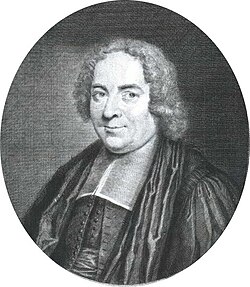
The mean base theorem is a particular case of proposition VI.2 of The Elements of Euclid: a straight line parallel to one side of a triangle divides the other two sides in the same proportion. A beautiful consequence has a well-known author: the Frenchman Pierre Varignon (1654–1722) showed that, connecting the midpoints of the sides of any quadrilateral, a parallelogram is always obtained. The result was published after his death, in 1731.

The story
Varignon was a priest, professor of mathematics in Paris and one of the first defenders in France of Leibniz’s calculus. The “Varignon parallelogram” is a direct application of the mean base: each side of it is the mean base of a triangle formed by a diagonal of the quadrilateral.
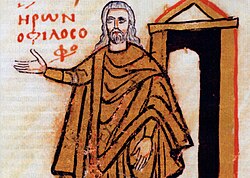
The average base of the trapezoid, equal to the average of the bases, explains the formula for the area of the trapezoid recorded by Heron: the average of the bases multiplied by the height.
In everyday life
- Ladders. On a staircase that narrows upwards, the middle step measures the average between the first and last.
- Trapezoidal shelves. In a bookcase with sloping sides, the middle shelf is the average of the widths of the base and top.
- Roof scissors. The horizontal piece that connects the midpoints of the two roofs measures half the span and is parallel to the base.
- Midpoints in the drawing. In drawing programs, connecting midpoints in any way generates a parallelogram, as Varignon predicted.
Sources: Elements, proposition VI.2 · Varignon (MacTutor).
Theory and constructions
TeoremaMiddle base of the triangle
a) If a segment has endpoints at the midpoints of two sides of a triangle, then it is parallel to the third side and measures half of it:
$$(AM = MB,\ AN = NC) \Rightarrow \overline{MN} \parallel \overline{BC} \ \text{ e } \ MN = \frac{BC}{2}.$$b) Reciprocal: if a segment parallel to one side has one end at the midpoint of the other side and the other at the third side, then that end is the midpoint of the third side.
View the demo
Through $C$, we draw the line parallel to $\overleftrightarrow{AB}$, which cuts the line $MN$ at $D$. Then $\hat{C} \equiv \hat{A}$ (alternates); with $AN = CN$ and the o.p.v. in $N$, by ALA, $\triangle AMN \equiv \triangle CDN$. So $CD = AM = MB$ and $MN = DN$. As $\overline{CD}$ and $\overline{MB}$ are parallel and congruent, $MBCD$ is a parallelogram: $\overline{MD} \parallel \overline{BC}$ and $MD = BC$. Logo $\overline{MN} \parallel \overline{BC}$ and $MN = \dfrac{MD}{2} = \dfrac{BC}{2}$. The converse comes out of the parallel postulate: the parallel to $\overline{BC}$ by $M$ is unique.
TeoremaMiddle base of the trapezius
a) If a segment has endpoints at the midpoints of the non-parallel sides of a trapezoid, then it is parallel to the bases and measures their semisome:
$$MN = \frac{AB + CD}{2}.$$b) Reciprocal: a segment parallel to the bases with one end at the midpoint of one of the other sides has the other end at the midpoint of the remaining side.
View the demo
Let $E$ be the meeting of the straight lines $DN$ and $AB$. Like $\overline{AB} \parallel \overline{CD}$, $\hat{B} \equiv \hat{C}$; with $BN = CN$ and the o.p.v. in $N$, by ALA, $\triangle BEN \equiv \triangle CDN$: $EN = DN$ and $BE = CD$. At $\triangle ADE$, $M$ and $N$ are midpoints of $\overline{AD}$ and $\overline{DE}$. By the middle base of the triangle, $\overline{MN} \parallel \overline{AE}$ and $MN = \dfrac{AE}{2} = \dfrac{AB + BE}{2} = \dfrac{AB + CD}{2}$.