Euler's Eyes
2026-10-11
Existence and uniqueness of parallel
A parallel passes through a point outside a straight line. That only one passes is the most discussed statement in the history of geometry.
Who discovered
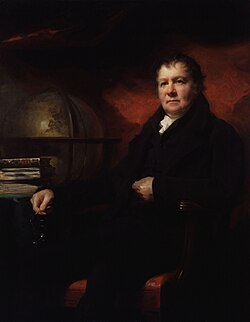
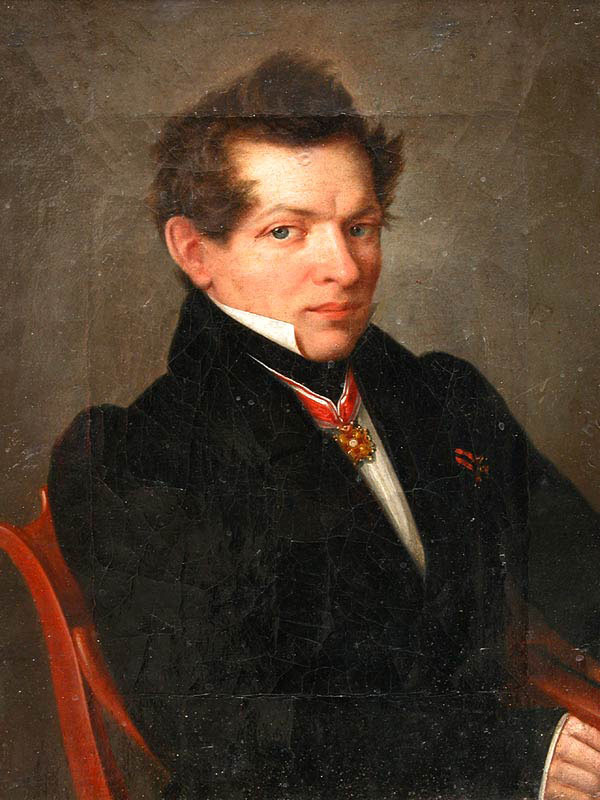
The existence of parallelism is demonstrated by Euclid (proposition I.31). uniqueness depends on its fifth postulate, the one that many have tried to transform into a theorem. The form used today at school — “a single parallel passes through a point outside a straight line” — became known as Playfair’s axiom, after the Scotsman John Playfair, who popularized it in 1795, although Proclus had already stated it. In 1829, the Russian Nikolai Lobachevsky published a geometry in which infinite parallels pass.

The story
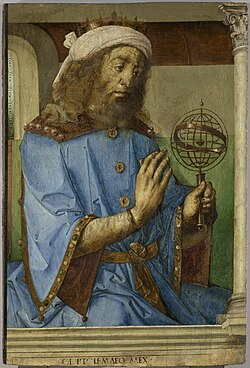
For more than two thousand years, mathematicians have tried to prove the fifth postulate from the others: Ptolemy and Proclus in antiquity, Ibn al-Haytham, Omar Khayyam and Nasir al-Din al-Tusi in the Islamic world, Girolamo Saccheri (1733), Lambert and Legendre in Europe. Everyone ended up using, without realizing it, some statement equivalent to the postulate itself.
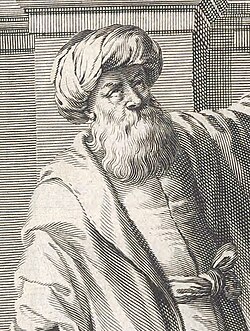
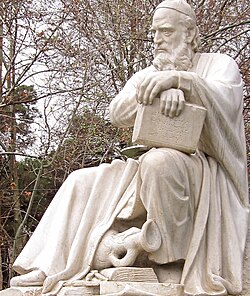
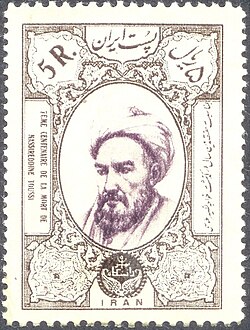
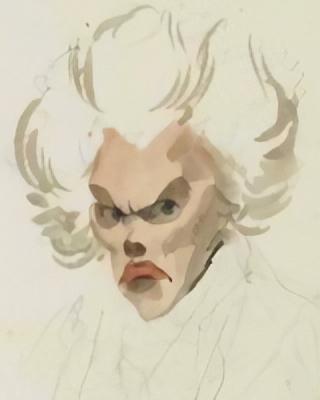
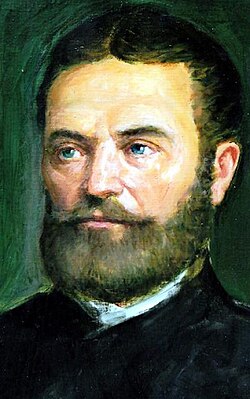
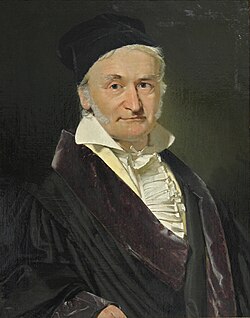
The turning point came when Lobachevsky (1829) and the Hungarian János Bolyai (1832), independently, accepted the negation of the postulate and obtained a geometry without contradictions. Gauss arrived at the same ideas, but never published them. The fifth postulate is not a theorem: it is a choice, and the geometry of this book is the one that adopts it.
In everyday life
- Maps and globes. On the Earth’s surface there are no parallels in Euclid’s sense: the meridians, which appear parallel at the equator, meet at the poles.
- Plane routes. The shortest route between São Paulo and Tokyo is not a straight line on a flat map, but rather a great circle arc.
- GPS. Satellite clocks are corrected by general relativity, Einstein’s theory that describes space-time with a non-Euclidean geometry.
- Technical drawing. Parallel rulers and sliding squares trace, at each point, the only parallel to a given straight line.
Sources: Non-Euclidean Geometry (MacTutor) · Elements, postulate 5 · Playfair (MacTutor) · Lobachevsky (MacTutor).
Theory and constructions
TeoremaExistence of parallel
If two distinct coplanar lines and a transversal determine alternate (or corresponding) congruent angles, then these two lines are parallel: $\alpha \equiv \beta \Rightarrow a \parallel b$.
Demonstration (by absurdity)
- If $a$ and $b$ were not parallel, they would have a point $P$ in common.
- Being $a \cap t = \lbrace A \rbrace$ and $b \cap t = \lbrace B \rbrace$, we would have the triangle $ABP$.
- One of the alternate angles would be an external angle of this triangle, and the other would be a non-adjacent internal angle. By the external angle theorem (chapter 4), we would have $\alpha > \beta$ or $\beta > \alpha$.
- This contradicts the $\alpha \equiv \beta$ hypothesis. Therefore, $a \parallel b$.
Construction of the parallel. To draw through $P$ a parallel to a straight line $a$: we pass through $P$ a straight line $t$, which cuts $a$ into $M$; we take $A \in a$, $A \neq M$, and construct, with vertex $P$ and side $\overrightarrow{PM}$, the angle $M\hat{P}B \equiv A\hat{M}P$, with $B$ in the half-plane opposite to that of $A$ in relation to the straight line $PM$. The angles are alternate and congruent; by the previous theorem, $\overleftrightarrow{PB} \parallel a$.
PostuladoEuclid's postulate (parallel postulate)
A single straight line passes through a point parallel to a given straight line.
This postulate, from Euclid (300 BC), characterizes the geometry we study: Euclidean Geometry.
TeoremaReciprocal: parallels form congruent alternates
If two distinct parallel lines intersect a transversal, then the alternate angles (or corresponding ones) are congruent: $a \parallel b \Rightarrow \alpha \equiv \beta$.
View the demo
If $\alpha$ and $\beta$ were not congruent, there would be a straight line $x$, distinct from $b$, passing through $P$ ($\lbrace P \rbrace = b \cap t$) and forming with $t$ an angle $\beta^{\prime} \equiv \alpha$, alternate with $\alpha$. By the existence theorem, $x \parallel a$. So through $P$ two distinct straight lines would pass, $x$ and $b$, parallel to $a$ — which contradicts Euclid’s postulate. Logo $\alpha \equiv \beta$.
ResumoNecessary and sufficient condition
Two distinct lines are parallel if, and only if, they form alternate (or corresponding) congruent angles with a transversal:
$$\alpha \equiv \beta \iff a \parallel b.$$