
Euler's Eyes
2026-10-12
Sines theorem
In any triangle, each side divided by the sine of the opposite angle always gives the same number: the diameter of the circumscribed circle.
Who discovered
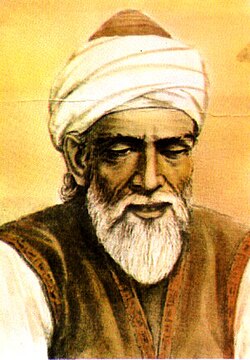
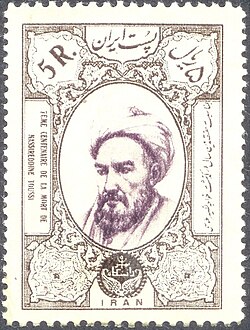
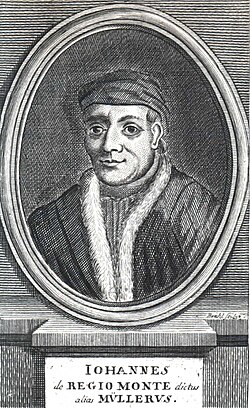
The law of sines was born in astronomy, for triangles drawn on the celestial sphere. The spherical version was obtained in the 10th century by astronomers from the Islamic world — including Abu al-Wafa and Abu Nasr Mansur. The form for flat triangles appears systematically in the Treatise on the quadrilateral (1260) by the Persian Nasir al-Din al-Tusi, who made trigonometry a discipline independent of astronomy. In Europe, it spread with the book On triangles of all kinds, by Regiomontanus, written in 1464 and printed in 1533.
The story
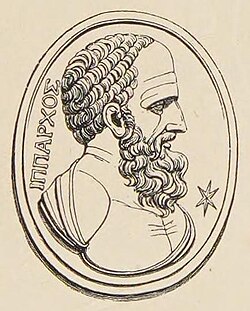
Before the sine, astronomers worked with chords: Hipparchus and Ptolemy tabulated the chord of each arc of a circle. The chord of an arc is twice the sine of half the central angle — that is why the law of sines is, in essence, a result on chords of a circle, and the demonstration of this topic uses exactly the circumscribed circle.

With the law of sines, simply measure a distance and two angles to calculate the other sides of a triangle. This was the principle of triangulation, which measured entire countries between the 17th and 19th centuries.
In everyday life
- Watchtowers. Two towers that see the same smoke measure the viewing angles; with the distance between the towers, the law of sines localizes the fire.
- Topography. To measure the width of a river, measure a base on one bank and the angles to a point on the other bank.
- Astronomy. The distance to nearby stars is calculated by huge triangles, based on the diameter of Earth’s orbit.
- Engineering. The decomposition of forces in trusses uses the law of sines in the triangle of forces.
Sources: Nasir al-Din al-Tusi (MacTutor) · Abu al-Wafa (MacTutor) · Regiomontanus (MacTutor).
Theory and constructions
TeoremaSines theorem (law of sines)
The sides of a triangle are proportional to the sines of the opposite angles, and the constant of proportionality is the diameter of the circle circumscribed by the triangle:
$$\frac{a}{\operatorname{sen}A} = \frac{b}{\operatorname{sen}B} = \frac{c}{\operatorname{sen}C} = 2R.$$View the demo
Let $O$ be the center of the circle circumscribed by the triangle $ABC$ and $R$ be its radius. Tracing the diameter $\overline{BD}$, the inscribed angles $\hat D$ and $\hat A$ see the same arc $\overset{\frown}{BC}$; logo $\hat D = \hat A$. The triangle $DCB$ is rectangular in $C$ (it is inscribed in a semicircle), so
$$\operatorname{sen} D = \frac{a}{2R} \;\Rightarrow\; \operatorname{sen} A = \frac{a}{2R} \;\Rightarrow\; \frac{a}{\operatorname{sen}A} = 2R.$$Proceeding in a similar way, $\dfrac{b}{\operatorname{sen}B} = 2R$ and $\dfrac{c}{\operatorname{sen}C} = 2R$.
AtençãoNotice
If $\hat A$ is obtuse, instead of $\hat D = \hat A$ we will have $\hat D = 180^{\circ} - \hat A$, which does not change the result, because $\operatorname{sen}(180^{\circ} - A) = \operatorname{sen}A$. If $\hat A$ is straight, the relationship also holds, as $\operatorname{sen}90^{\circ} = 1$ and $a = 2R$.