
Euler's Eyes
2026-10-31
The legacy of Henri Poincaré
Thought is only a flash in the middle of a long night. But that flash is everything.
— Henri Poincaré, The Value of Science (1905)
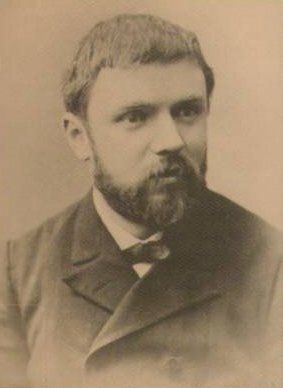
Poincaré published some five hundred papers and thirty books, collected in eleven thick volumes of complete works. More than the quantity, what is striking is the variety: there is hardly an area of late nineteenth-century mathematics in which he did not leave his mark.
What bears his name
- The Poincaré disc and half-plane, the most widely used models of hyperbolic geometry.
- The Poincaré section and Poincaré map, basic tools of dynamical systems.
- The Poincaré recurrence theorem and the Poincaré–Bendixson theorem, which says there is no chaos in the plane.
- Poincaré’s last geometric theorem, proved by Birkhoff in 1913.
- The Poincaré conjecture, the Poincaré homology sphere and Poincaré duality in topology.
- The Poincaré group, the symmetry group of the spacetime of relativity, and the Poincaré sphere of optics, which describes the polarisation of light.
- The Poincaré lemma on differential forms and the Poincaré series of number theory.
The founder of chaos theory
For half a century Poincaré’s discoveries in dynamics were poorly understood outside a small circle. They were taken up by Birkhoff in the United States, by Kolmogorov and Arnold in the Soviet Union and, from the 1960s, with the help of computers, they gave rise to chaos theory. We now know, thanks to the calculations of Jacques Laskar, that the Earth’s orbit is chaotic on a scale of tens of millions of years: it is impossible to predict precisely where it will be a hundred million years from now.
The philosopher
Poincaré’s books of philosophy were best-sellers. In them he defended a position that became known as conventionalism: certain principles of science, such as the axioms of geometry, are neither truths imposed by experience nor by reason, but conventions chosen because they are the most convenient. Asking whether physical space is Euclidean, he wrote, is like asking whether the metric system is true. At the same time he fought the idea that mathematics reduces to logic, defended by Russell and the logicists, and insisted on the role of intuition. These discussions influenced philosophers such as those of the Vienna Circle.
The psychology of invention
The 1908 lecture on mathematical invention, with the story of the bus at Coutances, became a classic text in the psychology of creativity. Poincaré described four phases: intense conscious work that seems to yield nothing; a period of rest, during which the unconscious goes on working; sudden illumination; and, finally, conscious verification. The mathematician Jacques Hadamard, in 1945, and the psychologist Graham Wallas, in 1926, built on this account theories of creativity that are still taught.
Places
There is a crater Poincaré on the Moon and an asteroid, 2021 Poincaré. In Paris, the Institut Henri Poincaré, founded in 1928, is one of the world’s great centres of mathematics and theoretical physics; in Nancy, the lycée where he studied bears his name, and for decades the city’s science university did too.
Exercise: a paper every three weeks
Poincaré published some 500 papers between 1878 and 1912. How many a year, on average? And one every how many days?
That is $1912 - 1878 = 34$ years. $\frac{500}{34} \approx 14.7$ papers a year, one every $\frac{365}{14.7} \approx 25$ days, not counting the books, the published lecture courses and the philosophical writings. All this working, according to Toulouse, about four hours a day.
Exercise: the Poincaré half-plane
In the Poincaré half-plane, the points are the $(x, y)$ with $y > 0$, and the distance between two points on the same vertical, $(x, y_1)$ and $(x, y_2)$, is $\left|\ln\frac{y_2}{y_1}\right|$. Compute the distance between $(0, 1)$ and $(0, 10)$, and between $(0, 0.01)$ and $(0, 0.1)$. What can be concluded?
The first is $\ln 10 \approx 2.303$; the second is $\ln\frac{0.1}{0.01} = \ln 10 \approx 2.303$ as well. Segments that look very different in the drawing, 9 units and 0.09 units, have the same hyperbolic length. Near the $x$-axis, which plays the role of the boundary of the disc, everything shrinks: the axis is infinitely far away.
Sources: Jeremy Gray, Henri Poincaré: A Scientific Biography (2013) · Henri Poincaré, La science et l’hypothèse (1902), La valeur de la science (1905) and Science et méthode (1908) · Jacques Hadamard, The Psychology of Invention in the Mathematical Field (1945) · Jacques Laskar, “A numerical experiment on the chaotic behaviour of the Solar System”, Nature 338 (1989).
All topics on Henri Poincaré · ← Probability in the Dreyfus affair · Image credits →