
Euler's Eyes
2022-07-05
Triangles
Introduction
In the previous post, we defined polygons and served to define quadrilaterals and their properties. Now, let’s define triangles, for this, we need the concept of polygons.
A triangle is a three-sided polygon, in which we use straight segments for the sides. A diagonal of a convex quadrilateral divides it into two triangles.

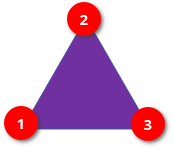
- Vertices: can be defined as meeting points between the sides of a triangle. Generally speaking, vertices are meeting points between sides of any polygon.
In particular, a triangle is formed by 3 vertices.
- Diagonal: is the straight line segment that connects two non-consecutive vertices of any flat and spatial polygon.
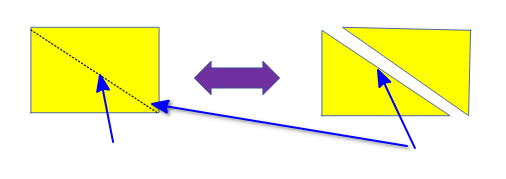
One of the important properties of triangles is that they have diagonals. An important observation is that there is no triangle that has two non-consecutive vertices. The diagonal of a quadrilateral, for example, is one of the sides of a triangle.
Triangle
Another definition for triangle is by the origin of the name:
- Tri is defined as 3 (three);
- Angle is the “opening” between two straight segments, connected by a vertex.
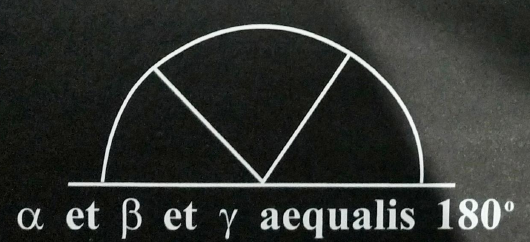
The first Canon (law of God) defined by Euclid is:
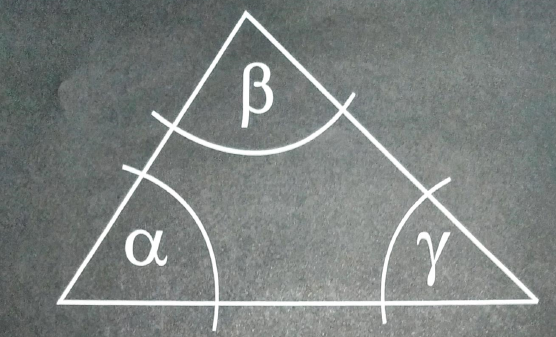
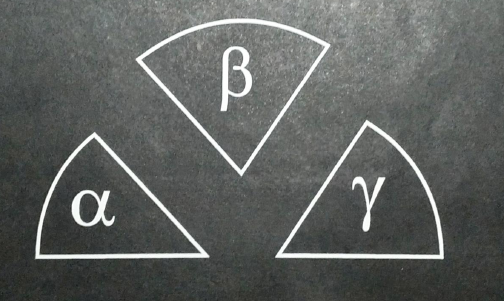
Canon α et (more) β et (more) γ aequalis (equal) 180°
Law of God α + β + γ = 180°
| Triangle | Angles | Half Turn |
|---|---|---|
|
|
|
Classification of Triangles
In terms of curiosity, we will classify the triangles, but it is not necessary to memorize, just know that these definitions exist.
Classification according to sides

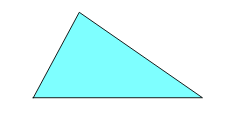
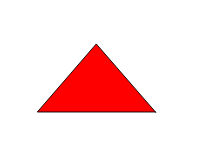
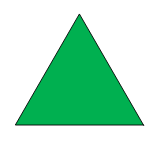
| scalene triangle | isosceles triangles | equilateral triangle |
|---|---|---|
| has all sides with different measurements | has two sides with equal measurements | has all sides equal in size |
|
|
|
Classification according to angles
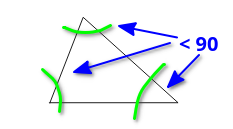
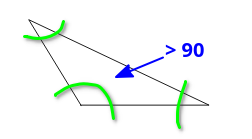
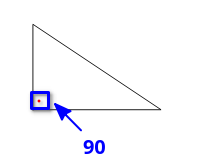
| acute triangle | Obtuse angle triangles | Right triangle |
|---|---|---|
| has all interior angles less than 90° | has exactly one internal angle greater than 90° | has exactly one interior angle equal to 90° |
|
|
|
The last one in the table is called a right triangle, as one of the angles is exactly the angle of the vertices of a rectangle that is ninety degrees (90°).
Triangle Area
From the quadrilaterals post we saw that the area of the rectangle is given by:
$$\text{Área do retângulo} = \text{base} ~\times ~ \text{altura} = b~.~h$$As said before, the triangle can be obtained by cutting a rectangle in half.
When using this idea, the area of the triangle is given by half the area of the rectangle:
$$\text{Área do triângulo} = \frac{\text{Área do retângulo} }{2}= \frac{\text{base} ~\times ~ \text{altura} }{2}$$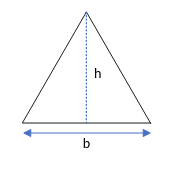 $$A_{\blacktriangle} = \frac{\text{base} ~\times ~ \text{altura} }{2} = \frac{b~.~h}{2}$$
Now the next step is to learn about the particularities of the right triangle, using concepts from Pythagoras.
Pythagoras Theorem and the Right Triangle
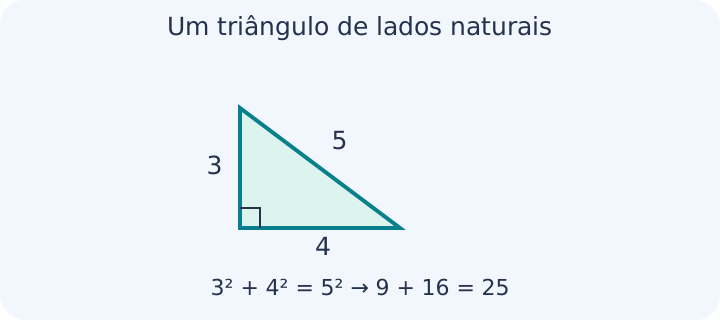
In the introduction to this book, we started with the concepts of sides of a square. Our radix quadratum, which is equivalent to the area of the square in the previous post.
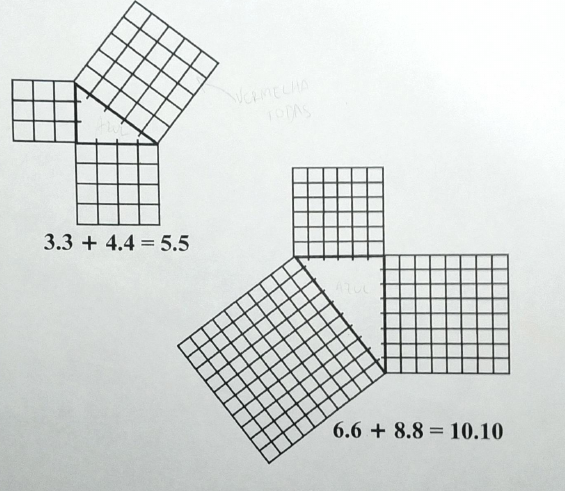
From the figure, we notice that we have area of squares, which in current mathematics is side \(\times\) side.
Example 1:
$$\text{Area 1} = 3\times 3 = 9$$$$\text{Area 2} = 4\times 4 = 16$$
$$\text{Area 3} = 5\times 5 = 25$$
$$\text{Area 1} + \text{Area 1} = \text{Area 3}$$
Example 2:
$$\text{Area 1} = 6\times 6 = 36$$$$\text{Area 2} = 8\times 8 = 64$$
$$\text{Area 3} = 10\times 10 = 100$$
$$\text{Area 1} + \text{Area 1} = \text{Area 3}$$
When we generalize the concept, we have the Pythagorean Theorem.
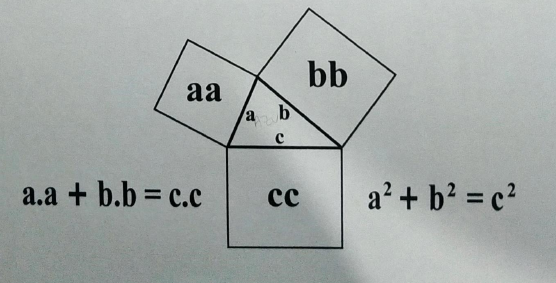
The square (quadratum) sideways (latus) a plus (et) the square (quadratum) sideways (latus) b
is equal (aequalis) to the square (quadratum) of side (latus) c.
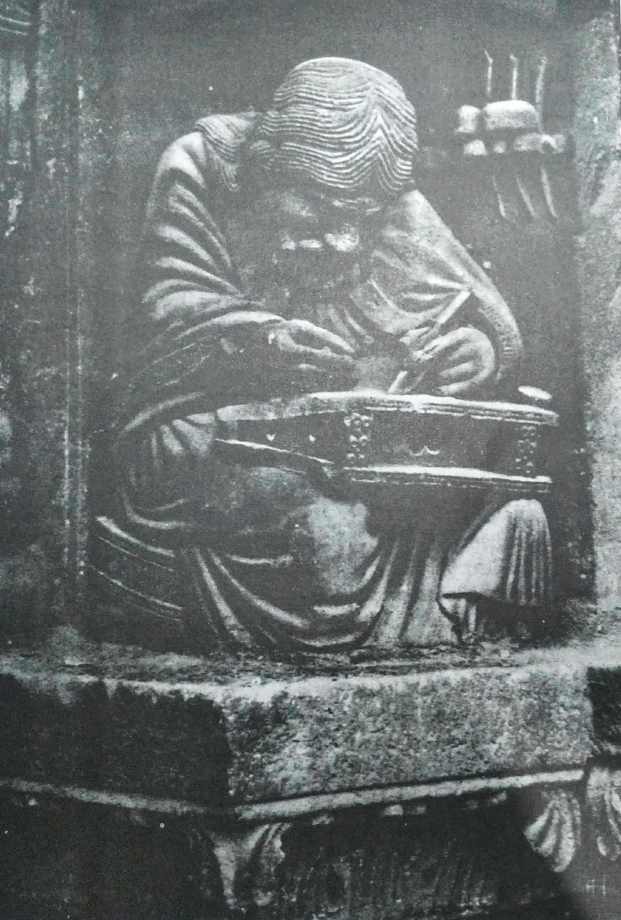
Pythagoras
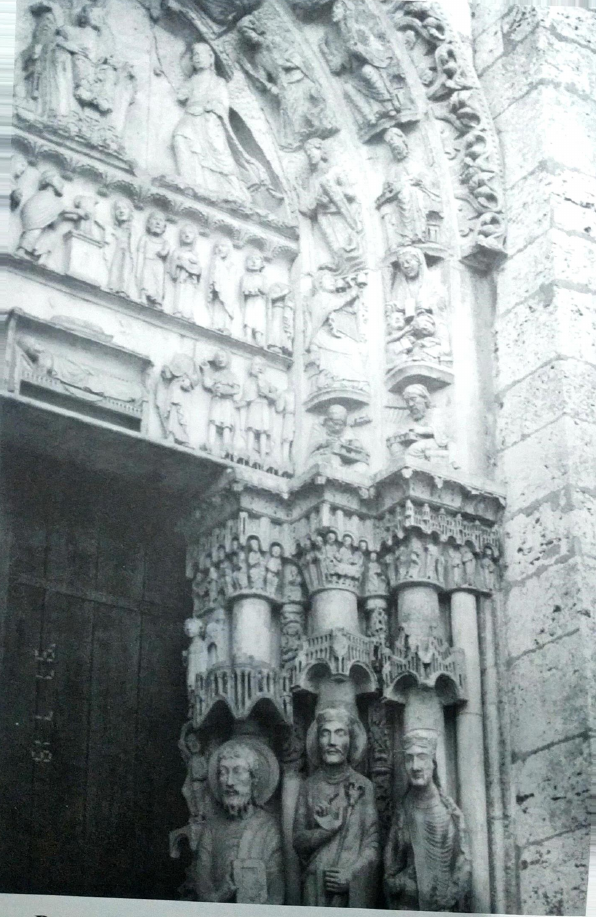
Portal of the Cathedral of Our Lady of Chartres
Help us build the math website. Donate as much as you can.

Applications of the Pythagorean Theorem
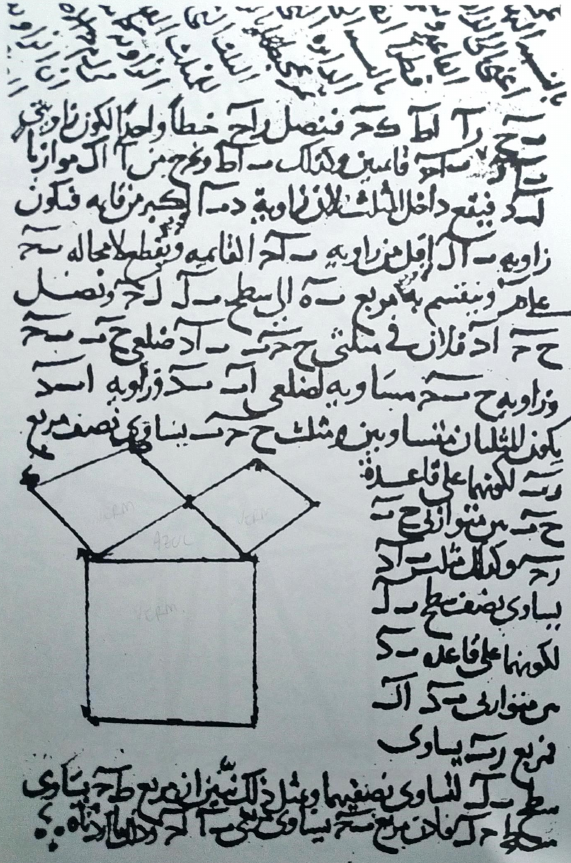
Pythagoras’ theorem is so important that we see it in Arabic and Chinese manuscripts confirm the following figure.

Rectangle Triangle
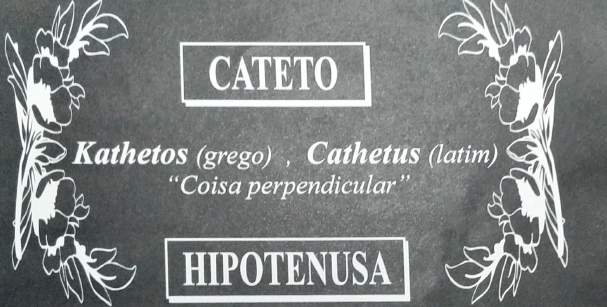
The right-angled triangle, as derived from the name, has one of the right angles, that is, two triangle data are perpendicular, as in two data of one square. Below, according to history, we present the names forcefully imposed by textbooks.
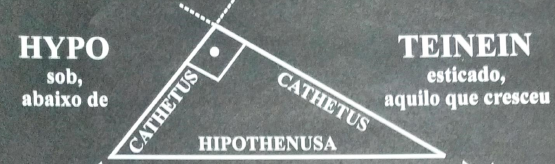
What we know as Catetos represents what is perpendicular ⊥, whereas what we know as Hipotenusa is what is below
two perpendicular lines (stretched).
equilateral triangle
equilateral triangle can be derived from the words equi (iguais) lateralo (lados) and can be obtained from a right-angled triangle. The right triangle is half (½) of a equilateral triangle.
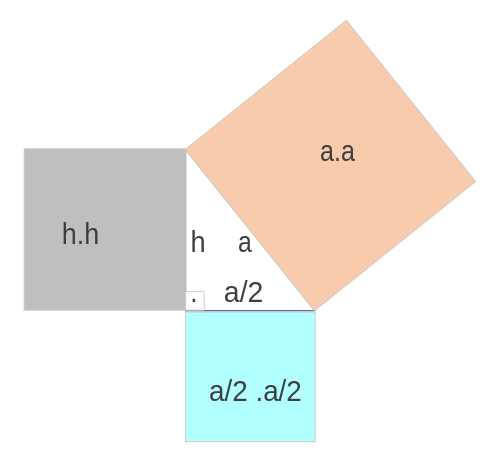
From the right triangle we notice that the hypotenuse in the following example has distance a, one of the legs has distance h and the other leg a/2. As shown in the following figure:
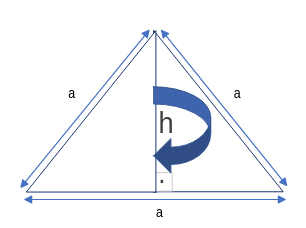
When we unfold the right triangle, we obtain the following equilateral triangle (3 equal sides).
Example 1:
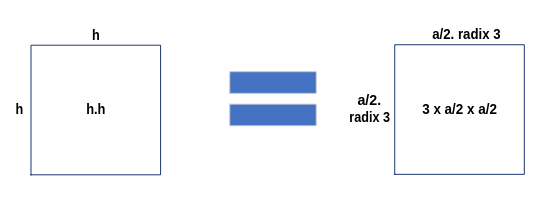
With this, we obtain:
$$h= \frac{a}{2}~.~\text{radix}~ 3$$
Example 2:
Example 3:
Therefore:
radix quadratum 9 aequalis 3
$$\sqrt{9} = 3$$
Robert Recort
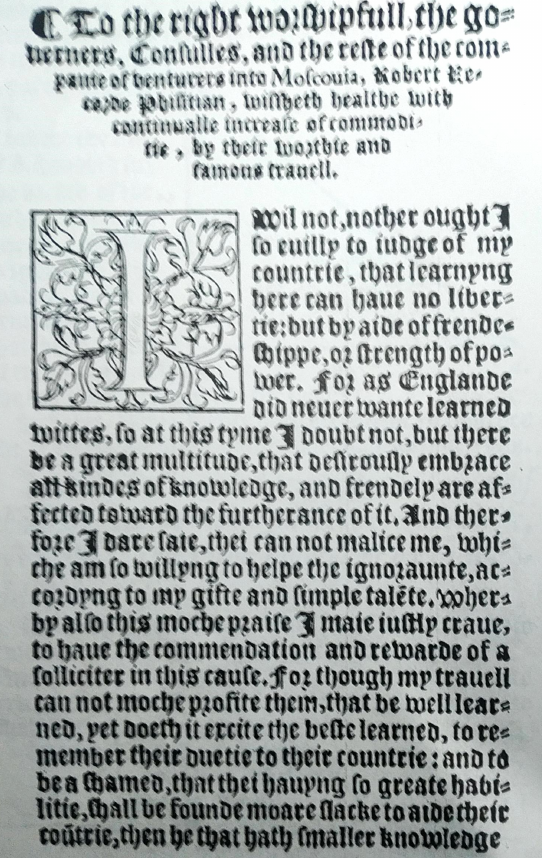
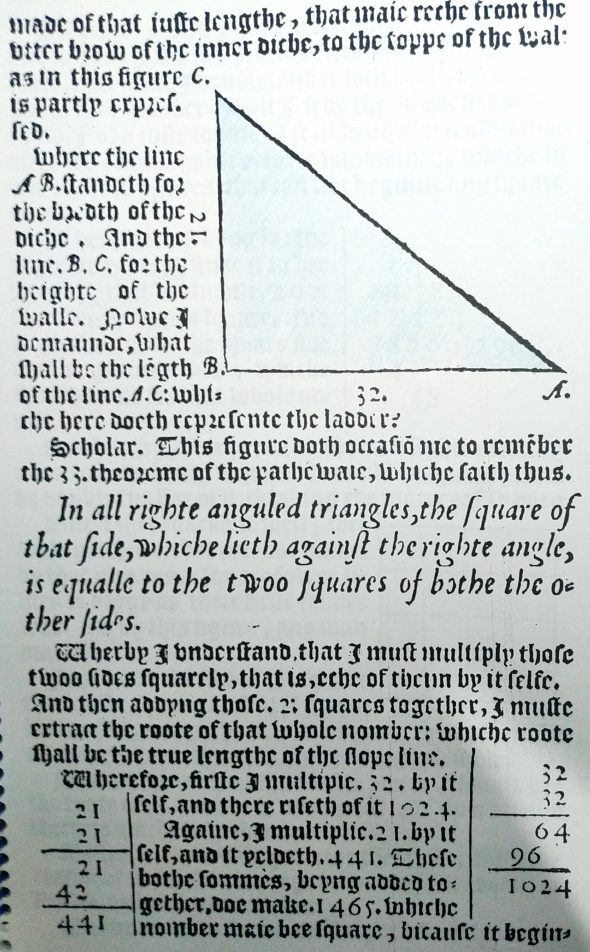
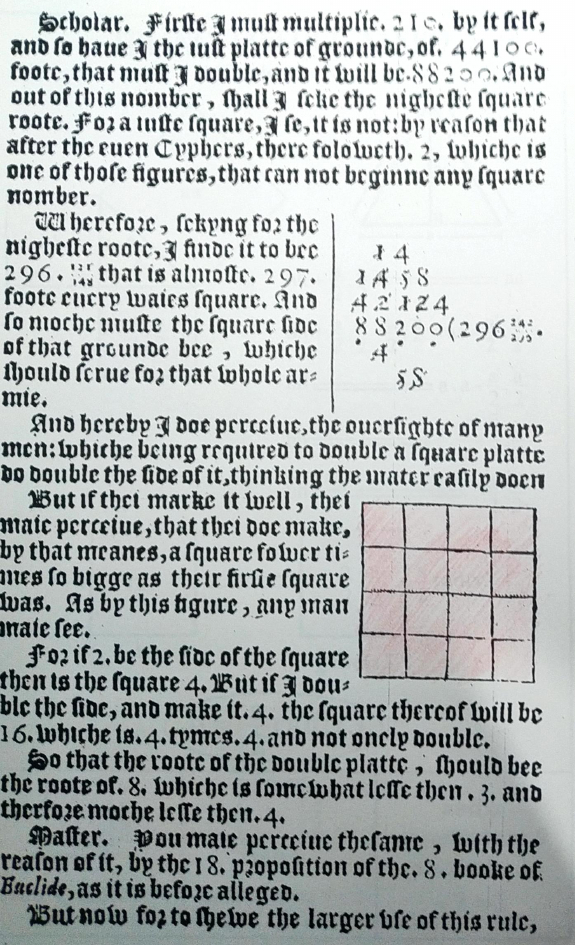
Robert Recort in his manuscripts shows us multiplication concepts used today.
We observe in the manuscripts
$$21 \times 21 = 441$$$$32 \times 32 = 1024$$
We note that the multiplications performed are with square area values.
This is an introduction to Euclid’s geometry concepts, next we will look at geometry with sequences of numbers.