
Euler's Eyes
2026-10-16
The life of Alan Turing
Timeline
- 1912Born on 23 June in London. His parents live in India.
- 1926Starts at Sherborne boarding school.
- 1930Christopher Morcom, his best friend, dies.
- 1931Enters King’s College, Cambridge.
- 1935Elected a fellow of King’s, aged 22.
- 1936Writes “On computable numbers”. Goes to Princeton.
- 1938Doctorate at Princeton. Returns to Cambridge.
- 1939Starts work at Bletchley Park, on breaking the Enigma.
- 1940The first electromechanical bombe comes into operation.
- 1945Moves to the National Physical Laboratory, where he designs the ACE.
- 1948Moves to the University of Manchester.
- 1950Publishes the paper on the imitation game.
- 1952Publishes the theory of morphogenesis. Convicted for homosexuality.
- 1954Dies on 7 June, in Wilmslow, aged 41.
- He is born on 23 June in Maida Vale. His parents live in India, and he is brought up by a foster family in the south of England.
- At boarding school he meets Christopher Morcom, the friend whose death in 1930 leads him to think about the relation between mind and matter.
- He studies at King’s College, becomes a fellow at 22 and writes “On computable numbers”.
- He does his doctorate with Alonzo Church, who had reached the same result by another route.
- During the war he heads the section that breaks the German naval Enigma and designs the electromechanical bombe.
- At the National Physical Laboratory he designs the ACE, a stored-program computer.
- He programs one of the first computers, proposes the imitation game and studies morphogenesis. He dies in Wilmslow, near the city, on 7 June 1954.
- 1912 · London
- 1926–1931 · Sherborne
- 1931–1936 · Cambridge
- 1936–1938 · Princeton
- 1939–1945 · Bletchley Park
- 1945–1947 · Teddington
- 1948–1954 · Manchester
A boy raised far from his parents
Alan Mathison Turing was born on 23 June 1912, in London. His father, Julius, was a British civil servant in India, and his mother, Ethel Sara, went back there soon after the birth. Alan and his elder brother, John, were brought up by a retired army couple in the south of England and saw their parents only when they were on leave.
He was a clumsy boy with dreadful handwriting who was interested in everything natural: plants, chemistry, maps, numbers. He taught himself to read in three weeks and did experiments with whatever he found at home.
Sherborne and Christopher
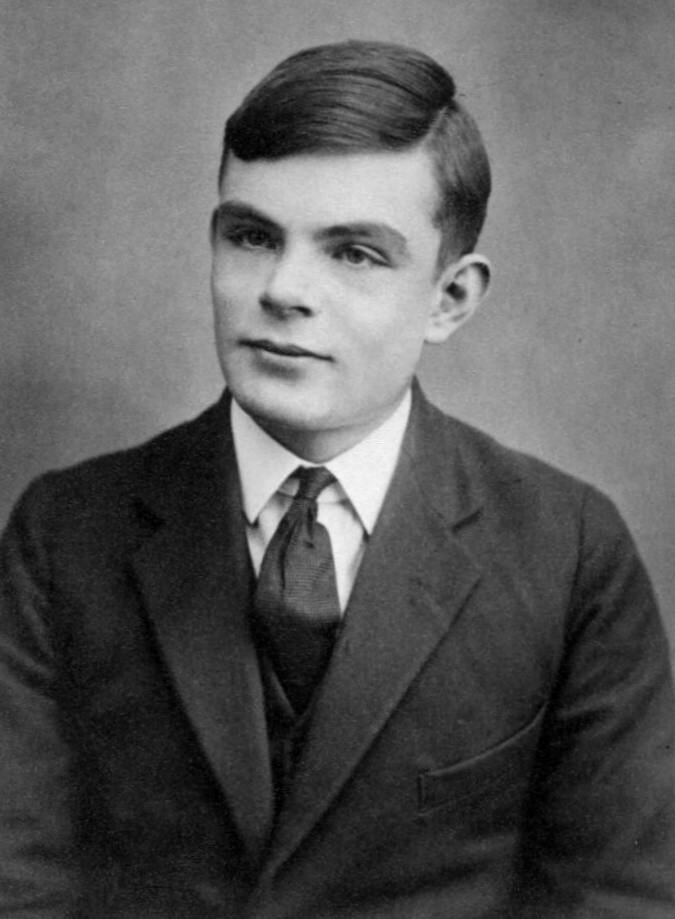
In May 1926, aged 13, Turing was due to start at Sherborne boarding school, in the south-west of England. It was the day of the General Strike, and there were no trains. He cycled from Southampton to the school, about a hundred kilometres, and spent the night at an inn halfway. A local newspaper reported the journey.
The school wanted to turn out gentlemen versed in Latin and Greek, and the headmaster complained that the boy “is wasting his time” on science. Turing read Einstein on his own and solved advanced problems without having studied calculus.
At Sherborne he met Christopher Morcom, a year older and also passionate about science. Christopher was his first great friend and, by all accounts, his first love. In February 1930 he died of bovine tuberculosis within a few days. Turing was devastated and spent years wondering whether a person’s mind survives the body and how mind is linked to matter. It is the question that, twenty years later, reappears in the imitation game.
Cambridge and the 1936 paper
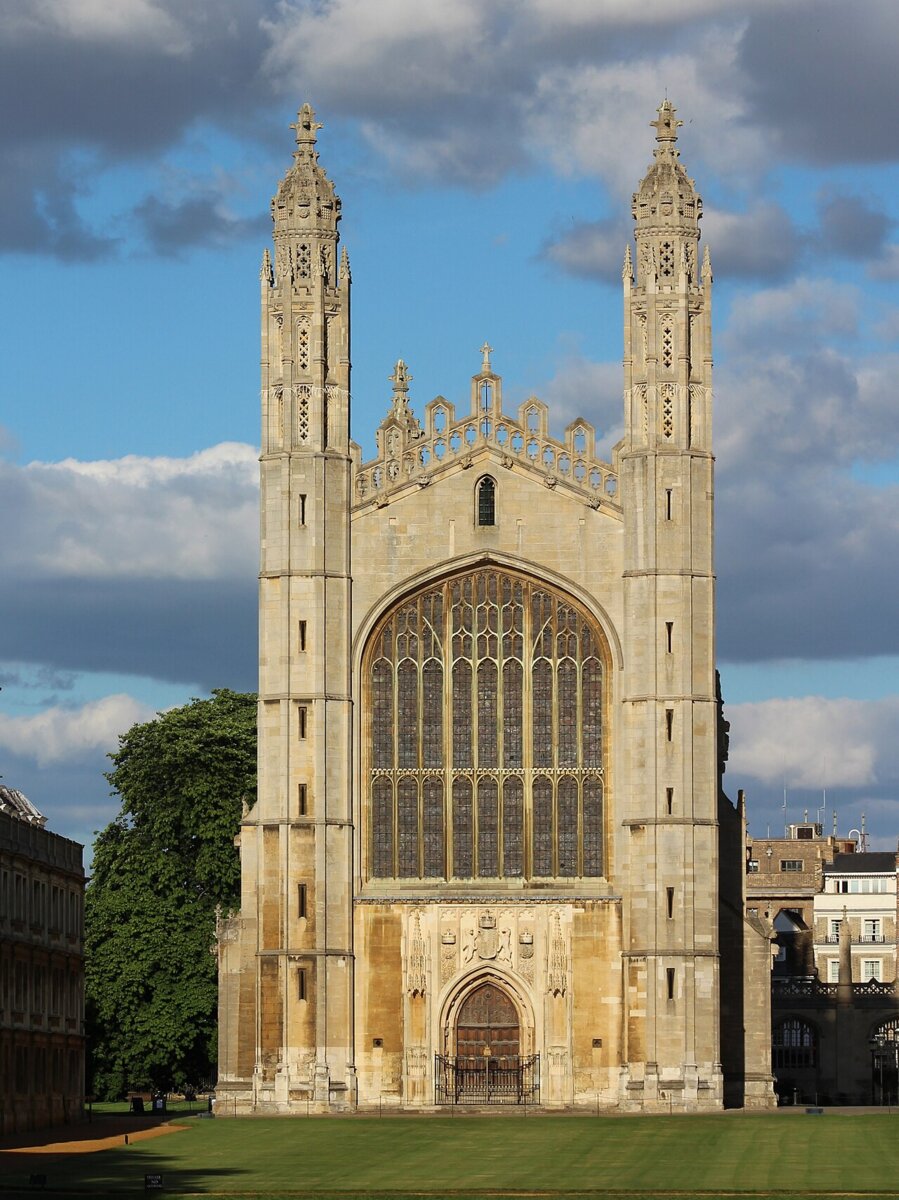
In 1931 he entered King’s College, Cambridge, to study mathematics. He rowed, ran long distances and graduated with distinction. In 1935, aged 22, he was elected a fellow of the college for a proof of the central limit theorem, the reason the bell-shaped curve turns up everywhere. He later found out that the Finn Jarl Lindeberg had already proved it in 1922.
That same year he attended a course by Max Newman on the foundations of mathematics and heard of a question posed by David Hilbert: is there a mechanical procedure that can decide whether any mathematical statement is true? To answer it, Turing had to say what a “mechanical procedure” is. The answer was the Turing machine, and the conclusion was that such a procedure does not exist.
The paper was ready in May 1936. A few weeks earlier, the American Alonzo Church had published the same result by a different route. Turing then went to Princeton to do a doctorate with Church and returned in 1938.
Bletchley Park
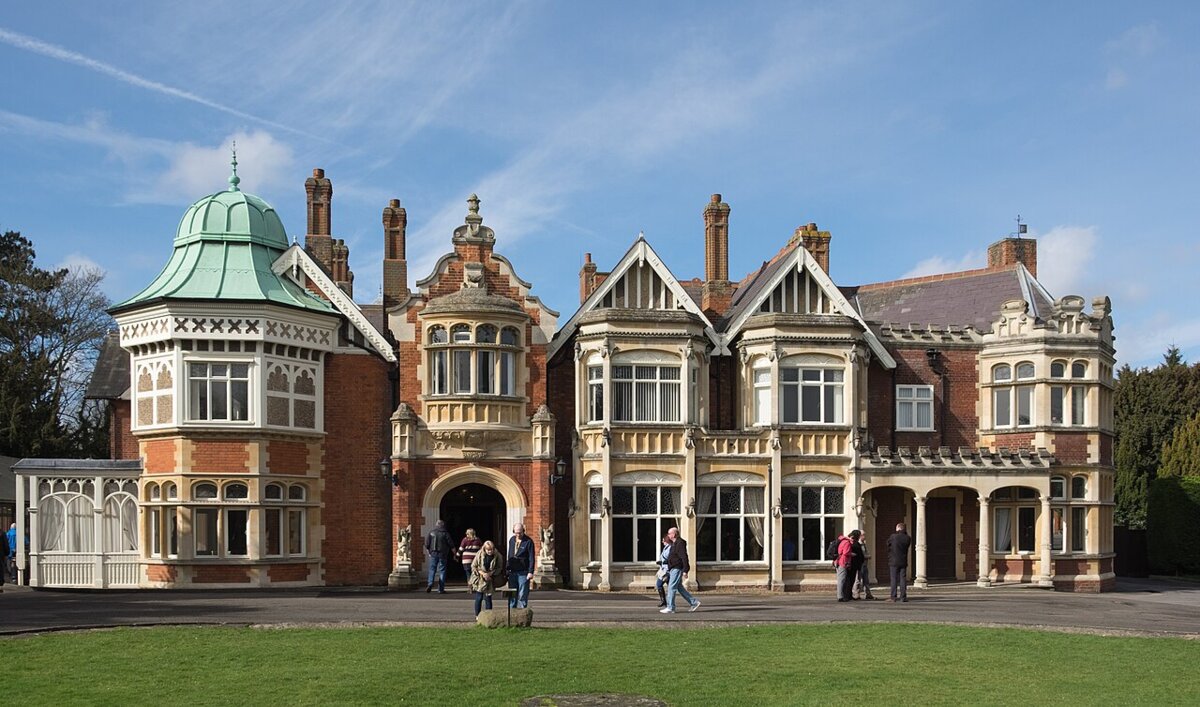
On 4 September 1939, the day after Britain entered the war, Turing reported to Bletchley Park, a country estate where the government was gathering mathematicians, linguists and chess players to read German messages. There he headed Hut 8, in charge of the naval Enigma, the hardest of all. He designed the electromechanical bombe that tested thousands of keys an hour and invented a statistical method, Banburismus, to save the bombes’ work.
His colleagues remembered the eccentric who chained his mug to the radiator with a padlock and cycled in a gas mask because of his hay fever. In 1941 Turing and three colleagues wrote directly to Winston Churchill asking for more staff. Churchill replied with an order: “Action this day”. For his war work Turing was appointed to the Order of the British Empire in 1946, but he could not tell anyone why. The secret lasted until the 1970s.
The first computers
After the war, at the National Physical Laboratory in Teddington, Turing designed the ACE, an electronic computer that kept its program in memory, like the universal machine of the 1936 paper. The project fell behind, and in 1948 he moved to the University of Manchester, where one of the first computers in the world was running. He wrote the programming manual for the machine, including an instruction to make it play notes, from which came some of the first music played by a computer, and with a friend he created a chess program that he carried out by hand himself, for want of a machine fast enough.
In 1950 he published the paper on the imitation game and, in 1952, the theory of morphogenesis. In 1951 he had been elected to the Royal Society.
The conviction and the death
In January 1952 Turing’s house in Wilmslow, near Manchester, was burgled. When he told the police that the burglar was an acquaintance of a man with whom he was having a relationship, Turing ended up charged with “gross indecency”: relations between men were a crime in England. He pleaded guilty and, to avoid prison, accepted a year of treatment with female hormones. He lost his clearance to work on state secrets.
He went on working in Manchester. On 8 June 1954 his housekeeper found him dead at home. The inquest concluded that he had taken cyanide and recorded suicide. There was a half-eaten apple beside the bed, which was never tested. His mother always maintained it had been an accident with the chemicals from his experiments.
Exercise: how long did each period last?
Turing was born in 1912 and died in 1954. How much time passed between the 1936 paper and his death? And between the end of the war and the conviction?
From 1936 to 1954 is 18 years: all of the modern computing that Turing saw being born fits in that span. From the end of the war, in 1945, to the conviction, in 1952, is only 7 years.
Exercise: a hundred kilometres by bicycle
Turing cycled about 100 km in two days. If he rode for 6 hours a day, what was his average speed?
In 12 hours, $\frac{100}{12}\approx8.3$ km/h. That is a gentle pace, but a long ride for a 13-year-old on a 1926 bicycle.
Sources: Andrew Hodges, Alan Turing: The Enigma (1983) · Turing biography, MacTutor · The Turing Digital Archive, King’s College.
All topics on Alan Turing · The Turing machine: calculating with pencil, tape and rules →