
Euler's Eyes
2026-10-11
Existence and uniqueness of the perpendicular
From a point outside a straight line, how can you lower a perpendicular to it? This is one of the few old issues with a registered author name.
Who discovered
Proclus attributes to Enopides of Chios (5th century BC) the first study of the problem of drawing a perpendicular to a straight line through a point outside it; Oenopides called this line “gnomonic”, in reference to the gnomon, the vertical rod of sundials. The classic solutions are in The Elements of Euclid: proposition I.11 raises the perpendicular by a point on the line, and I.12 lowers it by a point outside it.

The story
Euclid’s construction is simple: with the center at the point, a circle is drawn that cuts the straight line at two points; the perpendicular passes through the midpoint between them. The proof uses congruent triangles — the same methods as in the previous chapter.
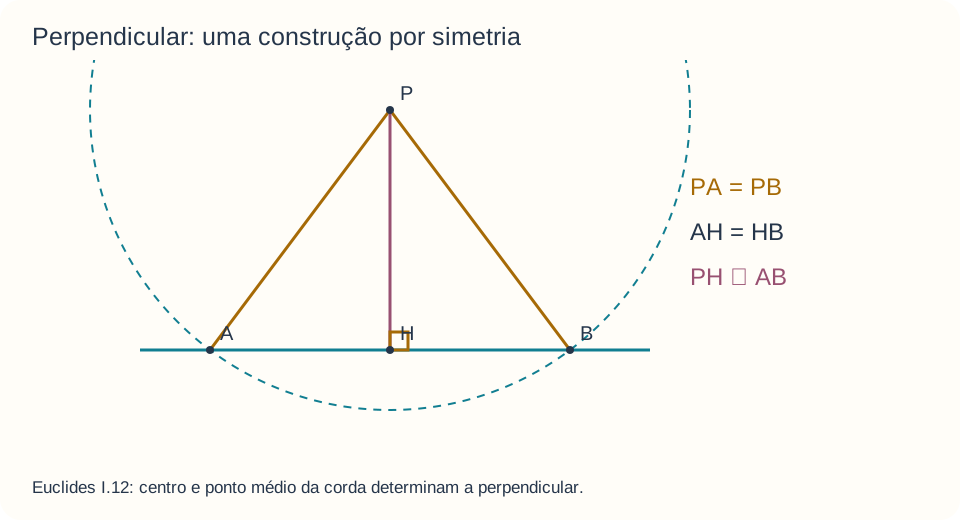
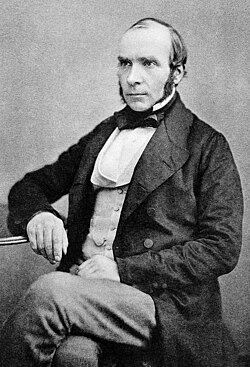
The perpendicular bisector, a perpendicular that passes through the midpoint of a segment, gained importance far beyond school geometry. In 1854, doctor John Snow mapped cholera deaths in London and linked each case to the nearest water pump, dividing the neighborhood by proximity. Dividing a region by the perpendicular bisectors between points — the “Voronoi diagram” — is still used to decide which school, hospital, or antenna serves which address.
In everyday life
- The shortest path to the edge. From a point outside a straight line, the shortest path to it is the perpendicular. Anyone who swims to the edge of the pool follows this line.
- Height of a building. Height is measured perpendicular to the floor, not along an inclined staircase.
- perpendicular bisector. A bus stop that must be at the same distance from two schools is on the perpendicular bisector of the segment that joins them.
- Cellular. Your phone usually connects to the nearest antenna; the boundaries between the regions of each antenna follow perpendicular bisectors.
Sources: Enópides (MacTutor) · Elements, proposition I.12 · Elements, proposition I.11.
Theory and constructions
TeoremaPerpendicular to a point on the line
In a plane, through a point $P$ on a straight line $r$ passes a single straight line $s$ perpendicular to $r$.
Existence: by transporting angles, we construct in one of the half-planes of $r$ the angle $s_1\hat{P}r_1$ congruent to a right angle; the line $s$ that contains $s_1$ is perpendicular to $r$. Uniqueness: if two distinct straight lines $x$ and $y$ through $P$ were perpendicular to $r$, the rays $Px_1$ and $Py_1$, in the same half-plane, would form two distinct right angles with $Pr_1$ — which contradicts the transport of angles.
TeoremaPerpendicular to a point outside the line
Through a point $P$ outside a straight line $r$ passes a single straight line perpendicular to $r$.
View the demo
Existence. Draw through $P$ a straight line that cuts $r$ in $O$, and let $Or_1$ be a ray of $r$. In the half-plane opposite to $P$, take $Q$ with $r_1\hat{O}P \equiv r_1\hat{O}Q$ and $\overline{OP} \equiv \overline{OQ}$. The straight line $s = \overleftrightarrow{PQ}$ is perpendicular to $r$: if $\overline{PQ}$ cuts $r$ in $X = O$, the angles are right; if $X \neq O$, by LAL, $\triangle OXP \equiv \triangle OXQ$, and $O\hat{X}P \equiv O\hat{X}Q$ are straight.
Uniqueness. If $x$ and $y$, distinct, passed through $P$ perpendicular to $r$ (in $X$ and $Y$), take $Q$ on the ray opposite $\overrightarrow{YP}$ with $\overline{YQ} \equiv \overline{YP}$. By LAL, $\triangle PXY \equiv \triangle QXY$, and $Q\hat{X}Y$ would be straight. So through $X$ two perpendiculars to $r$ would pass ($x$ and $XQ$), which contradicts the previous theorem.
Height and perpendicular bisector
DefiniçãoHeight of a triangle
Height of a triangle is the segment perpendicular to the supporting line of one side, with ends on that line and the opposite vertex. If $H_a$ is the intersection of the straight line $BC$ with the perpendicular to it through $A$, $\overline{AH_a}$ is the height relative to the side $\overline{BC}$ (or to the side $a$, or to the vertex $A$). $H_a$ is the foot height.
Definiçãoperpendicular bisector of a segment
The perpendicular bisector of a segment is the line perpendicular to the segment through its midpoint.