Euler's Eyes
2026-10-11
Properties of parallelograms
Opposite sides equal, opposite angles equal, diagonals that cut in half. The parallelogram is the figure of forces and articulated mechanisms.
Who discovered
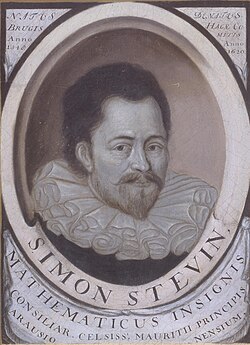
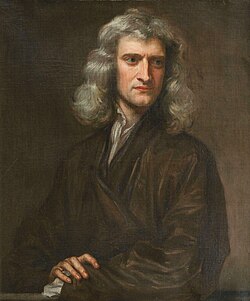
The first properties are in the proposition I.34 of the The Elements of Euclid (c. 300 BC): in a parallelogram, the opposite sides and angles are equal, and the diagonal divides it into two parts of the same area. Outside of geometry, the parallelogram gained fame with the parallelogram rule of forces, used by the Flemish Simon Stevin (1586) and enunciated by Isaac Newton in the Principia (1687): two forces acting at a point are equivalent to the diagonal of the parallelogram formed by them.

The story
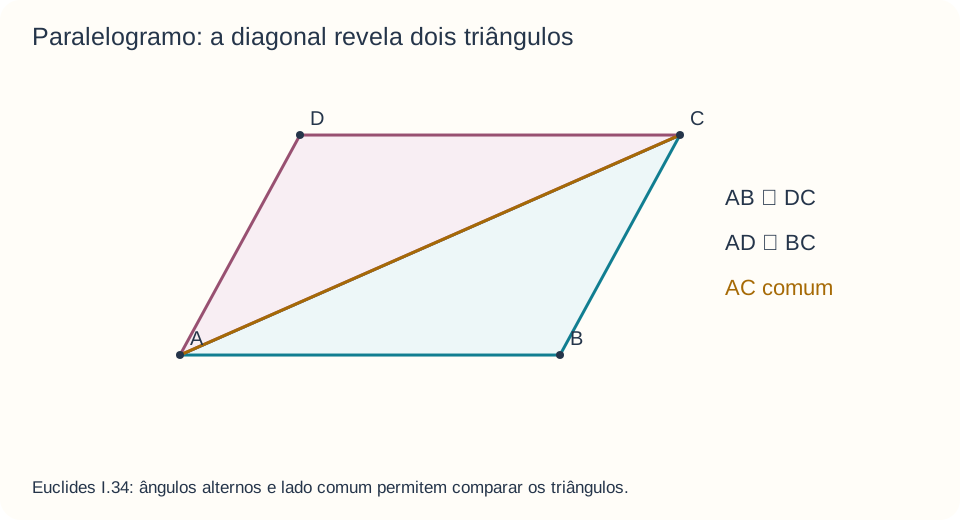
Euclid’s proof draws a diagonal and compares the two triangles formed, using alternate angles between parallels and the ALA case. It’s the same script that this thread follows.
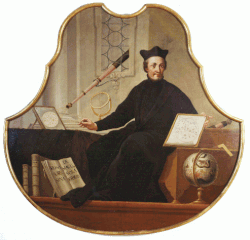
The pantograph, invented by Christoph Scheiner around 1603, uses hinged bars forming parallelograms to copy drawings to another scale: when the parallelogram deforms, the opposite sides remain parallel. The same principle is found in articulated luminaires and machine mechanisms.
In everyday life
- Forces and vectors. To find out the effect of two tugboats pulling a ship, the forces are added using the parallelogram rule.
- Desk lamp. The articulated bars form parallelograms, which is why the lamp always maintains the same inclination.
- Car scissors (jack). The accordion jack is an articulated lozenge; when you turn the screw, it raises the car.
- Diagonal parking. The inclined spaces are parallelograms.
Sources: Elements, proposition I.34 · Stevin (MacTutor) · Scheiner (MacTutor).
Theory and constructions
TeoremaOpposite angles
a) In every parallelogram, any two opposite angles are congruent (and two consecutive ones are supplementary).
b) Reciprocal: every convex quadrilateral that has congruent opposite angles is a parallelogram.
TeoremaOpposing sides
a) In every parallelogram, any two opposite sides are congruent.
b) Reciprocal: every convex quadrilateral that has congruent opposite sides is a parallelogram.
TeoremaDiagonals
a) In every parallelogram, the diagonals intersect at their respective midpoints.
b) Reciprocal: every convex quadrilateral in which the diagonals intersect at their respective midpoints is a parallelogram. In other words: if two segments cut in half, their ends are vertices of a parallelogram.
TeoremaTwo parallel and congruent sides
Every convex quadrilateral that has two parallel and congruent sides is a parallelogram.
View the demos
Opposite angles. With $\overline{AD} \parallel \overline{BC}$, $\hat{A} + \hat{B} = 180^{\circ}$; with $\overline{AB} \parallel \overline{CD}$, $\hat{B} + \hat{C} = 180^{\circ}$. Logo $\hat{A} \equiv \hat{C}$; similarly, $\hat{B} \equiv \hat{D}$. In the converse, $\hat{A} = \hat{C}$ and $\hat{B} = \hat{D}$ with sum $360^{\circ}$ give $\hat{A} + \hat{B} = \hat{A} + \hat{D} = 180^{\circ}$, and the supplementary collaterals give the parallels.
Opposite sides. With $\overline{AB} \parallel \overline{CD}$, $B\hat{A}C \equiv D\hat{C}A$ (alternates). With common $\overline{AC}$ and $\hat{B} \equiv \hat{D}$, by LAAₒ, $\triangle ABC \equiv \triangle CDA$, then $AB = CD$ and $BC = DA$. In the reciprocal, by LLL, $\triangle ABC \equiv \triangle CDA$, and the alternate congruent angles give the parallelisms.
Diagonals. $AB = CD$ and the alternates $B\hat{A}C \equiv D\hat{C}A$, $A\hat{B}D \equiv C\hat{D}B$ give, by ALA, $\triangle ABM \equiv \triangle CDM$: $AM = CM$ and $BM = DM$. Conversely, LAL ($AM = CM$, o.p.v., $BM = DM$) gives $\triangle ABM \equiv \triangle CDM$ and, hence, $\overline{AB} \parallel \overline{CD}$; similarly $\overline{AD} \parallel \overline{BC}$.
Parallel and congruent sides. $\overline{AB} \parallel \overline{CD}$ gives $B\hat{A}C \equiv D\hat{C}A$; with $AB = CD$ and $\overline{AC}$ common, by LAL, $BC = AD$ — and then the reciprocal of the opposite sides is valid.