It appears to me that if one wants to make progress in mathematics, one should study the masters and not the pupils.
— Niels Henrik Abel, note in a notebook
Niels Henrik Abel (1802–1829) was born in a poor country, into a poor family, and died of tuberculosis at 26 without ever having held a permanent post. In that short time he settled a problem that had resisted for almost three centuries: he proved that there is no formula for equations of the fifth degree. Then he turned the theory of integrals inside out, created elliptic functions and left ideas that mathematicians are still exploring.
His life looks like a series of letters that arrived too late. The pamphlet in which he proved the theorem was sent to Gauss, who, as far as anyone can tell, never read it. The great memoir he handed to the Paris Academy was lost by Cauchy. And the letter offering him a professorship in Berlin arrived two days after his death. Today the most important prize in mathematics bears his name.
In this track we tell Abel’s life and redo, with all the calculations, five of his discoveries.
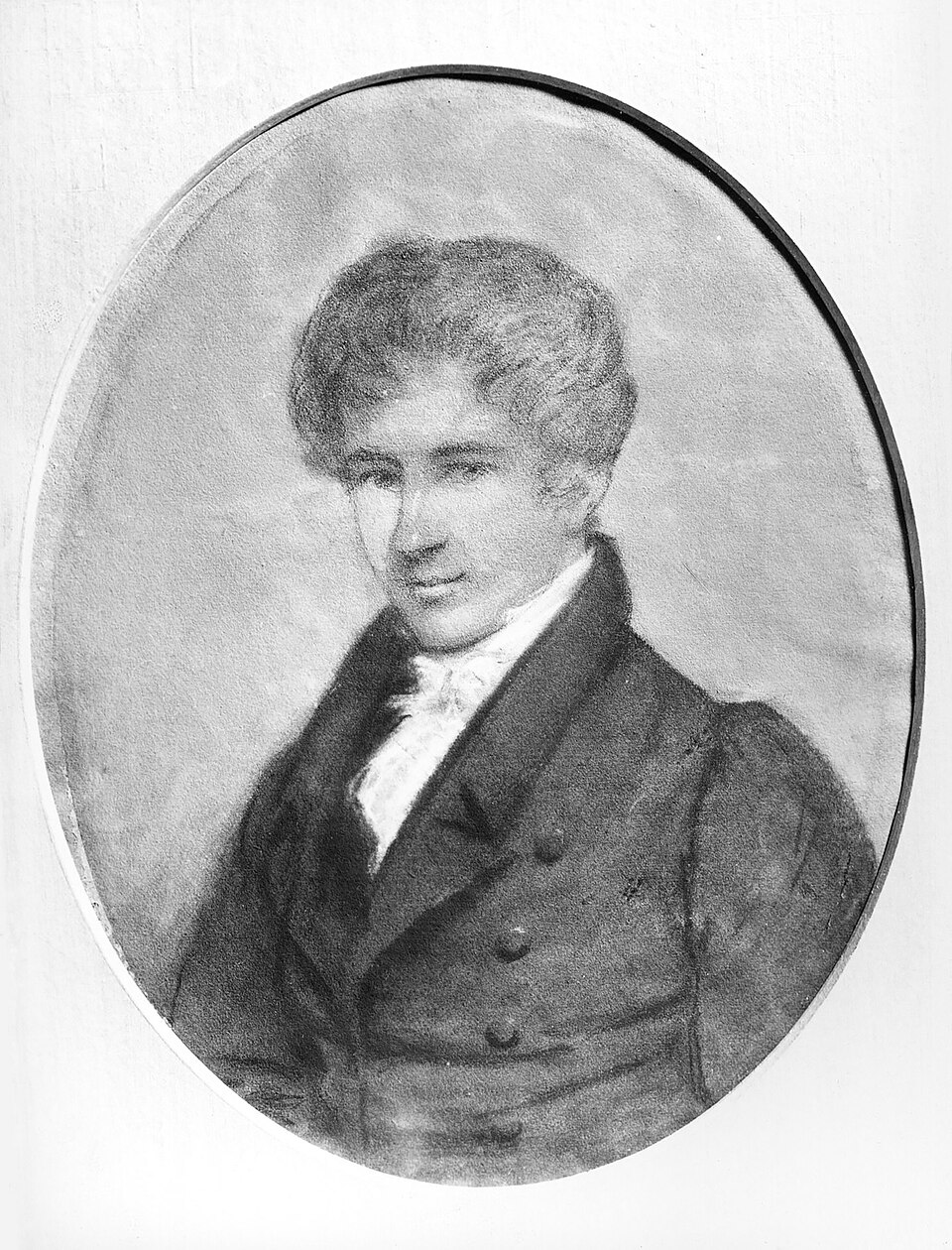
Who he was
Niels Henrik Abel
- Nascimento
- 5 August 1802, near Stavanger, Norway
- Morte
- 6 April 1829, Froland, Norway
- Origem
- Norway
- Áreas
- Algebra, analysis, elliptic functions and series
Reading guide
Biography
Discovery and proof
- The fifth-degree equation: the formula that does not exist
- The binomial series and the devil’s series
- Inverting the integral: elliptic functions
- Dividing the lemniscate with ruler and compass
- Abelian groups: when order does not matter