
Euler's Eyes
2026-10-11
Consequences in the triangle
The sum of the interior angles of any triangle is 180°. It is perhaps the best-known geometry theorem after Pythagoras'.
Who discovered
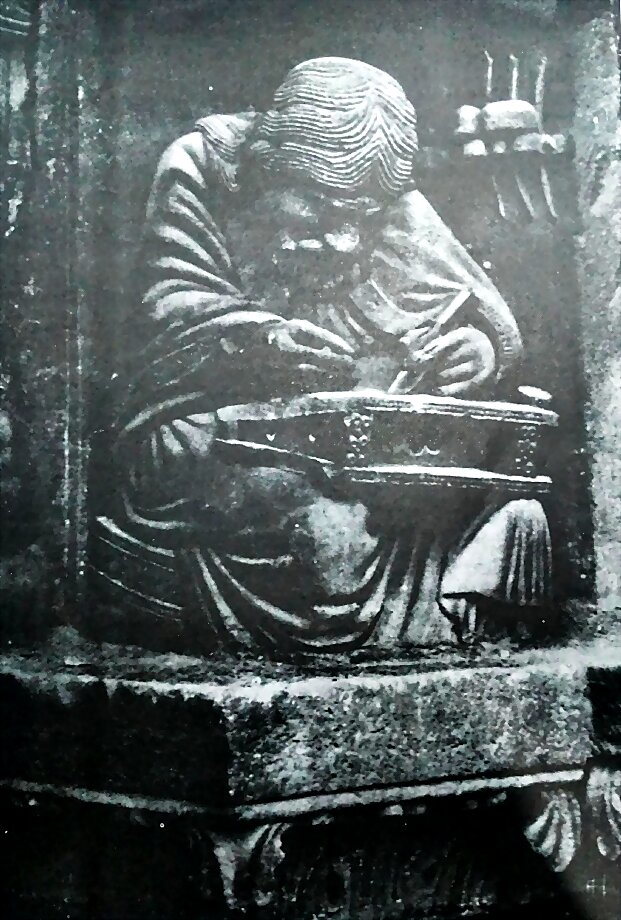
Proclus, citing Eudemus of Rhodes, attributes to the Pythagoreans (6th–5th centuries BC) the first general demonstration that the angles of a triangle add up to two right angles. The commentator Gemino adds that the ancients had proven the fact separately for equilateral triangles, isosceles and scalenes. The version that has come down to us is the proposition I.32 of the The Elements of Euclid, which also proves that the external angle is equal to the sum of the two non-adjacent internal angles.


The story
The proof uses one parallel to one of the sides — and therefore depends on the fifth postulate. This is not a detail: in non-Euclidean geometries, the sum of the angles of a triangle is different from 180°. On the surface of a sphere, for example, it is always larger.
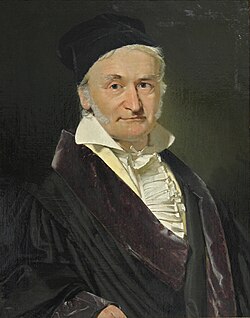
Legendre, at the end of the 18th century, proved that, without the fifth postulate, the sum never exceeds 180°, and that if a single triangle has an exact sum of 180°, they all do. It is said that Gauss, when measuring a large triangle between three mountains in Germany, checked whether the sum was 180°; Historians debate whether this was even the intention.

In everyday life
- Tear off the corners. Cut out a paper triangle, tear off the three corners and join them together: they form a shallow angle.
- Roofs. Knowing the slope of the roof (for example, 30°) and that the top of the scissors is symmetrical, the carpenter calculates the angle of the top: 120°.
- Topography. When measuring the three angles of a triangular terrain, the surveyor checks whether the sum gives 180°; the difference indicates the measurement error.
- Navigation. Pilots and navigators calculate the third angle of a route triangle from the other two.
Sources: Elements, proposition I.32 · Pythagoras (MacTutor) · Legendre (MacTutor).
Theory and constructions
TeoremaOutside angle
In every triangle, any external angle is equal to the sum of the two internal angles not adjacent to it: $e = \hat{A} + \hat{B}$.
TeoremaSum of the angles of a triangle
The sum of the angles of any triangle is equal to two right angles:
$$\hat{A} + \hat{B} + \hat{C} = 180^{\circ}.$$Demo
- Through $C$ we draw the straight line $\overleftrightarrow{CD}$ parallel to $\overleftrightarrow{AB}$. It divides the external angle $e$ (adjacent to $\hat{C}$) into $\alpha$ and $\beta$.
- $\overleftrightarrow{AB} \parallel \overleftrightarrow{CD}$ and transversal $\overleftrightarrow{AC}$: $\alpha \equiv \hat{A}$ (alternates).
- $\overleftrightarrow{AB} \parallel \overleftrightarrow{CD}$ and transversal $\overleftrightarrow{BC}$: $\beta \equiv \hat{B}$ (corresponding).
- Adding: $e = \alpha + \beta = \hat{A} + \hat{B}$ — is the exterior angle theorem.
- Since $e$ and $\hat{C}$ are supplementary, $e + \hat{C} = 180^{\circ}$, that is, $\hat{A} + \hat{B} + \hat{C} = 180^{\circ}$.
PropriedadeNotes
- Parallel-sided angles. Two angles with respectively parallel sides are congruent or supplementary.
- equilateral triangle. In equilateral triangle each angle measures $60^{\circ}$: by isosceles triangle, $\hat{A} \equiv \hat{B} \equiv \hat{C}$, and the sum is $180^{\circ}$. All equilateral triangle is equiangular.
A useful consequence, used in several exercises: if a polygonal makes a “beak” between two parallels, the angle of the beak is the sum of the angles that the segments form with the parallels.