
Euler's Eyes
2026-10-11
centroid — medians
The three medians of a triangle meet at a point: centroid, where a triangular plate is balanced on the tip of a finger.
Who discovered
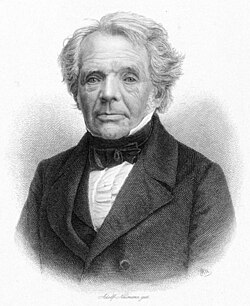
Archimedes of Syracuse (c. 287–212 BC) is the name linked to centroid. In On the balance of planes, he proved that the center of gravity of a triangle is on the straight line that connects a vertex to the midpoint of the opposite side — the median — and, therefore, at the meeting of the three medians. The word centroid is much more recent: it comes from the Greek barys, “heavy”, and was used in the 19th century by the German August Möbius, in the book The barycentric calculus (1827).
The story
Archimedes’ reasoning mixes geometry and physics. He imagines the triangle cut into very thin strips parallel to one side; The center of each range is at its midpoint, and all of these midpoints lie on the median. Then the entire triangle balances on it. Repeating the argument for another median, the equilibrium point must be the intersection of the two.
The division of each median into the ratio 2 : 1, demonstrated in this topic, is another consequence of the same equilibrium point. The phrase attributed to him — “give me a point of support and I will move the world” — talks about levers, but shows the same interest: transforming problems of balance into geometry.
In everyday life
- Balance on finger. A triangular cardboard plate of uniform thickness is balanced when resting exactly on centroid.
- Mobiles. Artists like Alexander Calder hung each piece from the center of gravity so that it remained in the desired position.
- Cars and trucks. Engineers calculate the center of gravity of vehicles; the lower it is, the lower the risk of tipping over.
- Carry a tray. Whoever carries a full triangular tray rests their hand near the center so as not to drop anything.
Sources: Archimedes (MacTutor) · Möbius (MacTutor).
Theory and constructions
TeoremaCompetition from medians
The three medians of a triangle intersect at the same point, which divides each median into two parts such that the part containing the vertex is twice the size of the other:
$$\overline{AM_1} \cap \overline{BM_2} \cap \overline{CM_3} = \lbrace G \rbrace, \qquad AG = 2 \cdot GM_1,\quad BG = 2 \cdot GM_2,\quad CG = 2 \cdot GM_3.$$Demo
- Let $X$ be the meeting point of the medians $\overline{BM_2}$ and $\overline{CM_3}$, and $D$, $E$ be the midpoints of $\overline{BX}$ and $\overline{CX}$.
- In $\triangle ABC$, $\overline{M_3M_2}$ is average base: $\overline{M_3M_2} \parallel \overline{BC}$ and $M_3M_2 = \dfrac{BC}{2}$.
- In $\triangle XBC$, $\overline{DE}$ is average base: $\overline{DE} \parallel \overline{BC}$ and $DE = \dfrac{BC}{2}$.
- Therefore $\overline{M_3M_2}$ and $\overline{DE}$ are parallel and congruent: $M_3M_2ED$ is a parallelogram, and its diagonals cut in half: $DX = XM_2$ and $EX = XM_3$.
- Then $BX = BD + DX = 2 \cdot XM_2$ and $CX = 2 \cdot XM_3$.
- Repeating with the medians $\overline{AM_1}$ and $\overline{CM_3}$, we obtain a point $Y$ with $CY = 2 \cdot YM_3$. Since $X$ and $Y$ divide $\overline{CM_3}$ in the same ratio, $X = Y = G$: the three medians pass through $G$.
Definiçãocentroid
The meeting point of the three medians is the centroid $G$ of the triangle. It is $\dfrac{2}{3}$ from each median starting from the vertex: $GM_1 = \dfrac{1}{3}AM_1$, $GM_2 = \dfrac{1}{3}BM_2$, $GM_3 = \dfrac{1}{3}CM_3$. centroid is the center of gravity of the triangle.