
Euler's Eyes
2026-10-11
Competing straights
Two different intersecting lines have exactly one point in common. It seems obvious — and that’s precisely why it took so long to be written.
Who discovered
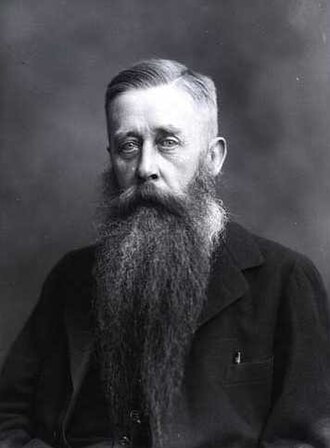
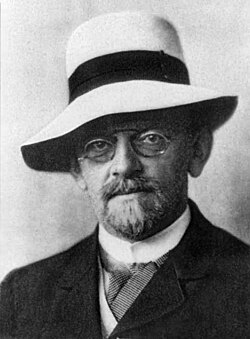
Greek geometers used the fact all the time, but Euclid did not include it among his postulates. Some older editions of The Elements added the phrase “two straight lines do not enclose a space” to cover the gap; the philologist J. L. Heiberg, who critically edited the work at the end of the 19th century, considered this excerpt to be a later addition. The modern version comes from David Hilbert’s incidence axioms (1899): if two distinct straight lines had two common points, they would contradict the postulate that two points determine a single straight line.

The story
The example shows how geometry has matured. A drawing convinces anyone that two straight lines intersect at a single point, but a drawing is not proof. Ancient and medieval commentators noted the points in which Euclid trusted the figure; in the 19th century these points were transformed into axioms or theorems.
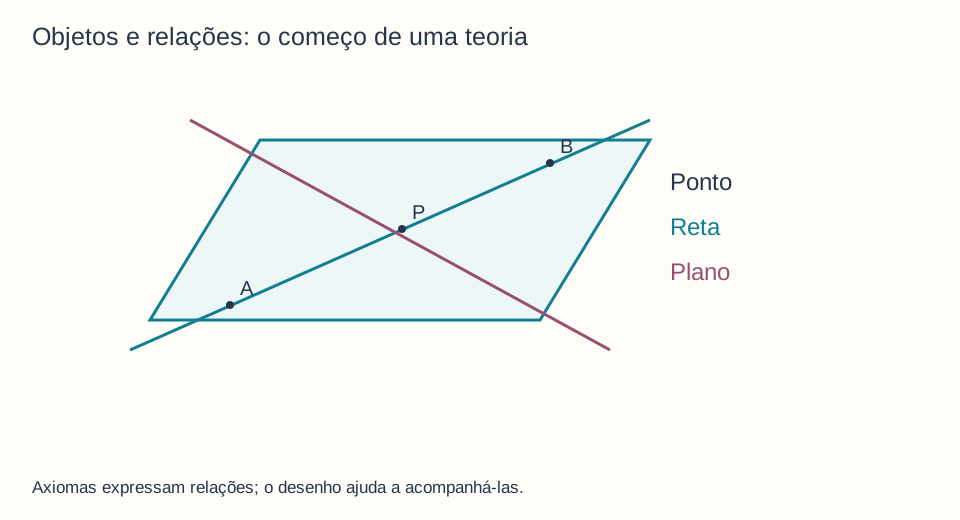
Today the demonstration fits in one line: just use the determination postulate. It’s a good first example of proof by absurdity, a method that will appear many times in this book.
In everyday life
- Intersections. Two straight streets meet at a single intersection; the address “corner of street A and street B” identifies a single place.
- Find the center of a painting. Mark the two diagonals of a rectangle with string: the only meeting point is the center, where the nail goes.
- Sight and reticle. The crosshairs of a scope or camera use two competing straight lines to mark an exact point on the target.
- Scissors. The blades rotate around the only common point, the screw.
Sources: Elements, book I (D. Joyce) · Hilbert (MacTutor).
Theory and constructions
DefiniçãoCompeting straights
Two lines are concurrent if, and only if, they have a single common point:
$$r \cap s = \lbrace P \rbrace$$Are there competing straights? The postulates allow us to construct them. Follow the demonstration and then redo the construction in the figure.
Existence of competing straights
- By the existence postulate, we take a straight line $r$, a point $P \in r$ and a point $Q \notin r$.
- $P$ and $Q$ are distinct, as one of them belongs to $r$ and the other does not.
- By the determination postulate, $P$ and $Q$ determine the straight line $s = \overleftrightarrow{PQ}$.
- The lines $r$ and $s$ are distinct: if they coincided, $Q$ would be in $r$ — but it was chosen outside of $r$.
- The distinct lines $r$ and $s$ have the point $P$ in common. If they had another common point, they would be the same straight line (determination postulate). Therefore $r \cap s = \lbrace P \rbrace$: $r$ and $s$ are competitors.
ResumoWhat to keep
| Idea | Short statement |
|---|---|
| Primitive notions | point, line and plane are not defined |
| Existence postulate | there are infinite points on a straight line, outside it and in a plane |
| Determination of the straight line | two distinct points determine a straight line |
| Determination of the plan | three non-collinear points determine a plane |
| Inclusion | line with two points in a plane is contained in it |
| Competitors | two lines with a single common point |