
Euler's Eyes
2022-11-21
Correspondence law
The law of correspondence is the modern definition for the subject of functions. In addition, it is important to define concepts of domain and image, already explained in the function introduction post, under the vision of René Descartes.

Tribute to Abel
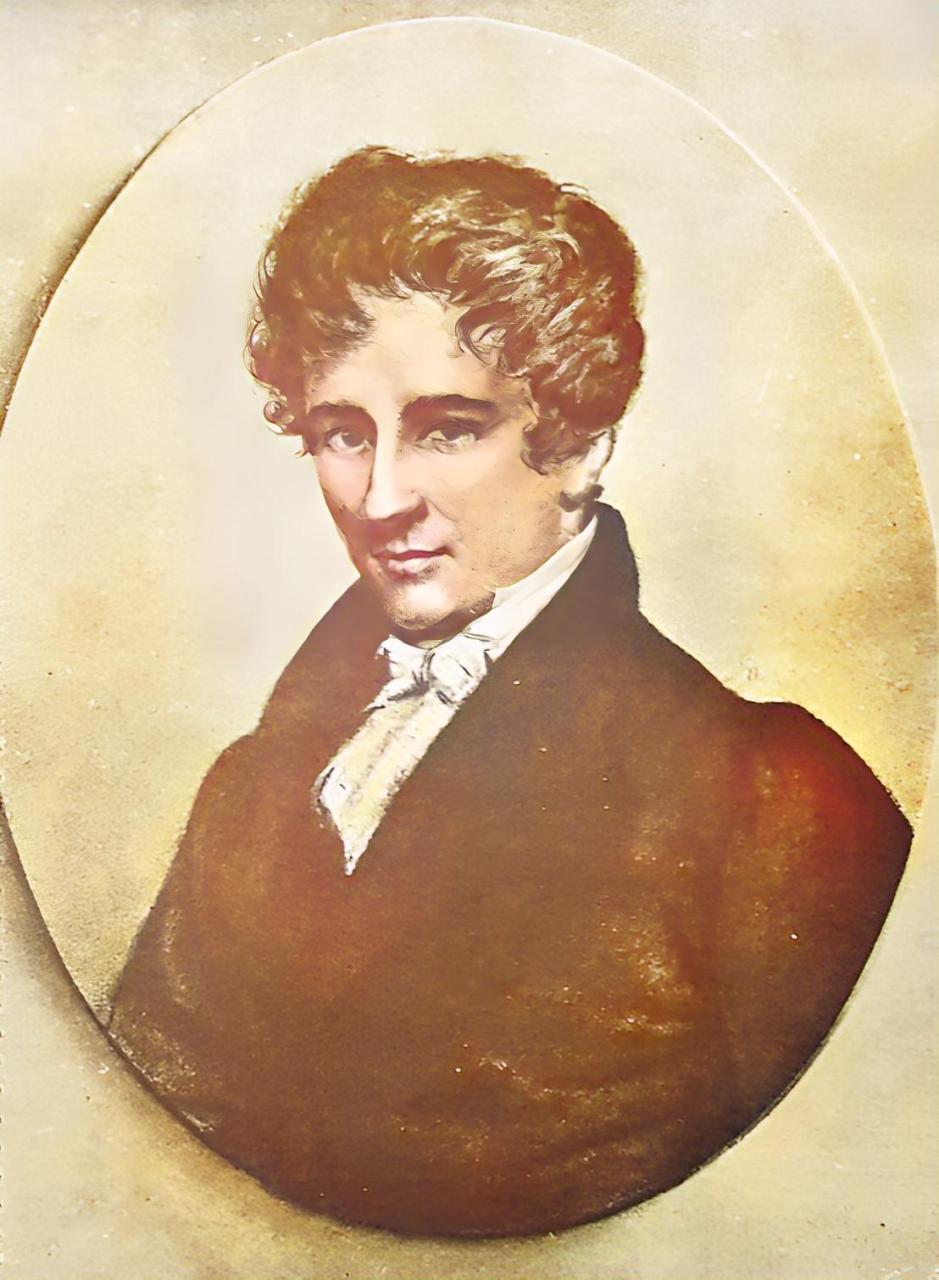
Niels Henrik Abel, from a large and poor family, was the son of the shepherd from the small village of Findo, in Norway. At the age of 17, his teacher insisted that he read the great mathematical works, including Gauss’s “Disquisitiones” (Research). At this time, Abel managed to generalize the binomial theorem that Euler had only proven for rational powers.
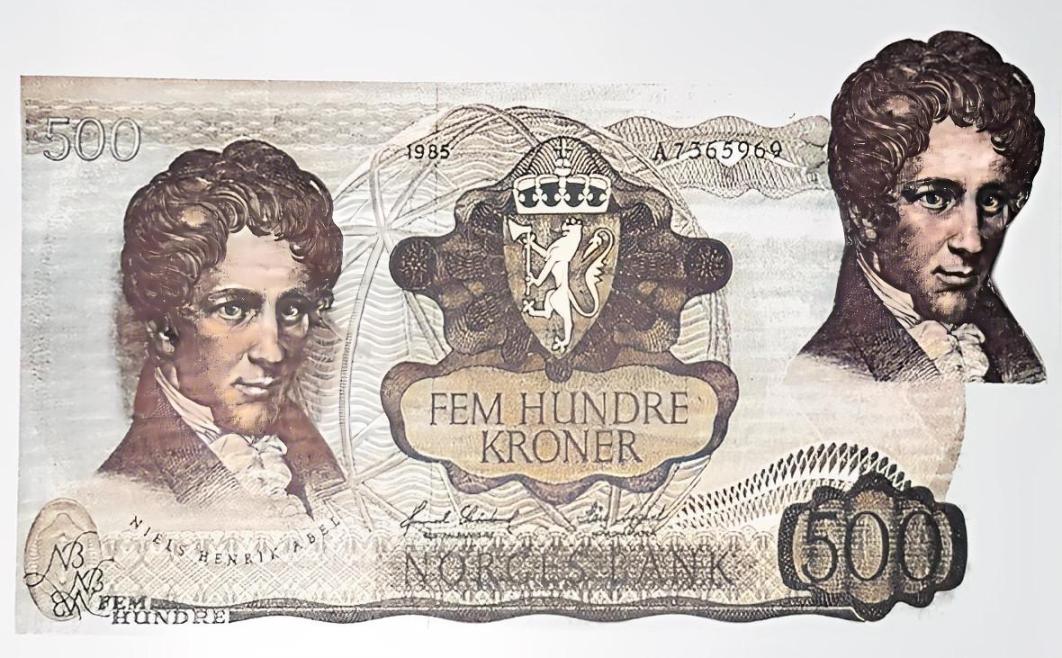
At 18 years old he lost his father and his responsibilities became greater as he to his family, but he continued researching anyway. In 1824, he published in an article proof that if the degree of an equation is greater than four, there is no general formula based on its coefficients to find its roots. This was a doubt that had worried mathematicians for a long time and has now been resolved.
| Niels Henrik Abel | Christine Kemp (Crelly) |
|---|---|
|

|
Its name is also linked to abelian, or commutative, groups and some of their results were published in the Jornal de Crelle. This subject is very complex and not suitable for a children’s book. If you are curious, there is a book on the history of mathematics with an introduction to Abel’s Groups.
In 1826, Abel visited Legendre and Cauchy in Paris, in an attempt to show his discoveries but was unsuccessful. In one of his letters to a friend he wrote:
“Every beginner finds it very difficult to get noticed here. I finished an extensive treatise on certain classes of transcendent functions but M. Cauchy didn’t deign to look at it”
Abel hoped to obtain a teaching position at some university and so This left his memories with Cauchy to be examined but he soon lost them and they were forgotten.
Due to lack of resources, he died at 26 years of tuberculosis, leaving profound and important results in Algebra and Number Theory. Two days after his death the letter finally arrived informing him that there had been was appointed professor at the University of Berlin.
At 1830, Cauchy found Abel’s manuscripts that were published in 1841 by the French Institute and which Legendre classified as:
“a monument more durable than bronze”
It contained important generalizations about elliptic functions.
Correspondence Law
The correspondence law is an open sentence, which expresses this law, given by:
$$y=f(x)$$Labeled by Euler at 1734, where this sentence is defined as:
Definition (Correspondence Law): Given a $x\in A$ we determine the $y\in B$ so that the ordered pair $(x,y)\in f$ as
$$y=f(x)$$

Correspondence Law Example
Example 1: Given the sets $A = \\{0, 1, 2, 3\\}$ and $B = \\{1, 2, 3, 4\\}$ and the open sentence $y = x+1$, it is possible to consider the function:
 $$f = \\{(0, 1), (1, 2), (2, 3), (3,4)\\}$$
from $A$ to $B,$ whose pairs $(x, y)$ verify the law $y = x + 1$.
Function
Definition (Function): We say function $f$ of $A$ in $B$, every sentence that obeys the correspondence law $y=f(x).$
There are cases of functions in which the correspondence law to obtain $y$ from $x$ changes, depending on the value of $x.$——————————————————————————————
These functions are defined by several sentences.
From Latin functus (function) comes from the past participle of the verb fungor, which is derived from fungi, which can be interpreted as:
- carrying out an activity.
- talk about what happens.
- or action of fulfilling a duty.
The act of listening and speaking represent what we call function today. In this way, René Discards used an ear as a symbol.

Leonhard Euler, in 1734, in the magazine Comment Petropol. ad Anneslabeled a function by
$$f(x)$$Function example
Example 2: Let $f: \mathbb{R} \rightarrow \mathbb{R}$ be such that
 a function defined by two sentences:
- $y=1$ when $x$ is negative;
- $y=-1$ when $x$ is positive or equal to zero.
Domain
An important concept is that of domain, which we define as:
Definition (Domain): Let $\mathcal{R}$ be a relation of $A$ in $B,$ we say domain of $\mathcal{R}$ the set $\mathcal{D}$ or $\mathcal{D}(f)$ of the correspondence law, the first elements of the ordered pairs belonging to $\mathcal{R}$:
$$f:A \longrightarrow B$$In this case, $\mathcal{D}(f)=A$

- Domain $\mathcal{D}(f)$ is the set of abscissa points on the graph.
- The set of abscissa points of points such that the vertical lines carried by them intersect the graph.
Image
Another important concept is ownership, which we define as:
Definition (Image): Let $\mathcal{R}$ be a relation of $A$ in $B,$ we say image of $\mathcal{R}$ the set $\mathcal{Im}$ or $\mathcal{Im}(f)$ of the correspondence law:
$$f:A \longrightarrow B$$where this set is constructed by the elements $y\in B$ for which there is some $x\in A$ such as $(x,y)\in f$.

- Image $\mathcal{Im}(f)$ is the set of ordinates of the points on the graph
- The set of ordinates of points such that the horizontal lines they conducted intersect the graph.
Codomain
Definition (Codomain): Let $\mathcal{R}$ be a relation of $A$ in $B,$ we say range of $\mathcal{R}$ the set $\mathcal{CD}$ or $\mathcal{CD}(f)$ of the correspondence law:
$$f:A \longrightarrow B$$In this case, $\mathcal{CD}(f)=B$

Example of sets
Example 3: Given the sets $A = \\{0, 1, 2, 3\\}$ and $B = \\{1, 2, 3, 4,5,6\\}$ and the open sentence $y = x+1$, it is possible to consider the function:
 $$f = \\{(0, 1), (1, 2), (2, 3), (3,4)\\}$$
from $A$ to $B,$ whose pairs $(x, y)$ verify the law $y = x + 1$.
- $\mathcal{D}(f) = \\{0, 1,2,3\\}=A$
- $\mathcal{Im}(f) = \\{1,2,3,4\\} \subseteq B$
- The image of $f$ is a subset of $B$
- $\mathcal{CD}(f) = \\{0,1,2,3,4,5,6\\}=B$
Existence and Uniqueness of a function
A function is well defined (exists and is unique) when the following are known:
- Domain $\mathcal{D}(f)$
- Range $\mathcal{CD}(f)$
- The law of correspondence $y = f(x)$
However, we only present the open sentence $y =f(x)$ to refer to a function $f.$. In this case, it is understood that:
-
$\mathcal{D}(f)$ is the set formed by real numbers whose images are real numbers, more specifically:
-
$x\in \mathcal{D}(f) \quad \Rightarrow \quad y=f(x)\in \mathbb{R}$
-
If $x$ belongs to the set of the function’s domain, it implies that the sentence $y=f(x)$ belongs to the set of real numbers.

EXERCISES
- Establish the domain and image of the following relationships:
- a) $\\{(1,1), (1,3), (2,4)\\}$
- b) $\\{(-2,4), (-1,1), (3,-7),(2,1)\\}$
- c) $\\{(2,1), (1,-3), (5, \sqrt{2})\\}$
- d) ${(1+\sqrt{2}, \sqrt{2}), (1-\sqrt{3},1)}$
- e) ${(3,1/2), (5/2,-1), (3/2,0)}$
$$x R y \Leftrightarrow x = y^2$$
- Let the sets $A = \\{-2,-1,0.1.2.3.4.5\\}$, $B = \\{-2,-1,,0,1,2\\}$ and $R$ be the binary relation of $A$ in $B$ defined by
It is requested:
a) enumerate the ordered pairs in R
b) enumerate the elements of the domain and image of R
c) make the Cartesian graph of R
These are the concepts of relationships. Wait for the next posts.