Euler's Eyes
2026-10-22
Fundamental relationships
All relations in this topic come from two plane geometry tools: the Pythagorean theorem and the triangle similarity. The figure below shows the three triangles we will use.
The story
In Almagest, Ptolemy already used the equivalent of $\operatorname{sen}^2 x + \cos^2 x = 1$: if he knew the chord of a bow, he obtained the additional bowstring through Pythagoras’ theorem in the triangle inscribed in the semicircle. The relations with tangent and secant appear in the works of Abu al-Wafa (10th century) and Nasir al-Din al-Tusi (13th century), whose Treatise on the quadrilateral made trigonometry a discipline independent of astronomy.
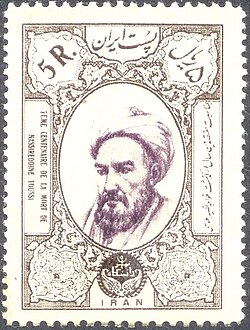
- Nasce em Tus, no Coração. O pai, jurista, o incentiva a estudar todas as ciências.
- Estuda filosofia, medicina e matemática numa das grandes cidades de saber do Irã, pouco antes da chegada dos mongóis.
- Vive nas fortalezas ismaelitas das montanhas, como Alamut, onde escreve boa parte da obra.
- Acompanha Hulagu, neto de Gengis Khan, na conquista de Bagdá.
- Dirige o grande observatório financiado por Hulagu, com biblioteca e astrônomos vindos de longe. Ali escreve o Tratado sobre o quadrilátero.
- Morre em Bagdá.
Sources: Al-Tusi (MacTutor) · Trigonometric functions (MacTutor).
In everyday life
- Screens. The size of a TV is the diagonal. On a screen 16:9 of 50 inches, $\operatorname{tg}\theta = \frac{9}{16}$, and the width and height are $50\cos\theta \approx 43{,}6$ and $50\operatorname{sen}\theta \approx 24{,}5$ inches.
- Electrical energy. In industrial installations, the active power is $P = S\cos\varphi$ and the reactive power is $Q = S\operatorname{sen}\varphi$; the fundamental relationship guarantees $S^2 = P^2 + Q^2$. The “power factor” that appears on companies’ electricity bills is $\cos\varphi$.
- Directions on the computer. A program represents a direction by the pair $(\cos\theta, \operatorname{sen}\theta)$; the relation $\cos^2\theta + \operatorname{sen}^2\theta = 1$ guarantees that this vector has length 1.
Theory
The fundamental relationship
TeoremaFundamental relationship
For every real $x$,
$$\operatorname{sen}^2 x + \cos^2 x = 1.$$View the demo
a) If $x \ne \dfrac{k\pi}{2}$, the image $P$ of $x$ is distinct from $A$, $B$, $A'$ and $B'$; then there is the triangle $OP_2P$, rectangle in $P_2$, with $|\overline{OP_2}| = |\cos x|$, $|\overline{P_2P}| = |\operatorname{sen} x|$ and hypotenuse $|\overline{OP}| = 1$. By Pythagoras’ theorem,
$$|\overline{OP_2}|^2 + |\overline{P_2P}|^2 = |\overline{OP}|^2 \quad\Longrightarrow\quad \cos^2 x + \operatorname{sen}^2 x = 1.$$b) If $x = \dfrac{k\pi}{2}$, we check directly:
| $x$ | $\operatorname{sen} x$ | $\cos x$ | $\operatorname{sen}^2 x + \cos^2 x$ |
|---|---|---|---|
| $0$ | $0$ | $1$ | $1$ |
| $\frac{\pi}{2}$ | $1$ | $0$ | $1$ |
| $\pi$ | $0$ | $-1$ | $1$ |
| $\frac{3\pi}{2}$ | $-1$ | $0$ | $1$ |
Tangent and cotangent
TeoremaTangent
For all real $x$, $x \ne \dfrac{\pi}{2} + k\pi$,
$$\operatorname{tg} x = \frac{\operatorname{sen} x}{\cos x}.$$View the demo
a) If $x \ne k\pi$, the image of $x$ is distinct from $A$, $B$, $A'$ and $B'$, and the triangles $OAT$ and $OP_2P$ are similar (both rectangles, with the angle in $O$ common or opposite at the vertex). Logo
$$\frac{|\overline{AT}|}{|\overline{OA}|} = \frac{|\overline{P_2P}|}{|\overline{OP_2}|} \quad\Longrightarrow\quad |\operatorname{tg} x| = \frac{|\operatorname{sen} x|}{|\cos x|}. \qquad (1)$$According to the sign table, the sign of $\operatorname{tg} x$ is equal to that of the quotient $\dfrac{\operatorname{sen} x}{\cos x}$ (2):
| quadrant | $\operatorname{tg} x$ sign | $\frac{\operatorname{sen} x}{\cos x}$ sign |
|---|---|---|
| 1º | $+$ | $+$ |
| 2º | $-$ | $-$ |
| 3º | $+$ | $+$ |
| 4º | $-$ | $-$ |
From (1) and (2) the thesis follows.
b) If $x = k\pi$, we have $\operatorname{tg} x = 0 = \dfrac{\operatorname{sen} x}{\cos x}$.
TeoremaCotangent
For all real $x$, $x \ne k\pi$,
$$\operatorname{cotg} x = \frac{\cos x}{\operatorname{sen} x}.$$View the demo
a) If $x \ne \dfrac{\pi}{2} + k\pi$, the image of $x$ is distinct from $A$, $B$, $A'$ and $B'$, and the triangles $OBD$ and $OP_1P$ are similar:
$$\frac{|\overline{BD}|}{|\overline{OB}|} = \frac{|\overline{P_1P}|}{|\overline{OP_1}|} \quad\Longrightarrow\quad |\operatorname{cotg} x| = \frac{|\cos x|}{|\operatorname{sen} x|}. \qquad (1)$$The sign of $\operatorname{cotg} x$ is the same as that of $\dfrac{\cos x}{\operatorname{sen} x}$ in all quadrants ($+$, $-$, $+$, $-$) (2). From (1) and (2) the thesis follows.
b) If $x = \dfrac{\pi}{2} + k\pi$, we have $\operatorname{cotg} x = 0 = \dfrac{\cos x}{\operatorname{sen} x}$.
Secant and cosecant
TeoremaDrying
For all real $x$, $x \ne \dfrac{\pi}{2} + k\pi$,
$$\sec x = \frac{1}{\cos x}.$$View the demo
a) If $x \ne k\pi$, the triangles $OPS$ (rectangle in $P$) and $OP_2P$ (rectangle in $P_2$) are similar, as they have the angle in $O$ in common:
$$\frac{|\overline{OS}|}{|\overline{OP}|} = \frac{|\overline{OP}|}{|\overline{OP_2}|} \quad\Longrightarrow\quad |\sec x| = \frac{1}{|\cos x|}. \qquad (1)$$The sign of $\sec x$ is the same as that of $\cos x$ ($+$ in the 1st and 4th quadrants, $-$ in the 2nd and 3rd) (2). From (1) and (2) the thesis follows.
b) If $x = k\pi$, we have $\sec x = 1 = \cos x$ ($k$ even) or $\sec x = -1 = \cos x$ ($k$ odd), and in both cases $\sec x = \dfrac{1}{\cos x}$.
TeoremaCosecant
For all real $x$, $x \ne k\pi$,
$$\operatorname{cossec} x = \frac{1}{\operatorname{sen} x}.$$View the demo
a) If $x \ne \dfrac{\pi}{2} + k\pi$, the triangles $OPC$ and $OP_1P$ are similar:
$$\frac{|\overline{OC}|}{|\overline{OP}|} = \frac{|\overline{OP}|}{|\overline{OP_1}|} \quad\Longrightarrow\quad |\operatorname{cossec} x| = \frac{1}{|\operatorname{sen} x|}. \qquad (1)$$The sign of $\operatorname{cossec} x$ is the same as that of $\operatorname{sen} x$ ($+$ in the 1st and 2nd quadrants, $-$ in the 3rd and 4th) (2). From (1) and (2) the thesis follows.
b) If $x = \dfrac{\pi}{2} + k\pi$: $\operatorname{cossec} x = 1 = \dfrac{1}{\operatorname{sen} x}$ ($k$ even) or $\operatorname{cossec} x = -1 = \dfrac{1}{\operatorname{sen} x}$ ($k$ odd).
Consequences
CorolárioDerived relations
For every real $x$, $x \ne \dfrac{k\pi}{2}$, the following are valid:
$$\operatorname{cotg} x = \frac{1}{\operatorname{tg} x} \qquad \operatorname{tg}^2 x + 1 = \sec^2 x \qquad 1 + \operatorname{cotg}^2 x = \operatorname{cossec}^2 x$$$$\cos^2 x = \frac{1}{1 + \operatorname{tg}^2 x} \qquad \operatorname{sen}^2 x = \frac{\operatorname{tg}^2 x}{1 + \operatorname{tg}^2 x}$$View the demo
ExemploAll from one
Knowing that $\operatorname{sen} x = \dfrac{4}{5}$ and $x$ are in the 2nd quadrant, the cosine is negative:
$$\cos x = -\sqrt{1 - \tfrac{16}{25}} = -\tfrac{3}{5}, \quad \operatorname{tg} x = -\tfrac{4}{3}, \quad \operatorname{cotg} x = -\tfrac{3}{4}, \quad \sec x = -\tfrac{5}{3}, \quad \operatorname{cossec} x = \tfrac{5}{4}.$$The fundamental relation gives the module; the quadrant gives the signal. This is exercise 73 from chapter list.
To go further: the directing cosines
The fundamental relationship has a version in space. A vector $\vec u = (x, y, z)$ of length $|\vec u| = \sqrt{x^2 + y^2 + z^2}$ forms angles $\alpha$, $\beta$ and $\gamma$ with the axes $x$, $y$ and $z$. Projecting $\vec u$ onto each axis, as we project the cycle point onto the cosine and sine axes,
$$\cos\alpha = \frac{x}{|\vec u|}, \qquad \cos\beta = \frac{y}{|\vec u|}, \qquad \cos\gamma = \frac{z}{|\vec u|},$$and adding the squares:
$$\cos^2\alpha + \cos^2\beta + \cos^2\gamma = \frac{x^2 + y^2 + z^2}{x^2 + y^2 + z^2} = 1.$$In the plane ($z = 0$, $\gamma = 90^\circ$) the angles with the axes are complementary, $\beta = 90^\circ - \alpha$, and equality becomes $\cos^2\alpha + \operatorname{sen}^2\alpha = 1$. For example, for $\vec u = (1, 2, 2)$, with $|\vec u| = 3$: $\frac{1}{9} + \frac{4}{9} + \frac{4}{9} = 1$.