
Euler's Eyes
2022-07-19
Mathematics for Children
Page 34 of 178
Introduction to Rational Numbers
The notion of dividing is present in our daily lives, for example, dividing a pizza is a simple process that reminds us of the notion of fraction.

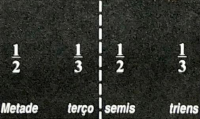
The first word we see in fraction is half or half.
$$\dfrac{1}{2}$$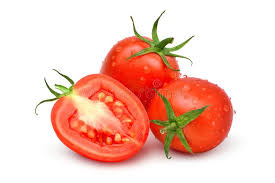
History of the representation of rational numbers
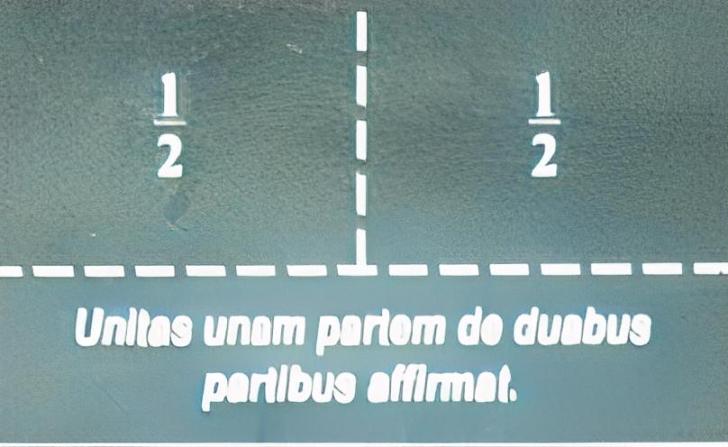
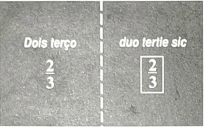
The great mathematicians took a long time to understand the representation of rational numbers, including the notation for fractions. Next, we show the types of writing for fractions.
| Year | Author |
|
Reference |
|---|---|---|---|
| 1202 | Leonardo of Pisa |
|
Free Abbaci |
| 1355 | Nicolau Eresme |
|
Algorithmus Proportionum |
| 1514 | Jacob Köbel |
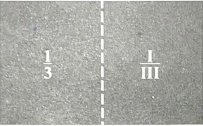
|
Ain New Gordnet Rechen Biechlin |
| 1525 | Christoff Rudoff |
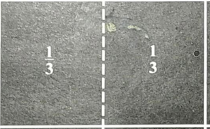
|
Coss |
| 1534 | John Schöner (Gerdanus) |
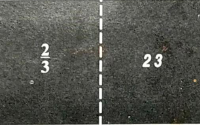
|
Algorthmus Demonstratus |
| 1562 | Juan Perez de Moya |
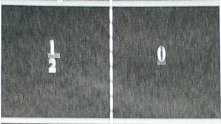
|
Practical Arithmetic |
| 1675 | Florence ciacchi |
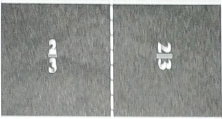
|
Regole Generali d’Abbaco |
| 1690 | Tobias Beutel |
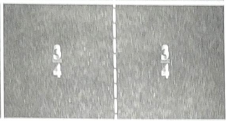
|
Geometriche Gallerie |
| 1784 | Manuel Valdes |
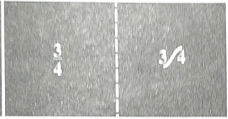
|
Mexico Gazette |
| 1845 | Augustus De Morgan |
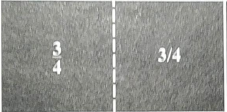
|
The Calculus of Functions |
| 1556 | Nicolo Tartaglia |
|
General Treaty of Numeri |
Final notation for fractions
The fraction notation used today was first presented by Leonardo of Pisa in (1202), who was also known as Leonardo Fibonacci. He was also known for discovering the Fibonacci sequence. Below we present the work, in which he mentioned fraction notation.
| Main Author’s Work |
|---|

|
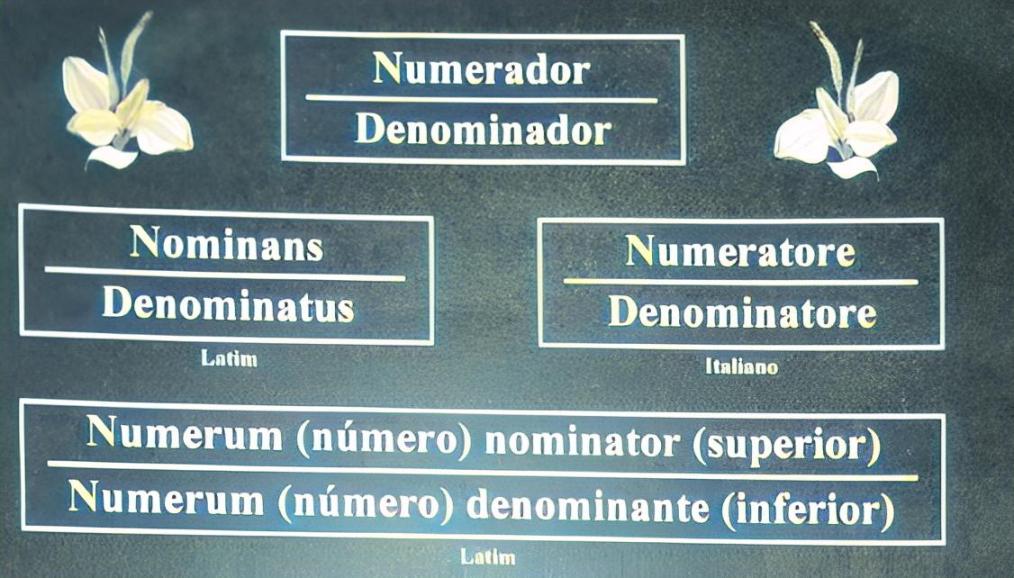
The notation used by Fibonacci is given by:
This is a summary for an introduction to rational numbers.