
Euler's Eyes
2026-10-12
Metric relationships
The square of the hypotenuse is the sum of the squares of the legs. But this is just one of several relationships that height reveals within the right triangle.
Who discovered
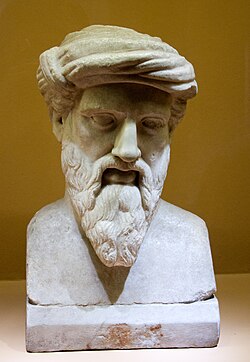
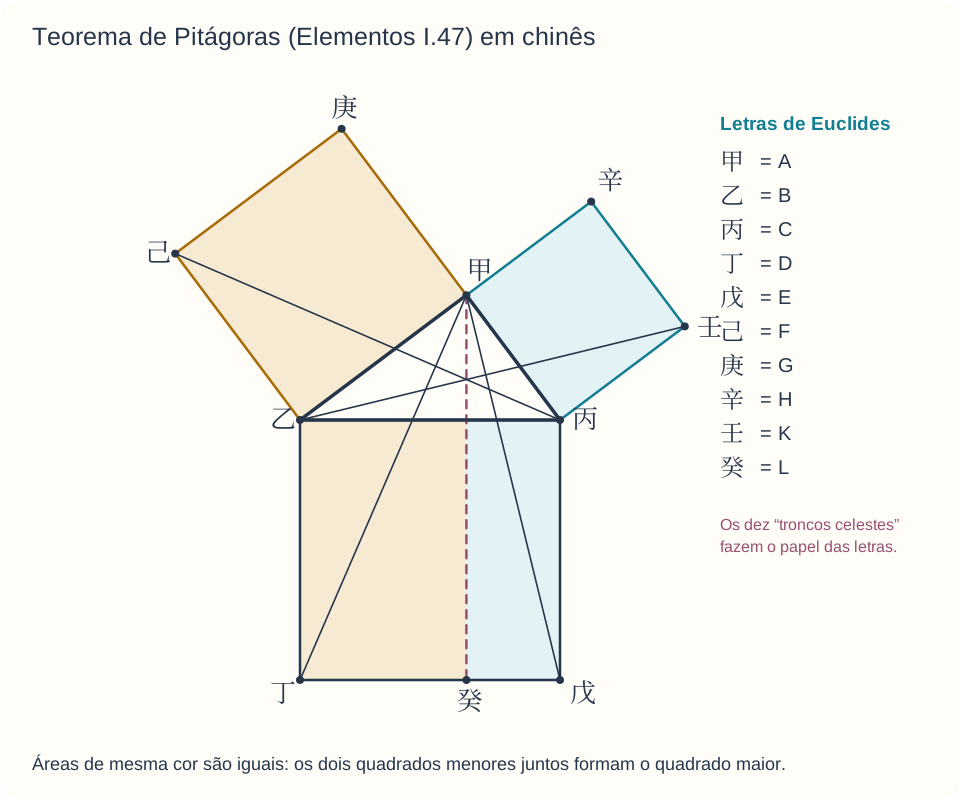
The relationship between the sides of the right triangle is much older than Pythagoras of Samos (6th century BC). Tablets from Babylon from around 1800 BC use terms like 3, 4, 5 and calculate the diagonal of the square; the Sulba Sutras of India (c. 800–500 B.C.) enunciate the rule for building altars; and the Chinese text Zhoubi Suanjing provides visual proof. Greek tradition associated the theorem with Pythagoras, but there is no documentary proof that he demonstrated it. The oldest demonstration that has come down to us is in the The Elements of Euclid (c. 300 BC): the proposition I.47 proves the theorem by areas, and the I.48 proves the reciprocal. The relations with height — each leg and height as proportional averages — are in the proposition VI.8 and its corollary.

The story
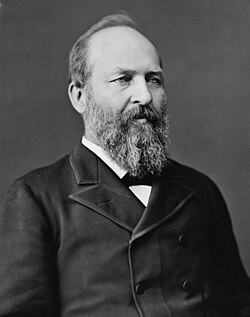
The proof of this chapter is that of Euclid in book VI: the height divides the triangle into two triangles similar to the original, and the proportions give the metric relationships; Adding two of them together gives the Pythagorean theorem. Few statements in mathematics have been proven in so many ways: the American professor Elisha Loomis brought together 370 different demonstrations in 1940’s edition of the book The Pythagorean Proposition — including one by the future president of the United States James Garfield, by 1876, made with a trapeze.
The theorem is also a door to irrational numbers: the diagonal of a square with side 1 measures $\sqrt{2}$, and the discovery that this number is not a fraction shook the Pythagorean school.
In everyday life
- Work square. To check whether two walls form a right angle, the bricklayer marks 3 m on one, 4 m on the other and checks whether the diagonal measures 5 m — the reciprocal of the theorem.
- Screens. The “inch” of a TV is the diagonal: a screen of 16 by 9 units has diagonal $\sqrt{16^2 + 9^2} \approx 18{,}4$ units.
- Maps and GPS. The straight-line distance between two points on a gridded map is calculated by the Pythagorean theorem.
- Stairs and ramps. The length of a ramp depends on the height to be overcome and the horizontal distance available.
Sources: Pythagoras (MacTutor) · Elements, proposition I.47 · Elements, proposition VI.8 · Pythagoras in Babylon (MacTutor).
Theory and constructions
Elements
DefiniçãoElements of the right triangle
In a triangle $ABC$, rectangle in $A$, we drive $\overline{AD}$ perpendicular to $\overline{BC}$, with $D$ in $\overline{BC}$:
| Segment | Measure | Name |
|---|---|---|
| $\overline{BC}$ | $a$ | hypotenuse |
| $\overline{AC}$ | $b$ | cateto |
| $\overline{AB}$ | $c$ | cateto |
| $\overline{BD}$ | $m$ | projection of the leg $c$ onto the hypotenuse |
| $\overline{CD}$ | $n$ | projection of the leg $b$ onto the hypotenuse |
| $\overline{AD}$ | $h$ | height relative to the hypotenuse |
To simplify, we confuse a segment with its measure: we say that “$a$ is the hypotenuse” instead of “$a$ is the measure of the hypotenuse”.
Similarities
TeoremaHeight divides the triangle into similar triangles
The height $\overline{AD}$ relative to the hypotenuse determines two right-angled triangles, $DBA$ and $DAC$, similar to the triangle $ABC$:
$$\triangle ABC \sim \triangle DBA \sim \triangle DAC.$$View the demo
Let $\hat 1 = B\hat AD$ and $\hat 2 = D\hat AC$ be. Since $\hat B$ and $\hat 1$ are both complements of $\hat 2$ (in the triangles $ABD$ and $ABC$), we have $\hat B \equiv \hat 1$; likewise, $\hat C \equiv \hat 2$. Each pair of triangles has one right angle and one congruent angle; in the AA case, the three triangles are similar.
Metric relationships
Of the three similarities, writing the ratios between homologous sides:
$$\triangle ABC \sim \triangle DBA:\quad \frac{a}{c} = \frac{b}{h} = \frac{c}{m} \;\Rightarrow\; c^2 = a\,m \quad\text{e}\quad b\,c = a\,h$$$$\triangle ABC \sim \triangle DAC:\quad \frac{a}{b} = \frac{b}{n} = \frac{c}{h} \;\Rightarrow\; b^2 = a\,n \quad\text{e}\quad b\,h = c\,n$$$$\triangle DBA \sim \triangle DAC:\quad \frac{c}{b} = \frac{h}{n} = \frac{m}{h} \;\Rightarrow\; h^2 = m\,n \quad\text{e}\quad c\,h = b\,m$$ResumoMetric relations in the right triangle
| (1) $b^2 = a \cdot n$ | (4) $b \cdot c = a \cdot h$ |
| (2) $c^2 = a \cdot m$ | (5) $b \cdot h = c \cdot n$ |
| (3) $h^2 = m \cdot n$ | (6) $c \cdot h = b \cdot m$ |
Proportional mean. The segment $x$ is proportional mean (or geometric mean) between $r$ and $s$ when $\dfrac{r}{x} = \dfrac{x}{s}$, that is, $x^2 = r \cdot s$ or $x = \sqrt{r \cdot s}$. With this language:
PropriedadeRelationship statements
In any right triangle:
- each leg is a proportional average between its projection on the hypotenuse and the hypotenuse: $b^2 = a\,n$ and $c^2 = a\,m$;
- the height relative to the hypotenuse is the proportional average between the segments that it determines on the hypotenuse: $h^2 = m\,n$;
- the product of the legs is equal to the product of the hypotenuse and the height relative to it: $b\,c = a\,h$;
- the product of one side by the height relative to the hypotenuse is equal to the product of the other side by the projection of the first on the hypotenuse: $b\,h = c\,n$ and $c\,h = b\,m$.
Pythagoras Theorem
TeoremaPythagoras Theorem
The sum of the squares of the legs is equal to the square of the hypotenuse:
$$b^2 + c^2 = a^2.$$View the demo
Adding member to member the relations (1) and (2):
$$b^2 + c^2 = a\,n + a\,m = a\,(m + n) = a \cdot a = a^2.$$AtençãoObservations
1ª) The first three relationships, $b^2 = a\,n$, $c^2 = a\,m$ and $h^2 = m\,n$, are the most important: all the others follow from them. For example, multiplying (1) by (2) and using (3): $b^2c^2 = a^2 m n = a^2 h^2$, therefore $b\,c = a\,h$.
2ª) In a right-angled triangle, the sum of the inverses of the squares of the legs is equal to the inverse square of the height relative to the hypotenuse:
$$\frac{1}{b^2} + \frac{1}{c^2} = \frac{1}{h^2}.$$Indeed, $\dfrac{1}{b^2} + \dfrac{1}{c^2} = \dfrac{c^2 + b^2}{b^2c^2} = \dfrac{a^2}{a^2h^2} = \dfrac{1}{h^2}$.
Converse of the Pythagorean theorem
TeoremaConverse of the Pythagorean theorem
If in a triangle the square on one side is equal to the sum of the squares on the other two, then the triangle is rectangular:
$$\triangle ABC \text{ com } a^2 = b^2 + c^2 \;\Longrightarrow\; \triangle ABC \text{ é retângulo em } A.$$View the demo
We construct the triangle $MNP$, a rectangle in $M$, with legs $\overline{MN} \equiv \overline{AB}$ and $\overline{MP} \equiv \overline{AC}$. By the Pythagorean theorem in $MNP$, $m^2 = n^2 + p^2 = b^2 + c^2 = a^2$, therefore $m = a$. In the case of LLL, $\triangle ABC \equiv \triangle MNP$ and, as $MNP$ is a rectangle in $M$, the triangle $ABC$ is a rectangle in $A$.
PropriedadeMedian relative to the hypotenuse
The median relative to the hypotenuse measures half of the hypotenuse. Therefore, the midpoint of the hypotenuse is the center of the circle circumscribed to the right triangle — the hypotenuse is a diameter (it is the angle inscribed in the semicircle of the chapter 11).