
Euler's Eyes
2026-10-11
The life of Pierre de Fermat
Timeline
- c. 1607Born at Beaumont-de-Lomagne, in the south of France. The exact year is disputed.
- 1626Graduates in law from the University of Orléans.
- 1629–1631In Bordeaux, studies the work of Viète and reconstructs lost books of Greek geometry.
- 1631Becomes a councillor in the Parlement of Toulouse. Gains the right to use “de” in his name.
- 1636Begins corresponding with Marin Mersenne. He already has his analytic geometry and his method of maxima and minima.
- 1637Around this year, writes in the margin of Diophantus’s Arithmetica the note of the “last theorem”.
- 1640Announces the little theorem and the conjecture about the numbers $2^{2^n}+1$.
- 1652Nearly dies of plague. He is even reported dead.
- 1654Exchanges letters with Blaise Pascal and, with him, founds probability theory.
- 1662Derives the law of refraction from the principle of least time.
- 1665Dies on 12 January in Castres.
- 1670His son Samuel publishes Diophantus’s Arithmetica with his father’s margin notes.
- He is born into a family of leather merchants. The exact year is still debated.
- He graduates in law from the University of Orléans.
- He studies the work of Viète and reconstructs lost books of Greek geometry. He already has his method of maxima and minima.
- A councillor in the Parlement. In his spare time he writes to Mersenne and Pascal and notes the “last theorem” in the margin of Diophantus.
- He dies on 12 January, while serving at the court in Castres.
- c. 1607 · Beaumont-de-Lomagne
- 1626 · Orléans
- 1629–1631 · Bordeaux
- 1631–1665 · Toulouse
- 1665 · Castres
Fermat’s life
A lawyer who read Greek
Fermat was born at Beaumont-de-Lomagne, a small town near Toulouse. His father, Dominique, was a wealthy leather merchant and a consul of the town. The son received an excellent education, learned Latin, Greek, Italian and Spanish, and wrote verse in several of these languages.
He studied law at Orléans and spent some years in Bordeaux, where he met admirers of the mathematician François Viète, the creator of algebra with letters. There Fermat began to do mathematics seriously. One of his first works was to reconstruct, from quotations, a lost book by the Greek geometer Apollonius.
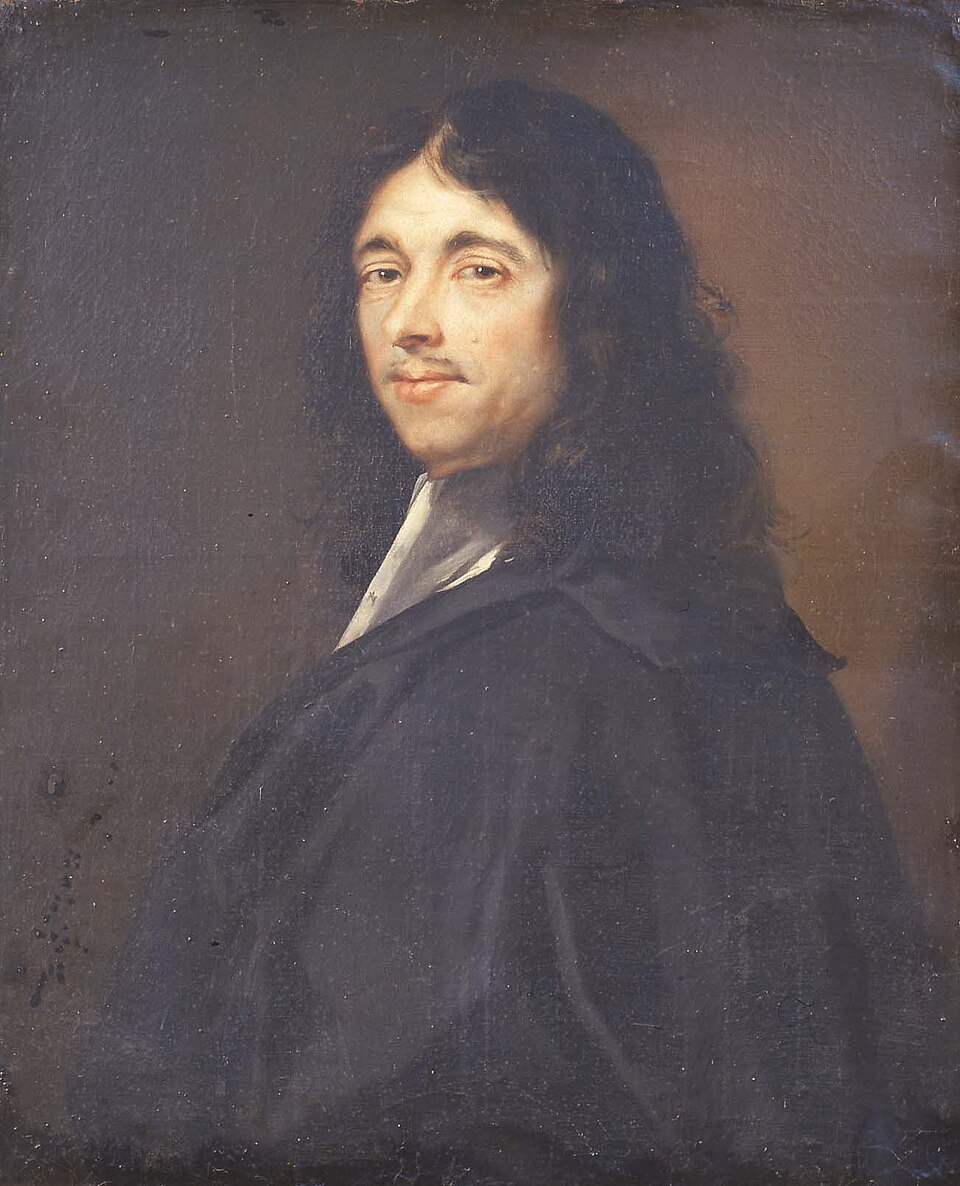
A judge in Toulouse
In 1631 Fermat bought the office of councillor in the Parlement of Toulouse. Despite its name, the Parlement did not make laws: it was a court, one of the most important in France. With the office he joined the legal nobility and gained the right to use “de”: he became Pierre de Fermat.
That same year he married Louise de Long, a cousin of his mother. They had five children. Fermat had a long and quiet career, judging civil and criminal cases. His colleagues found him learned but somewhat absent-minded, which may be explained by what he did in his spare time.
Mathematics by letter
Fermat never left the south of France to meet other mathematicians. His link to the world was Father Marin Mersenne in Paris, who acted as a 17th-century social network: he received letters from scientists all over Europe, copied them and passed them on.
Fermat’s style was peculiar. He would announce a result, sometimes challenge others to prove it, and rarely show his own proof. This irritated many people, especially René Descartes, with whom Fermat quarrelled twice: about the method of tangents and about the refraction of light. Both times history showed Fermat was right.
The plague and a premature announcement
In 1652 an epidemic of plague struck Toulouse and Fermat fell gravely ill. A friend even wrote to other scholars announcing his death. Shortly afterwards he sent a correction: “I informed you earlier of the death of Fermat. He is alive, and we no longer fear for his health.”
In the years that followed Fermat lived one of his most productive periods. In 1654 an exchange of letters with Blaise Pascal founded probability theory. In 1660 the two tried to meet, but both were ill. Pascal wrote that he considered Fermat “the greatest geometer in all of Europe”.
The notebook in the margins
Fermat had the habit of writing ideas in the margins of the books he read. His favourite book was the Arithmetica of Diophantus, a Greek mathematician of the 3rd century, in a Greek and Latin edition of 1621. There he wrote dozens of observations about whole numbers, almost always without proof.
Fermat died in Castres on 12 January 1665, during a work trip. Five years later his son Samuel published a new edition of Diophantus with his father’s notes. Among them was a short sentence about powers that would become famous as Fermat’s last theorem. In 1679 Samuel also published the Varia opera mathematica, gathering his father’s other works.
Fermat was never a professional mathematician, and the historian Eric Temple Bell called him “the prince of amateurs”. Yet almost all 17th-century mathematics passes through him.
Sources: Fermat biography, MacTutor · Abel Prize material on Fermat and Wiles.
All Fermat topics · Fermat and analytic geometry: a curve in an equation →