
Euler's Eyes
2026-10-11
Relative positions of straight line and circle
A straight line can cut a circle at two points, touch it at just one or pass far. The line that only touches is the tangent.
Who discovered
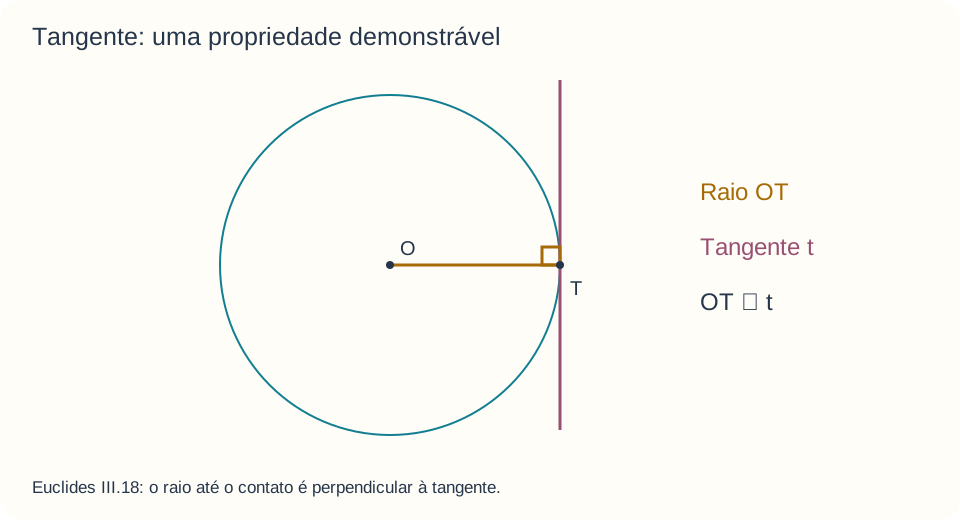
The tangent properties are in book III of The Elements by Euclid (c. 300 BC). The proposition III.16 shows that the straight line perpendicular to the radius, at its extremity, touches the circle at a single point, and the III.18 proves the opposite: the tangent is perpendicular to the radius at the point of contact. The word tangent comes from the Latin tangere, “to touch”.

The story
Proposition III.16 generated one of the longest controversies in geometry. Euclid states that the “angle” between the circle and the tangent is smaller than any angle formed by straight lines. This contingency angle would be greater than zero and smaller than any angle — something strange. In the 16th century, Jacques Peletier and Cristovão Clávio argued for years whether he was really an angle; the issue was only well resolved centuries later.

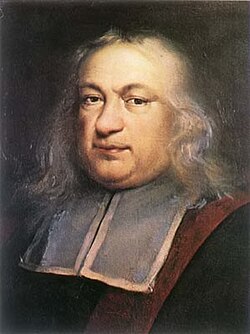
The tangent was also the starting point of differential calculus. In the 17th century, Fermat, Descartes, Newton and Leibniz were looking for a method to draw the tangent to any curve — and the derivative was born as an answer.

In everyday life
- Wheel on the ground. A wheel touches the street at a single point; the street is tangent to the wheel.
- Sparks from the grinder. Sparks come out at a tangent to the rotating stone — the same goes for mud coming out of a tire.
- Sling and hammer throw. The object, when released, follows the tangent to the circular path.
- Road curves. Engineers connect straight and curved sections tangentially, so that the steering wheel does not need a “jolt”.
Sources: Elements, proposition III.16 · Elements, proposition III.18 · Clávio (MacTutor).
Theory and constructions
DefiniçãoSecant, tangent and exterior
- A straight line is secant to a circle if it intersects it at two distinct points.
- It is tangent if it intersects at a single point (the point of tangency); the other points on the line are external.
- It is exterior if it does not intercept it.
PropriedadeDrying properties
a) If a secant cuts the circle at $A$ and $B$ and $M$ is the midpoint of the chord $\overline{AB}$ ($M \neq O$), then $\overline{OM} \perp \overline{AB}$ (case LLL in triangles $OAM$ and $OBM$).
b) Conversely, the perpendicular to the chord drawn through the center passes through the midpoint of the chord (catheto-hypotenuse case).
Consequence: perpendicular bisector of a string passes through the center.
TeoremaTangent property
a) Every straight line perpendicular to a radius at its end (on the circle) is tangent to the circle.
b) Every tangent is perpendicular to the radius at the point of tangency.
View the demos
a) Let $t \perp \overline{OT}$ be in $T$ and $E$ be another point of $t$. The segment $\overline{OE}$ is oblique and $\overline{OT}$ is perpendicular to $t$, therefore $OE > OT = r$: $E$ is external. So $t$ has a single point in common with the circle: it is tangent.
b) If $t$ were not perpendicular to $\overline{OT}$, let $M$ be the foot of the perpendicular to $t$ by $O$ ($M \neq T$). Taking $X$ on the ray opposite $\overrightarrow{MT}$ with $MX = MT$, the triangles $OMX$ and $OMT$ would be congruent (LAL), and $OX = OT = r$: $X$ would be on the circumference, and $t$ would cut it at two points — absurd.
ResumoStraight and circumference
With $d$ being the distance from the center to the straight line:
| $d < r$ | $d = r$ | $d > r$ |
|---|---|---|
| secant (2 points) | tangent (1 point) | exterior (no points) |