
Euler's Eyes
2026-10-14
The life of Sophie Germain
Timeline
- 1776Born on 1 April in Paris, the daughter of a wealthy silk merchant.
- 1789At 13, during the Revolution, she reads the story of Archimedes’ death and decides to study mathematics.
- 1794The École Polytechnique is founded and does not admit women. Sophie obtains the lecture notes and sends Lagrange a paper under the name Monsieur Le Blanc.
- 1801Gauss publishes the Disquisitiones Arithmeticae.
- 1804She begins writing to Gauss, again as Monsieur Le Blanc.
- 1806French troops occupy Braunschweig. Sophie asks a general who is a friend of the family to protect Gauss, who thus discovers who she is.
- 1809The Academy of Sciences announces a prize for the mathematical theory of vibrating plates.
- 1816On her third attempt, she wins the prize. She is the first woman to receive a prize from the Academy.
- 1823Legendre makes public her theorem on Fermat’s Last Theorem.
- 1829She learns she has breast cancer.
- 1831Dies on 27 June in Paris, aged 55.
- She grows up in the house of her father, a rich silk merchant. At 13, during the Revolution, she decides to study mathematics.
- The school does not admit women. She obtains the lecture notes and sends a paper to Lagrange as Monsieur Le Blanc.
- She writes to Gauss about number theory. In 1806, with the city occupied, she asks a French general to protect Gauss, who thus learns who she is.
- At the third attempt she wins the Academy’s prize on vibrating plates, the first woman to receive a prize from the Academy.
- She dies on 27 June, aged 55. It is said that her death certificate recorded her as a rentière, a person of private means, and not as a mathematician.
- 1776–1794 · Rue Saint-Denis
- 1794 · École Polytechnique
- 1804–1806 · Brunswick
- 1816 · Institut de France
- 1831 · Père-Lachaise cemetery
A girl shut up at home
Marie-Sophie Germain was born in Paris in 1776, in a house on the rue Saint-Denis. Her father, Ambroise-François Germain, was a rich and cultivated silk merchant who in 1789 would be elected a deputy to the Estates-General, the assembly that set off the French Revolution. The family house had a good library, and it was there that the girl spent the most turbulent years in the history of France.
In 1789, when the Bastille fell, Sophie was 13. The streets of Paris were dangerous, and she stayed at home, reading. In a history of mathematics by Jean-Étienne Montucla she found the story of Archimedes’ death: during the sack of Syracuse in 212 BC, the old sage was so absorbed in a geometry problem drawn in the sand that he did not answer a Roman soldier, who killed him. Sophie concluded that if someone could concentrate so hard on a problem as to forget his own death, the subject must be the most fascinating in the world.
The frozen ink
Her parents thought the idea unsuitable for a young lady and tried to stop her. Her first biographer, Guglielmo Libri, who knew her, says that at night they removed the light, the fire and even the clothes from her room so that she could not study. Sophie waited for the family to fall asleep, wrapped herself in blankets and studied by the light of hidden candles. One winter morning they found her asleep at her desk, with the ink frozen in the inkwell and her slate covered with calculations. Her parents gave up.
On her own she learned Latin and Greek to read Newton and Euler in the original, and differential calculus from the books of Étienne Bézout.
Monsieur Le Blanc
In 1794 the École Polytechnique was founded in Paris, with the best teachers in France, Lagrange among them. Women could not enrol. But the school had a new practice: it handed out lecture notes to anyone who asked. Sophie got hold of the notes for Lagrange’s course on analysis, studied them and, at the end of the course, did what the students did: she wrote a paper with her observations and sent it to the professor.
She signed it with the name of a former student who had left Paris, Antoine-Auguste Le Blanc. Lagrange found the paper so good that he wanted to meet the author. He found an 18-year-old young woman. Instead of being scandalised, he went to visit her, praised her and became her mentor. The news spread, and Sophie began to be received by the scientists of Paris.
The letters to Gauss
In 1801 the German Carl Friedrich Gauss published the Disquisitiones Arithmeticae, the book that founded modern number theory. Sophie studied it in depth and in 1804 wrote to its author, again as Monsieur Le Blanc, with new proofs on topics from the book. Gauss replied enthusiastically, and the letters continued for three years. She would later explain the choice of pseudonym: she was afraid of the ridicule attached, at the time, to the title of “learned woman”.
In 1806 Napoleon’s armies invaded Prussia and occupied Braunschweig, Gauss’s city. Sophie remembered Archimedes. She asked a friend of the family, General Joseph-Marie Pernety, to ensure the mathematician’s safety. Pernety sent an officer, who told Gauss he was there at the request of a “Mademoiselle Germain”. Gauss had no idea who she was. In her next letter, Sophie told him the truth.
But how can I describe to you my admiration and astonishment at seeing my esteemed correspondent, Monsieur Le Blanc, metamorphosed into this illustrious person […]. When a person of the sex which, according to our customs and prejudices, must encounter infinitely more obstacles and difficulties than men in familiarising herself with these thorny researches, nevertheless succeeds in overcoming these obstacles and penetrating their most hidden parts, then without doubt she must have the noblest courage, quite extraordinary talents and superior genius.
— Carl Friedrich Gauss, letter to Sophie Germain (30 April 1807)
In 1808 Gauss turned from number theory to astronomy, and the correspondence thinned out. The two never met.
The prize for plates
In 1808 the German physicist Ernst Chladni showed in Paris, before Napoleon, the figures that sand makes on vibrating plates. The emperor was so impressed that he funded a prize from the Academy of Sciences for whoever could explain the phenomenon with a mathematical theory. The prize was announced in 1809.
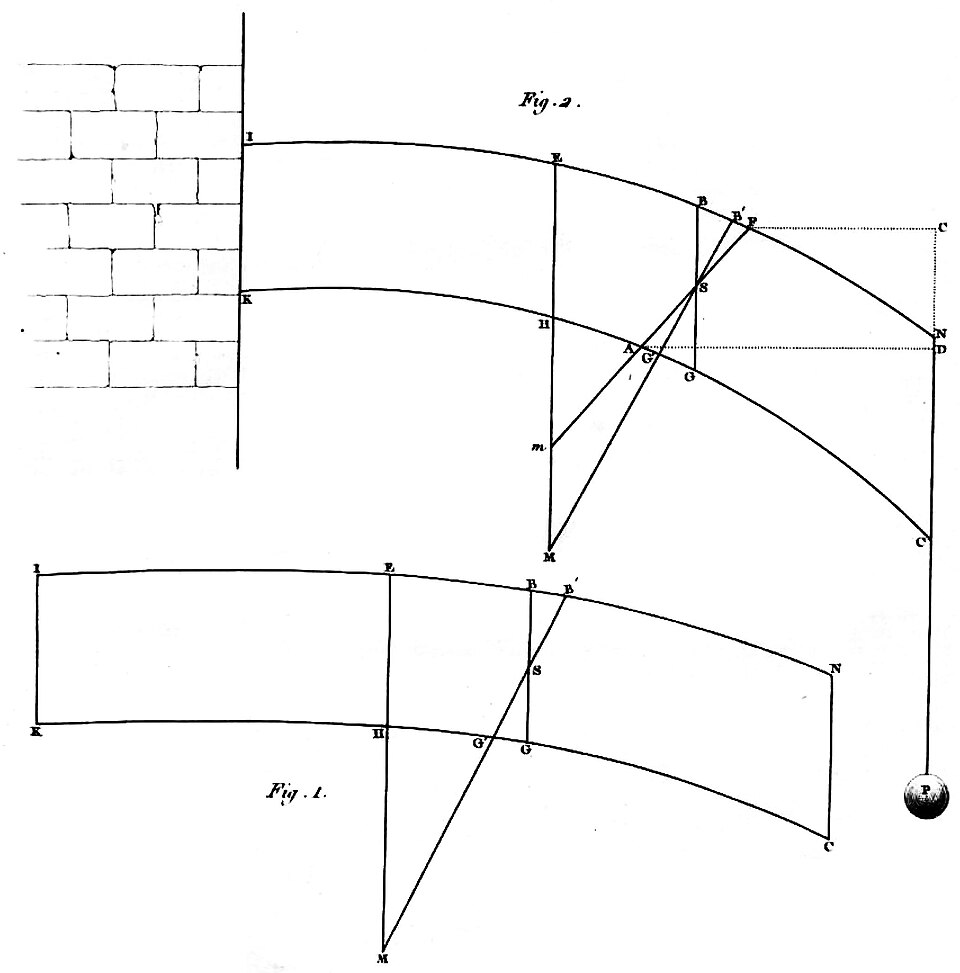
Almost nobody tried, because Lagrange had said that the methods of the day were not enough. Sophie tried three times. In 1811 she was the only entrant, and the paper was rejected for errors in the calculations. In 1813 she received an honourable mention. In 1816 she won: she was the first woman to receive a prize from the Academy. She did not attend the ceremony.
The prize did not open doors for her. Siméon-Denis Poisson, who sat on the jury, published his own theory and began to treat her coldly. Only later, thanks to Joseph Fourier, secretary of the Academy, was she able to attend its sessions, the first woman to do so who was not the wife of a member.
Fermat
Through all these years, her passion remained number theory. In an 1819 letter to Gauss she described a plan to attack Fermat’s Last Theorem, the most famous problem in mathematics. The full plan did not work, but one part of it gave the most important result on the problem in more than a century. Legendre made it public in 1823, in a footnote giving her the credit. It is Sophie Germain’s theorem.
The last years
In 1829 Sophie learned that she had breast cancer. She kept working, in mathematics and in philosophy, almost to the end. She died in Paris on 27 June 1831, aged 55, and is buried in the Père-Lachaise cemetery. It is said that on her death certificate the occupation recorded was rentière, a person of private means, and not mathematician.
Gauss had persuaded the University of Göttingen to award her an honorary doctorate. She died before she could receive it.
Sources: biography of Sophie Germain, MacTutor · Dora Musielak, Prime Mystery: The Life and Mathematics of Sophie Germain (2015) · Louis L. Bucciarelli and Nancy Dworsky, Sophie Germain: An Essay in the History of the Theory of Elasticity (1980).
All Sophie Germain topics · The letters of Monsieur Le Blanc: the arithmetic of remainders →