
Euler's Eyes
2022-09-15
Classification in mathematics
Classification is a very important topic, used since the Greeks with Archimedes. In biology, for example, classification is done by groupings, which organize living beings into categories such as kingdom, phylum, class, order, family, genus and species. In mathematics, this first contact with classification is the grouping of numbers into sets.
Next, let’s talk about classification in terms of groups and categories.
Groups
In this section we will talk about groups in terms of classification and not group theory, which is an abstract theory and will be covered in pure mathematics or history of mathematics. This theory is not for children yet.
Start of cluster
One of the first to use classification into groups was Archimedes, who separated living beings into characteristics shared between them, such as:
- Do you have hair or not?
- Does it have an arm or not?
- among others

Use in biology
With this, biologists were able to develop the groupings of living beings.
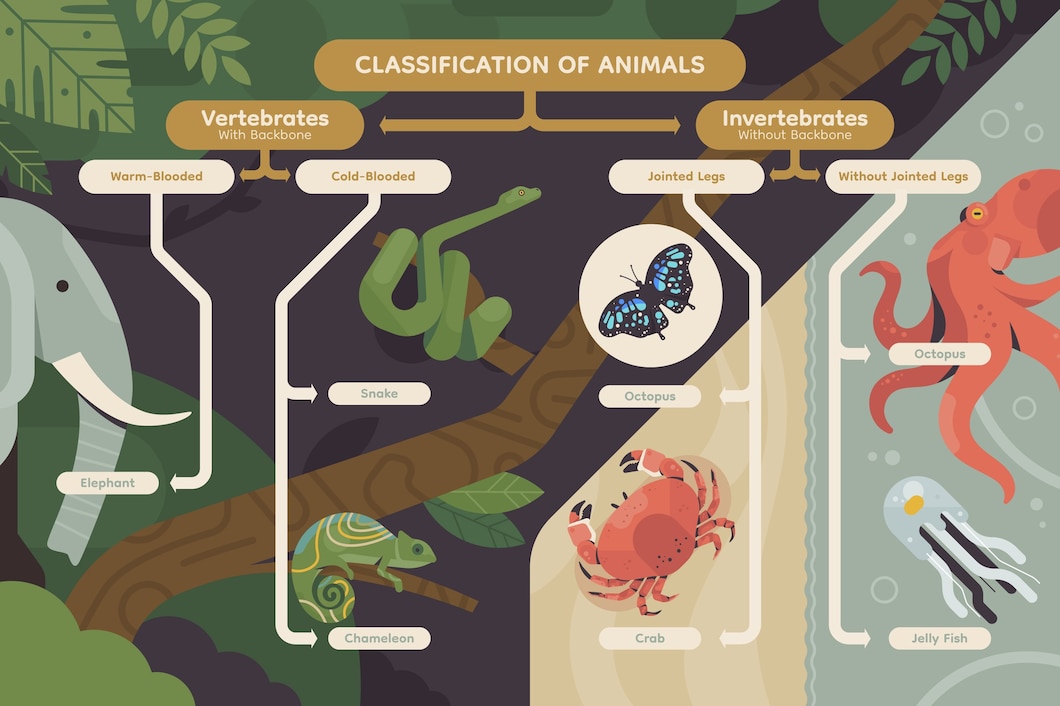
Classification regarding grouping is very old and in mathematics it is no different. In this book for children, we separate the topics studied into groups of numbers that have the same characteristic.
Numeric sets
The sequences of numerical groups studied are called sets. Among these sets we study the set of números naturais ($\mathbb{N}$) and we are in the set of números inteiros ($\mathbb{Z}$). Later on, we will study the numbers:
Números racionais($\mathbb{Q}$)Números irracionais($\mathbb{I} = \mathbb{R} - \mathbb{Q}$)Números reais($\mathbb{R}$)Números complexos($\mathbb{C}$).

Applications in everyday life
In short, classification into groups is widely used in everyday life. For example, the football world cup, one of the biggest sporting events.

Categories
The concept of category is widely used, especially in statistics, which is a group of mathematics. The category is classified as a variable that takes on a limited (fixed) number of possible values.
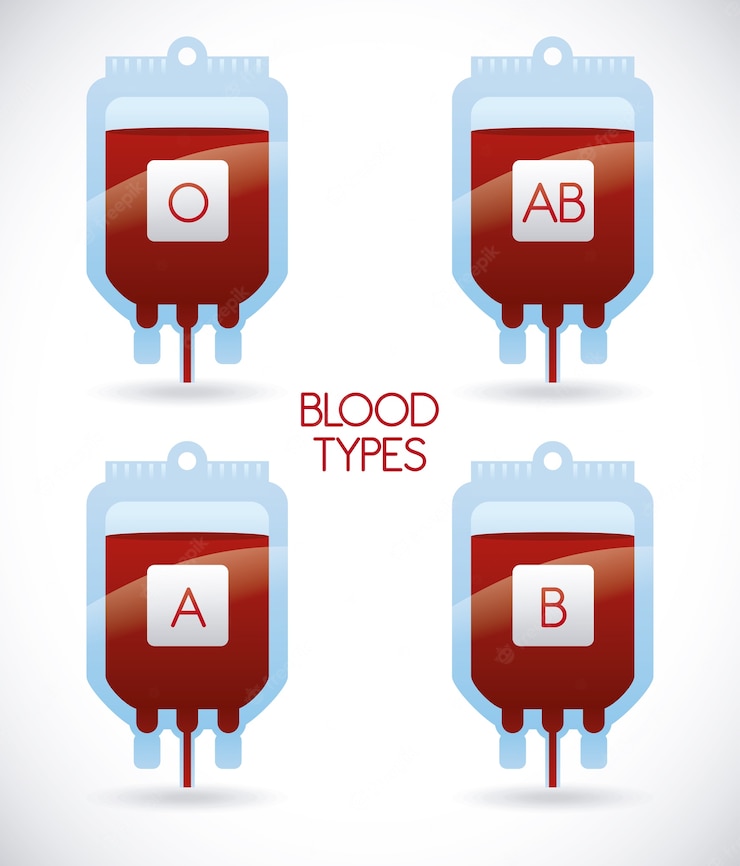
This type of concept is applied to sets of natural numbers ($\mathbb{N}$). For example, we can mention, among groups of human beings, blood type. Now we cite some examples:
- Blood type category:
- A
- B
- AB
- O
- Sex category:
- Masculine
- Feminine

- Education level category:
- Fundamental
- Average
- Higher
| Fundamental | Average | Higher |
|---|---|---|

|

|

|
- Libraries category:
- mathematics
- biology
- Portuguese
- etc.

These concepts presented are fundamental for the development of graphs for integers, which will be the topic of the following post.