
Euler's Eyes
2022-10-14
Bhaskara
One of the biggest traumas for school children in modern times is the second-degree equation, where they make them memorize formulas. This memorize make students hate math. Notice what it is like to teach in a modern school.
The equation of 2° degree is given by:
$$ax^2 + bx + c = 0$$in which
$$\Delta = b^2 - 4ac$$From this, we obtain that the roots of Bhãskara’s equation:
$$x = \frac{-b\pm \sqrt{\Delta}}{2a}$$
Bhãskara’s work
The work of Bhãskara(around 1070 AD), which cites the writings of Śridhara (around 1030 AD), is what went down in history as the author of solving the equations of 2° degree. The first to work on this topic was Al-Khowarizm, in approximately 1000 AD, who is cited by Śridhara.
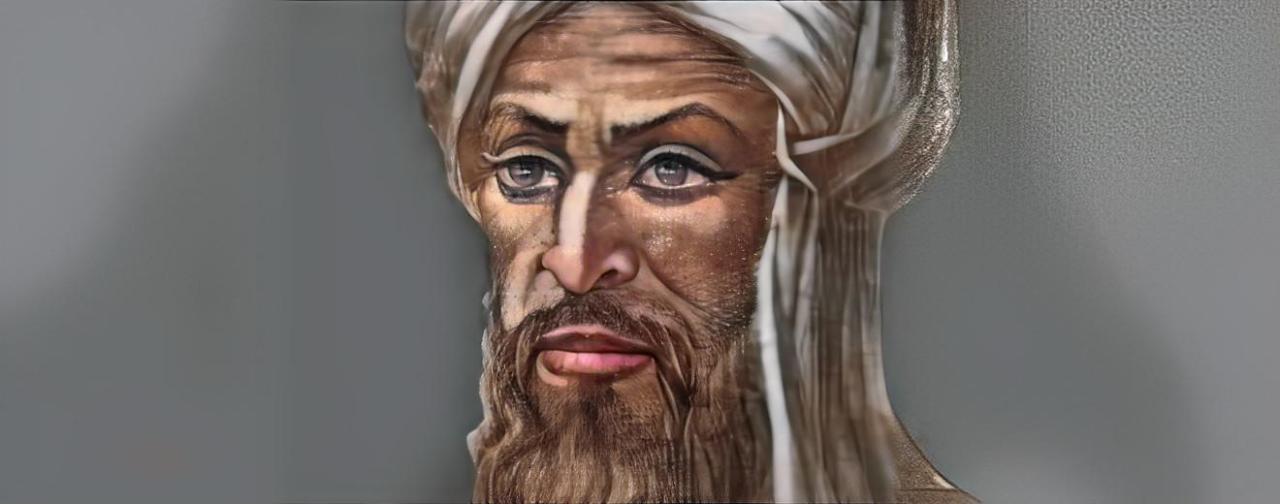
His work is known as Lilânvati Vija-Ganita, which can be translated as beautiful mathematics.
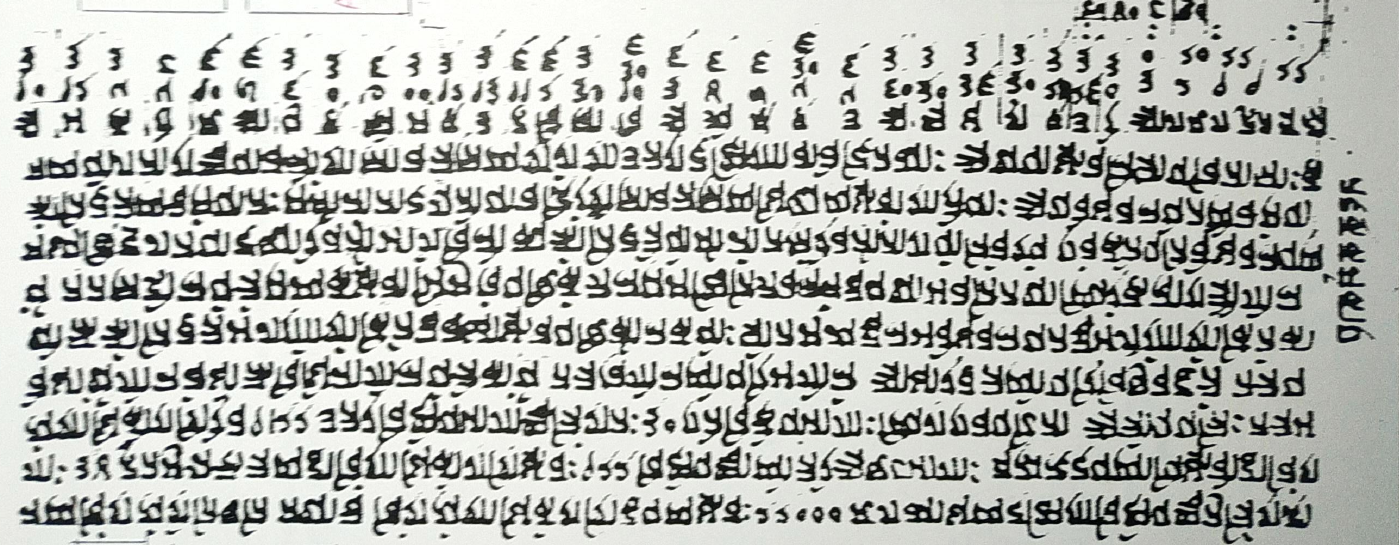
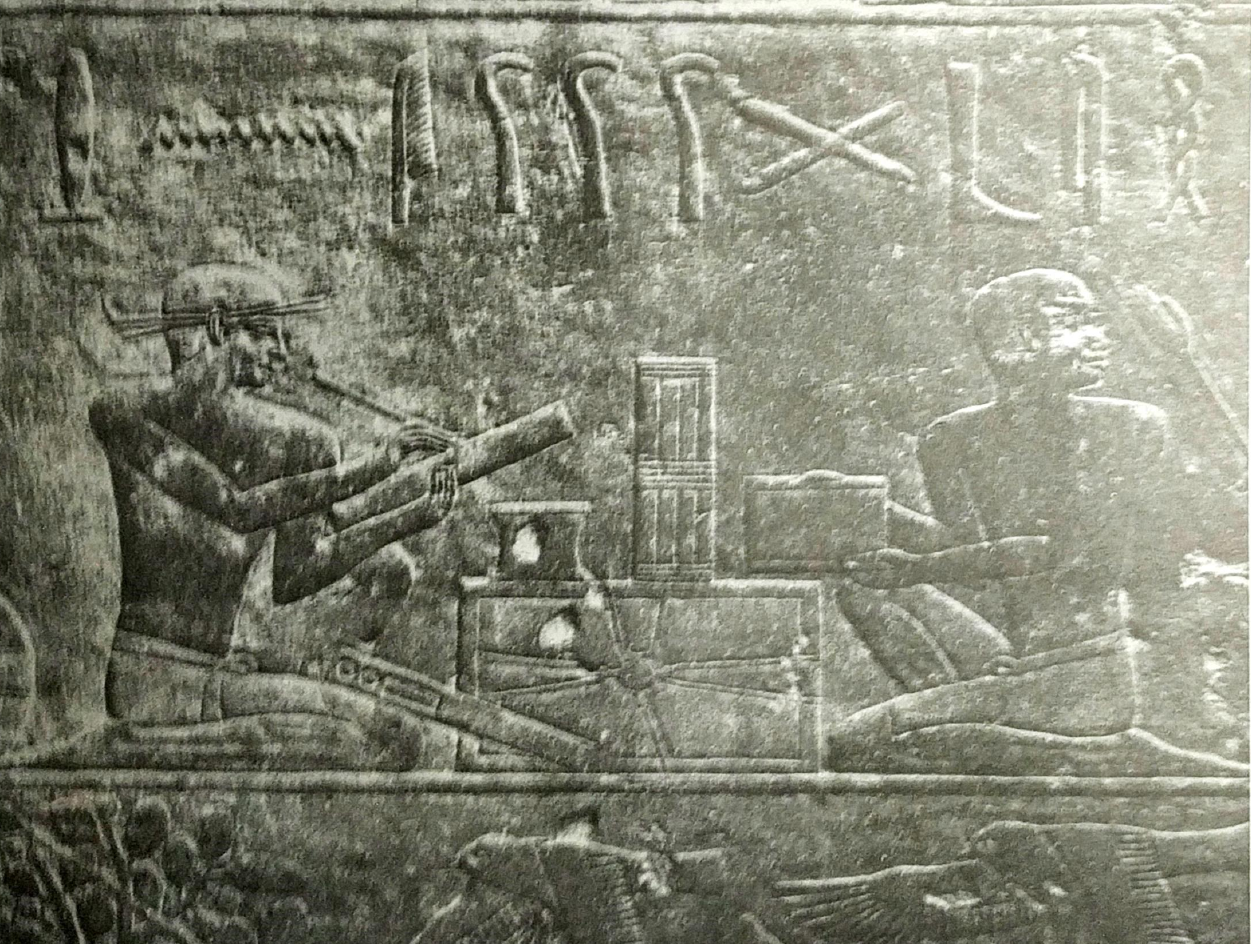
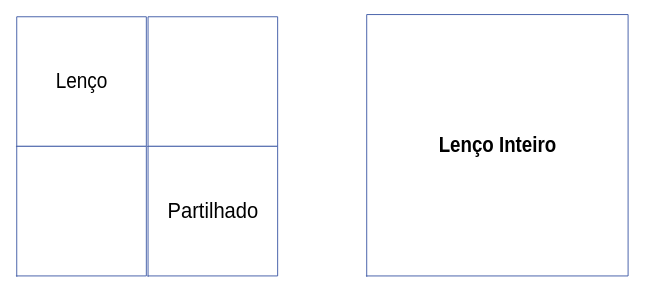
Bhãskara called the equation 2° degree as a square problem, which involved solving inventories (sharing of inherited assets).
Al-Jabr Wa’l Muquabalah
From Arabic, we can translate Al-Jabr Wa’l as gathering things (bones) and Muqabalah as weighing, comparing (balances). More precisely, Al-Khowarizm’s Mohamed Musa in approximately 1000 A.D. Baghdad Iraq.
…a certain amount of vessels of water for a certain amount of vessels of water plus 10 times this certain amount of vessels of water equals 39 vessels of water.
How much is this certain amount of water vessels worth?…
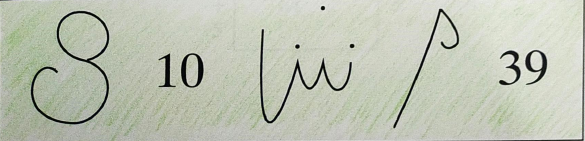
Example 1
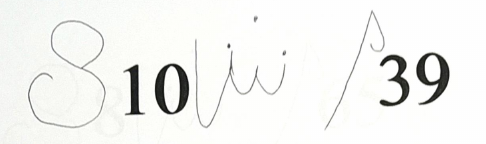
In current terms we have:

From Bhâskara’s scheme we note that the 3 squares with the unknown x represent 39. The smaller square represents an amount of 25. From this, we obtain that
$$39+25=64$$From the concepts presented in the radiciação post, we have:
$$\text{radix} ~ 64 = \sqrt{64} = 8$$We know that the side of the square has length 8. Logo
Example 2
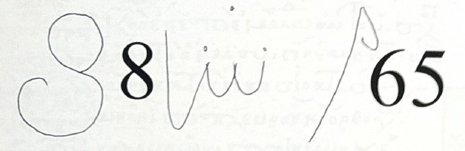
In current terms we have:
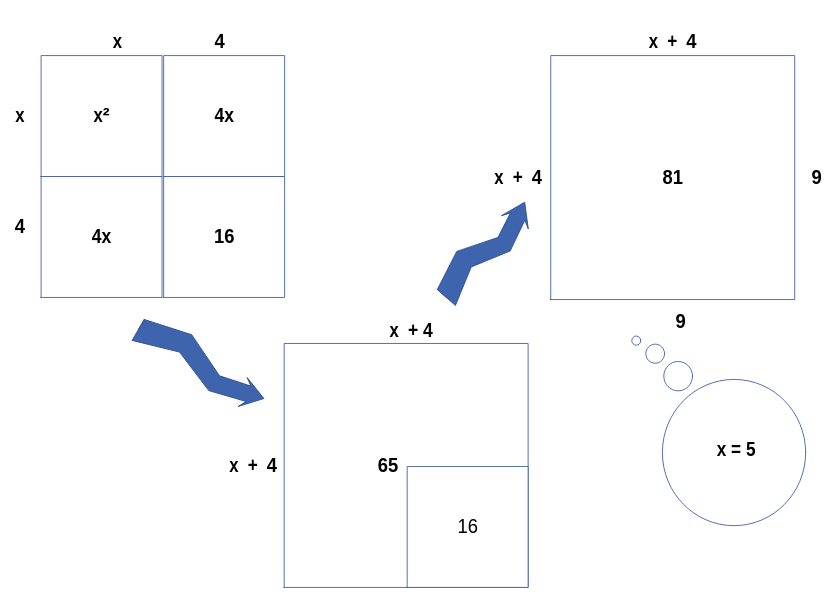
From Bhâskara’s scheme we note that the 3 squares with the unknown x represent 65. The smaller square represents an amount of 16. From this, we obtain that
$$65+16=81$$Of the concepts presented in the geometry section, we have:
$$\text{radix} ~ 81 = \sqrt{81} = 9$$We know that the side of the square has length 9. Logo
Historical fragments
Bhâskara’s writings.
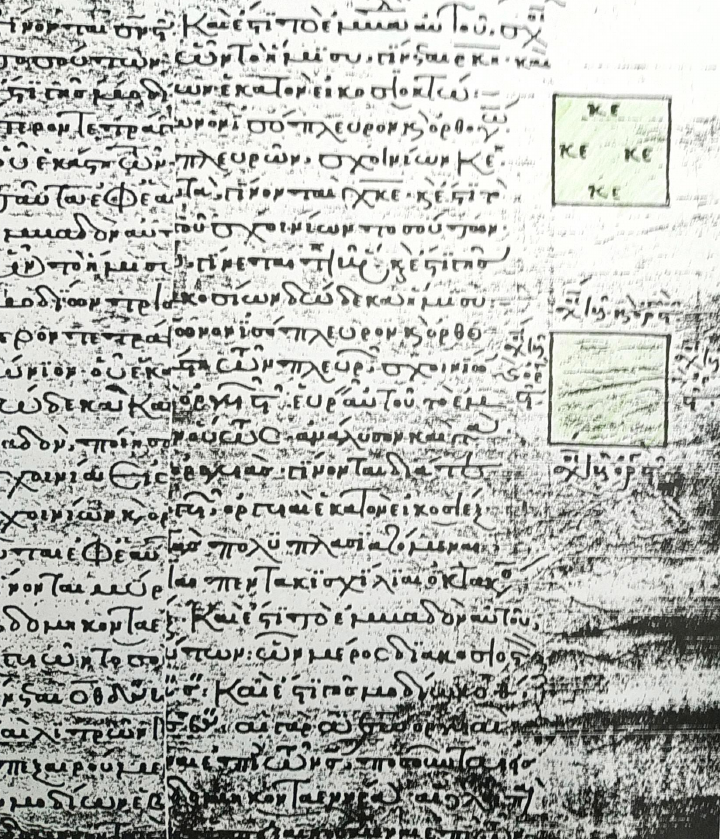
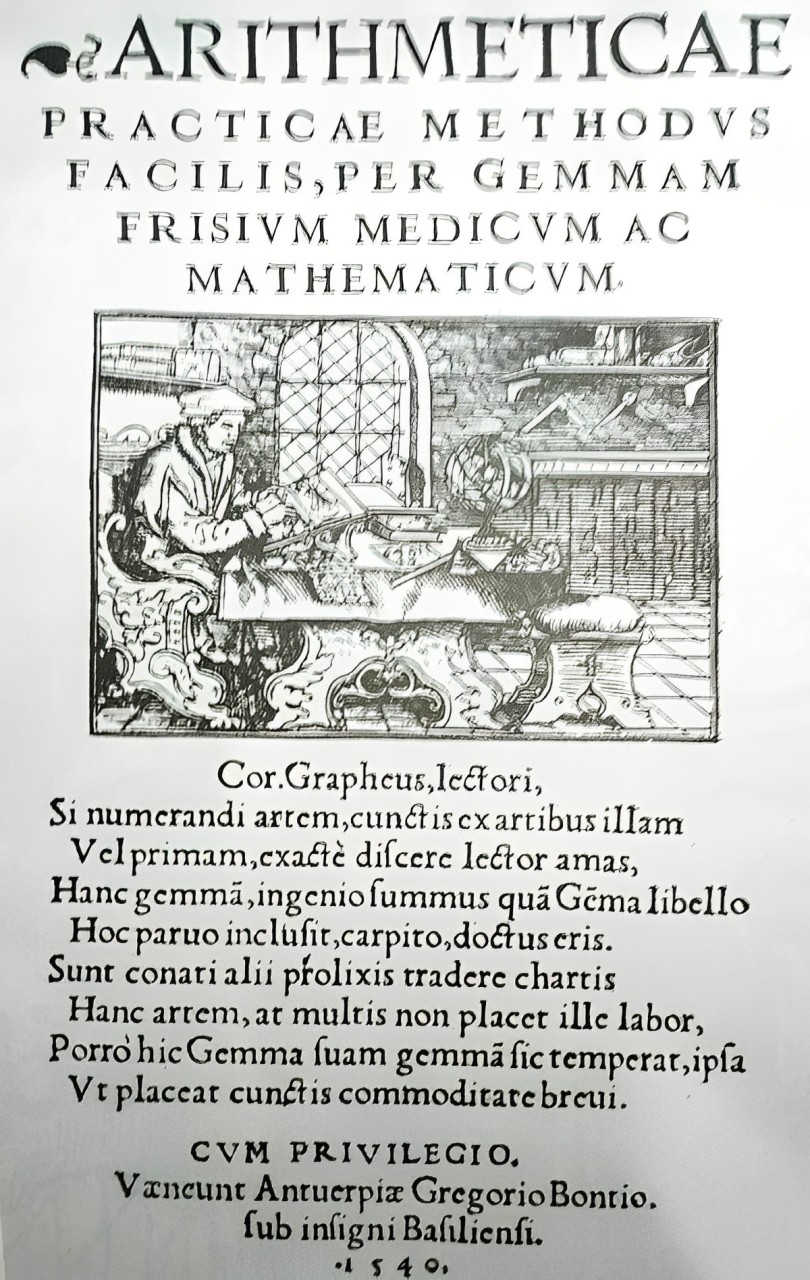
Works by Europeans based on the work of Bhãskara
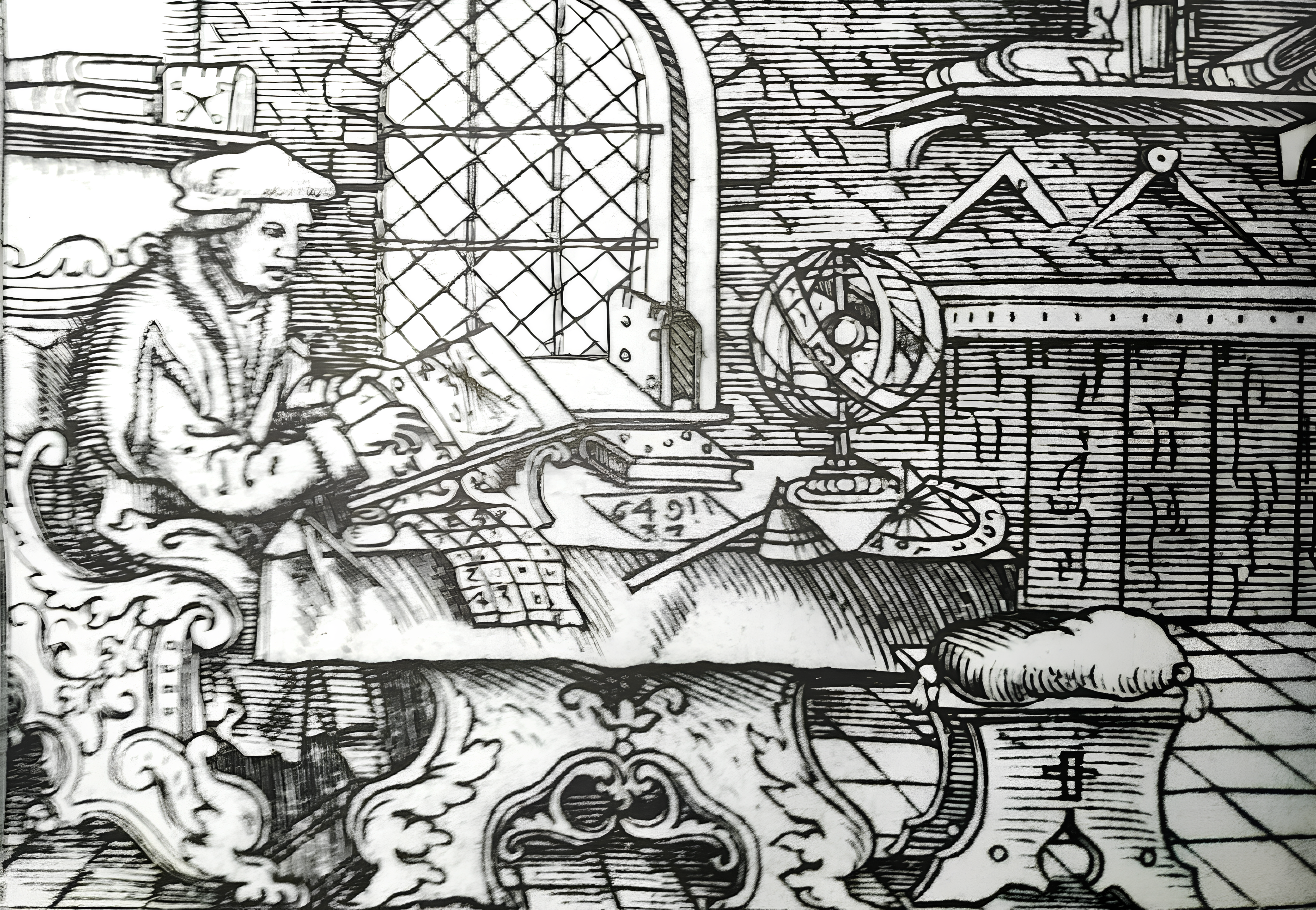
Book Arithmeticae.
Works
| Year | Author | Work | Historical notation |
|---|---|---|---|
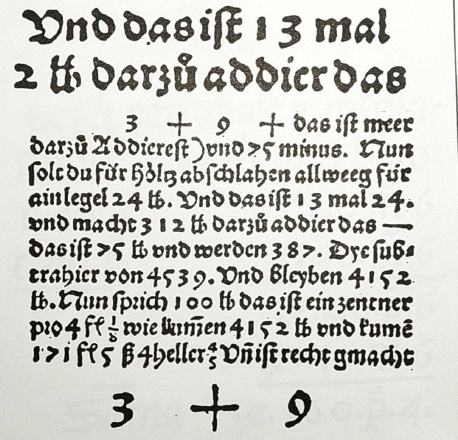
| 1489 | Johann Widman |
|
The + and - signs appear |
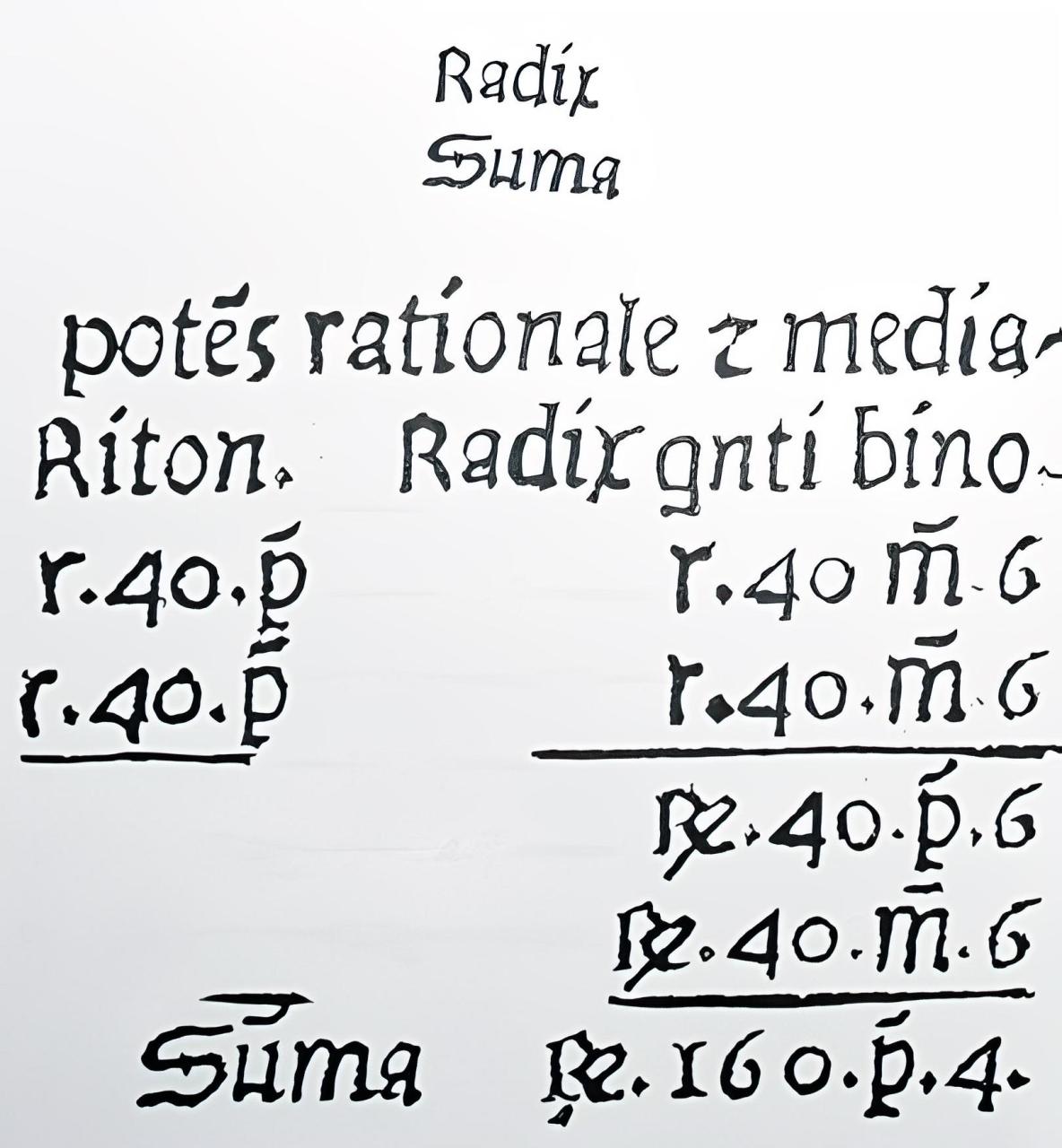
| 1494 | Luca Pacioli |
|
$$\tilde{m}~\text{(minus) e (plus)} ~\tilde{p}$$ |
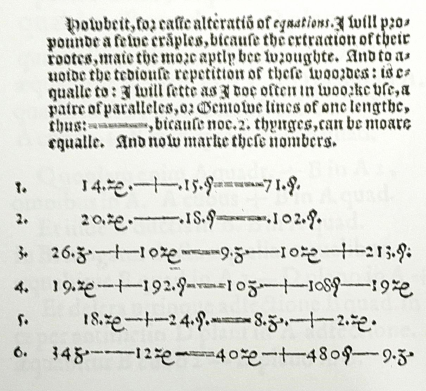
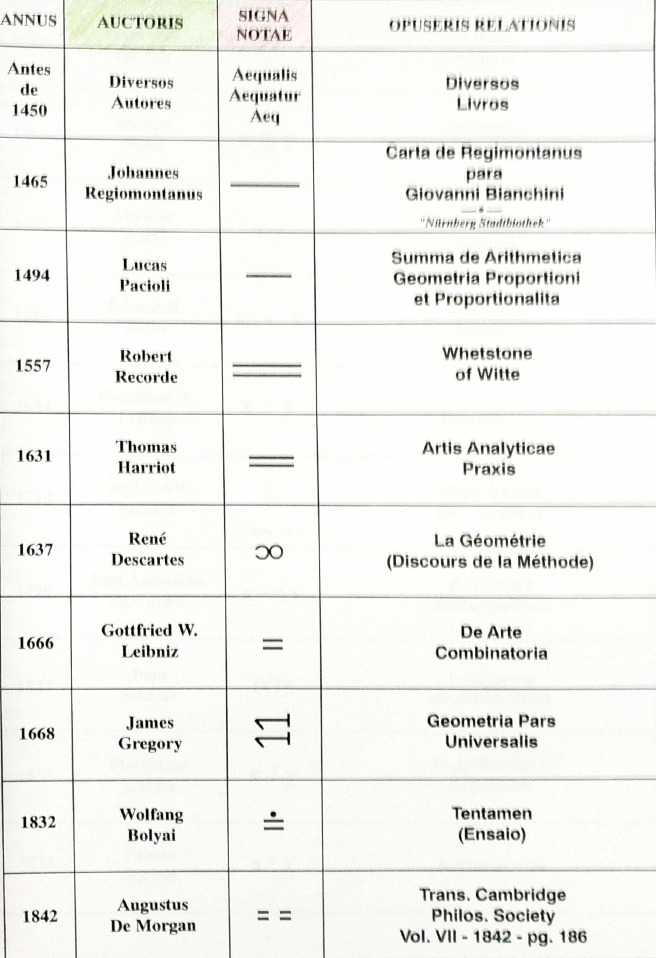
| 1557 | Robert Record |
|
Symbol of equal two parallel lines $$=$$ |
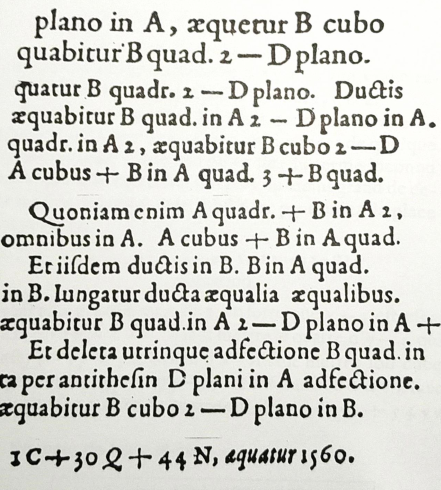
| 1593 | Francis Vieta |
|
$$1x^3 + 30x^2+44x = 1560$$ |
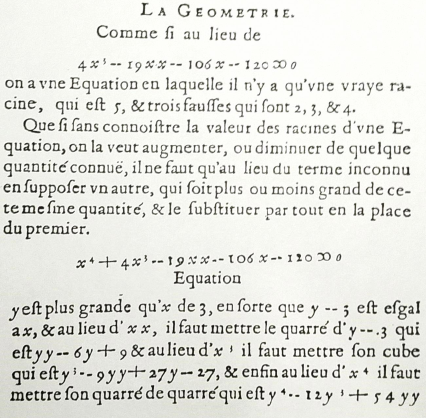
| 1637 | René Descartes |
|
Symbols $$+ ~\text{(plus)},~-- ~\text{(minus)}, \propto ~\text{(igual)}~\text{e}~xx~(x^2)$$ |
Historical references
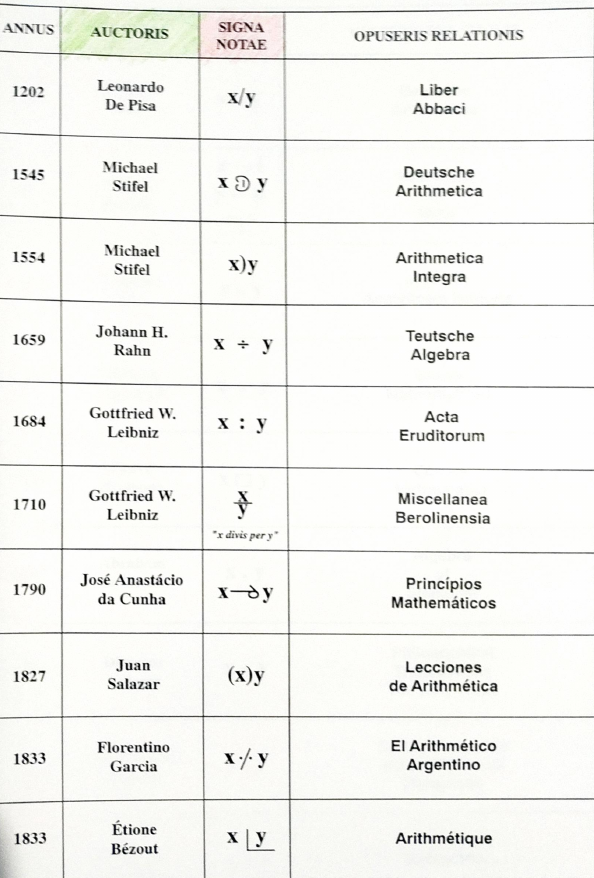
| Equality (aequalis) | Division (partition) |
|---|---|
|
|
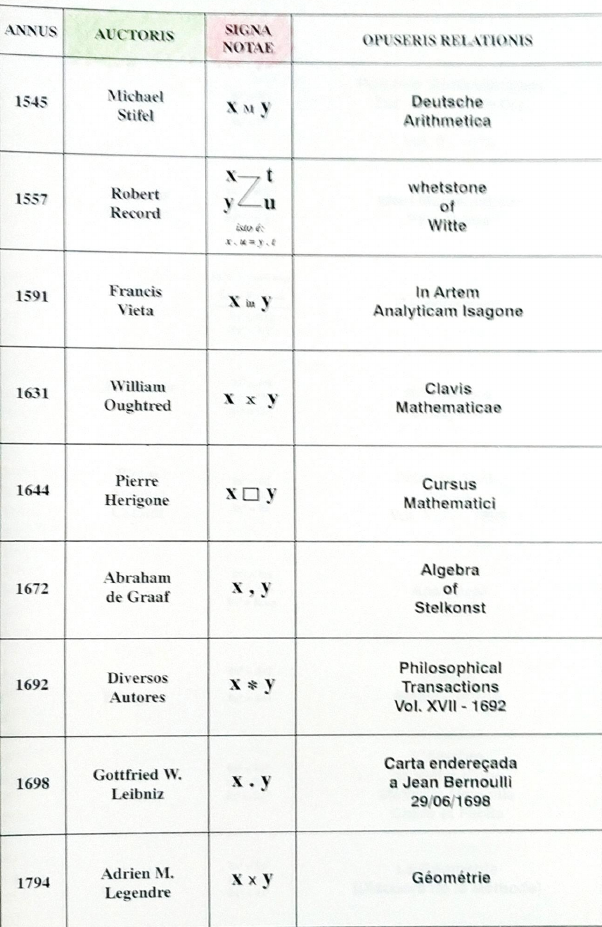
| Multiplication (multiplicatio) | Potentiation (potestate) |
|---|---|
|
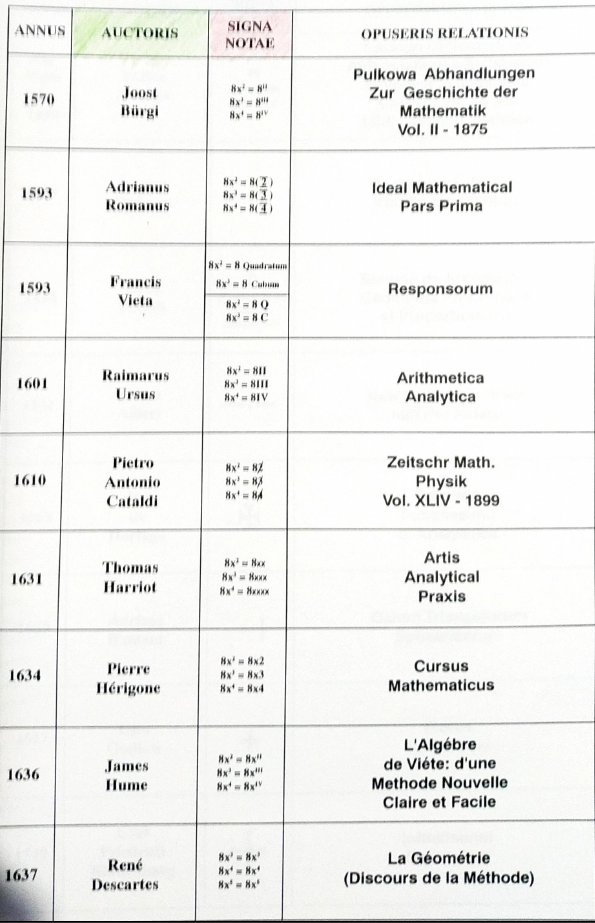
|
| Sum (summa) | Subtraction (subtractio) |
|---|---|
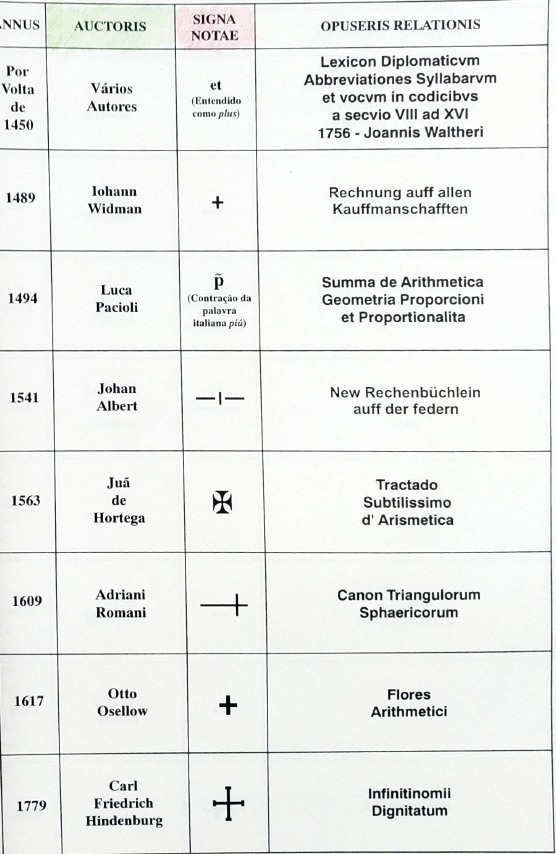
|
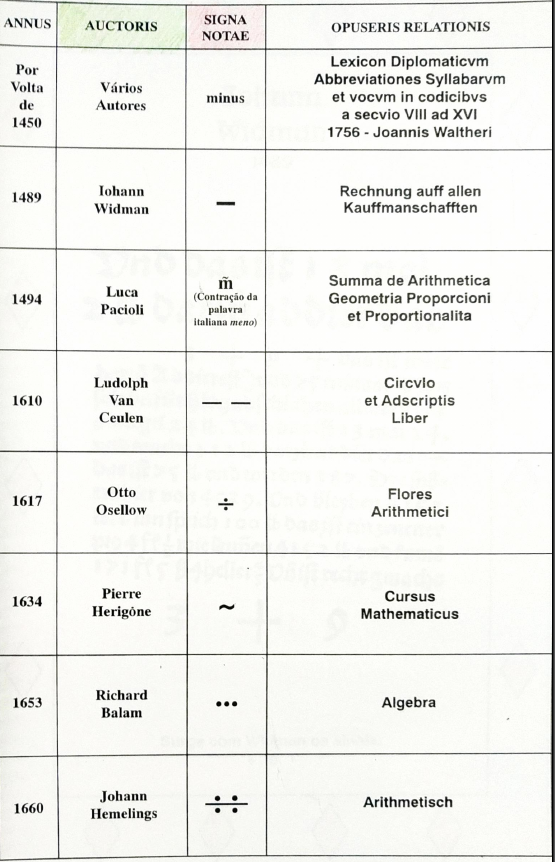
|
Bhãskara’s work is one of the most used today and we show, according to the original, the intuitive idea for solving quadratic equations.