
Euler's Eyes
2026-10-11
Parallel lines
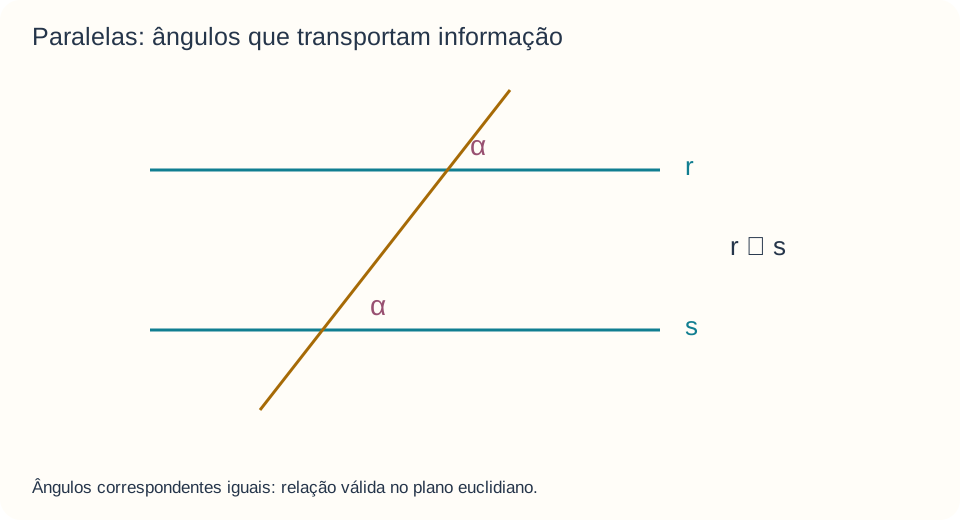
Parallel lines never meet — and yet, in a perspective drawing, they appear to meet at the horizon.
Who discovered
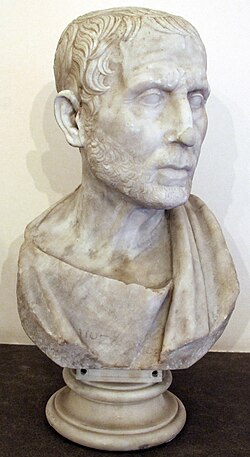
The classic definition is from Euclid (c. 300 BC), in definition I.23 of The Elements: parallel lines are those that are in the same plane and, extended indefinitely in both directions, do not meet. The relationships between the angles formed by a transversal — alternate, corresponding, collateral — are the propositions I.27 to I.29. The philosopher Posidonius (1st century BC) proposed another definition, as straight lines always at the same distance; Proclus recorded the debate.

The story
Why not define parallels as “equidistant” lines, which looks more natural? Because proving that two straight lines that don’t meet are always at the same distance requires the fifth postulate — and the Greeks already suspected that it was delicate. Euclid chose the definition that depended on fewer hypotheses and first proved everything he could without the postulate: propositions I.27 and I.28 do not use it, I.29 does.
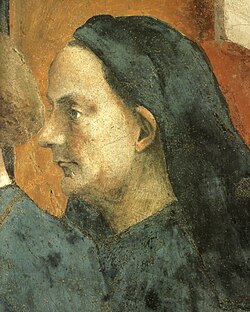
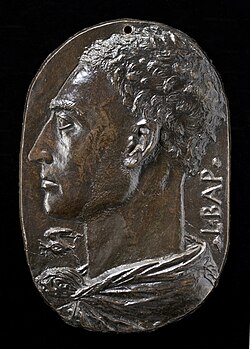
In the Renaissance, Filippo Brunelleschi (c. 1415) and Leon Battista Alberti (1435) showed that, in a perspective painting, parallel lines must be drawn converging to a vanishing point. Hence projective geometry was born, in which “parallels meet at infinity”.
In everyday life
- Train tracks. They need to be parallel: if the distance between them changes, the train will derail.
- Road lanes and parking spaces. They are painted parallel to organize traffic.
- Blinds and notebook staves. Equally spaced parallel lines.
- Photography. In a photo of a straight street, the parallel sidewalks appear to meet on the horizon — the vanishing point of the Renaissance.
Sources: Elements, definition I.23 · Elements, proposition I.29 · Proclus (MacTutor).
Theory and constructions
DefiniçãoParallel lines
Two lines are parallel (symbol $\parallel$) if, and only if, they are coincident or are coplanar and have no common point:
$$a = b \ \Rightarrow\ a \parallel b \qquad\qquad (a \subset \alpha,\ b \subset \alpha,\ a \cap b = \varnothing) \ \Rightarrow\ a \parallel b$$


Angles formed by two straight lines and a transversal
Let $a$ and $b$ be two distinct lines, parallel or not, and $t$ be a line concurrent with both: $t$ is a transversal of $a$ and $b$. The eight angles determined by them are named in pairs:
| Pairs | Name | Detailing |
|---|---|---|
| 1 e 7, 2 e 8, 3 e 5, 4 e 6 | alternates | internal: 3 and 5, 4 and 6 · external: 1 and 7, 2 and 8 |
| 1 e 5, 2 e 6, 3 e 7, 4 e 8 | correspondents | same position at each intersection |
| 1 e 8, 2 e 7, 3 e 6, 4 e 5 | collaterals | internal: 3 and 6, 4 and 5 · external: 1 and 8, 2 and 7 |
PropriedadeOne congruence pulls all others
The congruence of two alternating angles of one of the pairs (for example, $\hat{1} \equiv \hat{7}$) is equivalent:
- to the congruence of all alternating pairs ($\hat{2} \equiv \hat{8}$, $\hat{3} \equiv \hat{5}$, $\hat{4} \equiv \hat{6}$);
- to the congruence of all pairs of corresponding;
- to the supplementary of all pairs of collaterals ($\hat{1} + \hat{8} = \hat{2} + \hat{7} = \hat{3} + \hat{6} = \hat{4} + \hat{5} = 180^{\circ}$).