
Euler's Eyes
2022-11-22
Function Concept
The law of correspondence is the modern definition for the subject of functions. In addition, it is important to define concepts of domain and image, already explained in the function introduction post, under the vision of René Descartes.

Tribute to the Bernoulli family
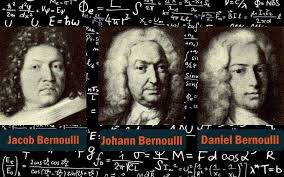
No family in the history of mathematics has produced as many famous mathematicians as the Bernoulli family. Originally from the Spanish Netherlands, this family emigrated in 1583 to Basel, Switzerland, fleeing the war. About a dozen members of the family achieved renown in Mathematics and Physics, four of them being elected as members foreigners from the French Academy of Sciences.
The first Bernoulli who excelled in Mathematics were Jacques and Jean, respectively the fifth and tenth children of Nicolaus. This with the following figure:
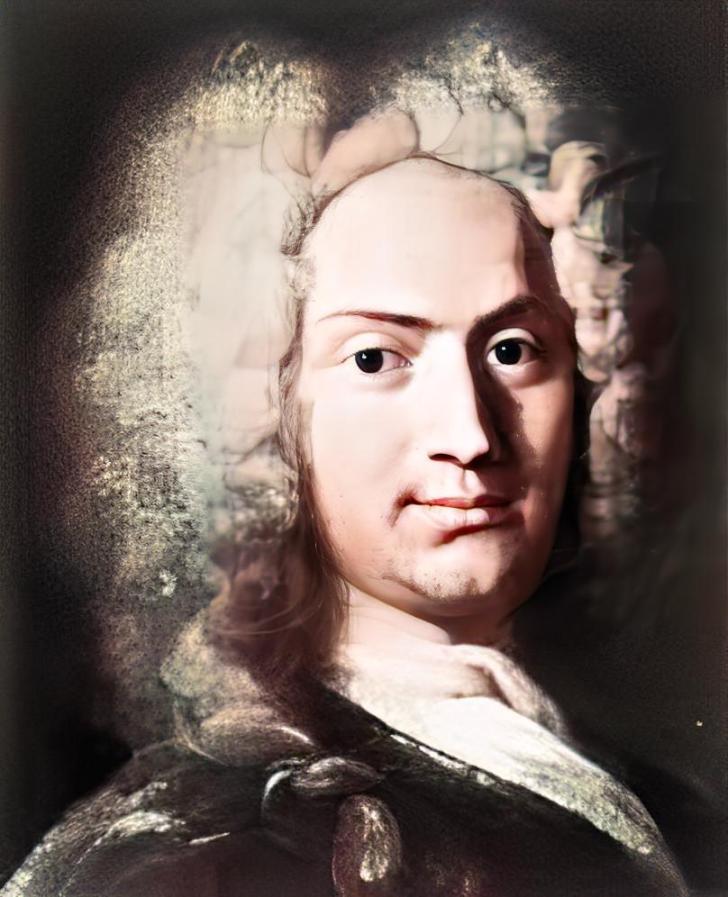
Jacques traveled a lot to meet scientists from other countries. He was notable for his studies on infinitesimals, his articles on maxima and minima of functions published in the magazine “Acta Eruditorum” (Notes of Scholars), his research on infinite series in which the famous result known as “Bernoulli’s inequality” appears.
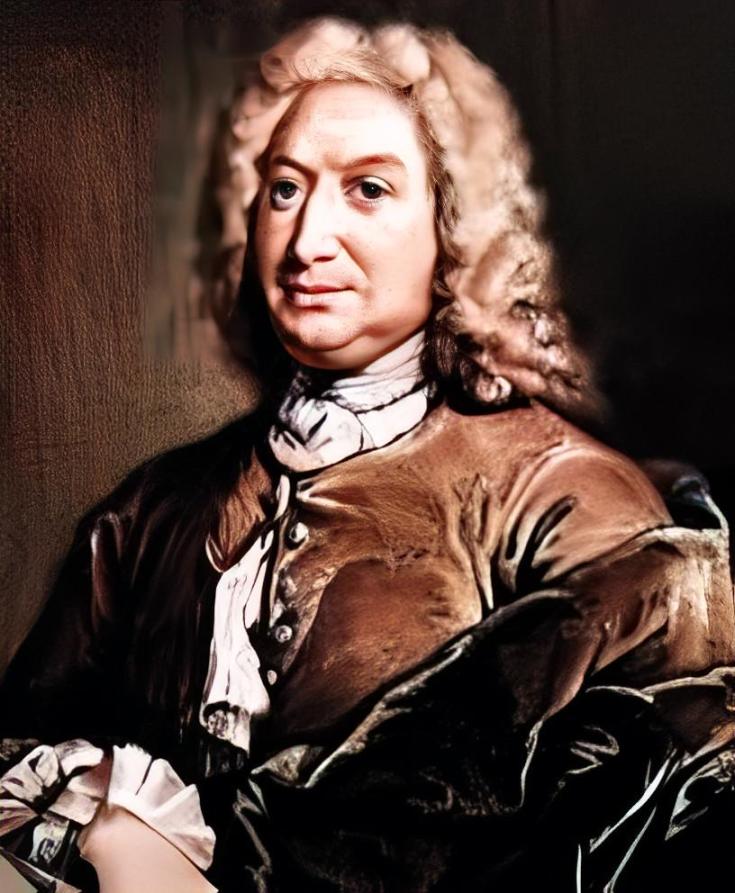
Jacques had a real fascination with curves, having studied several of them: the semi-cubic parabola, the lemniscate, the catenary, the is6chronous and the logarithmic spiral, among others.
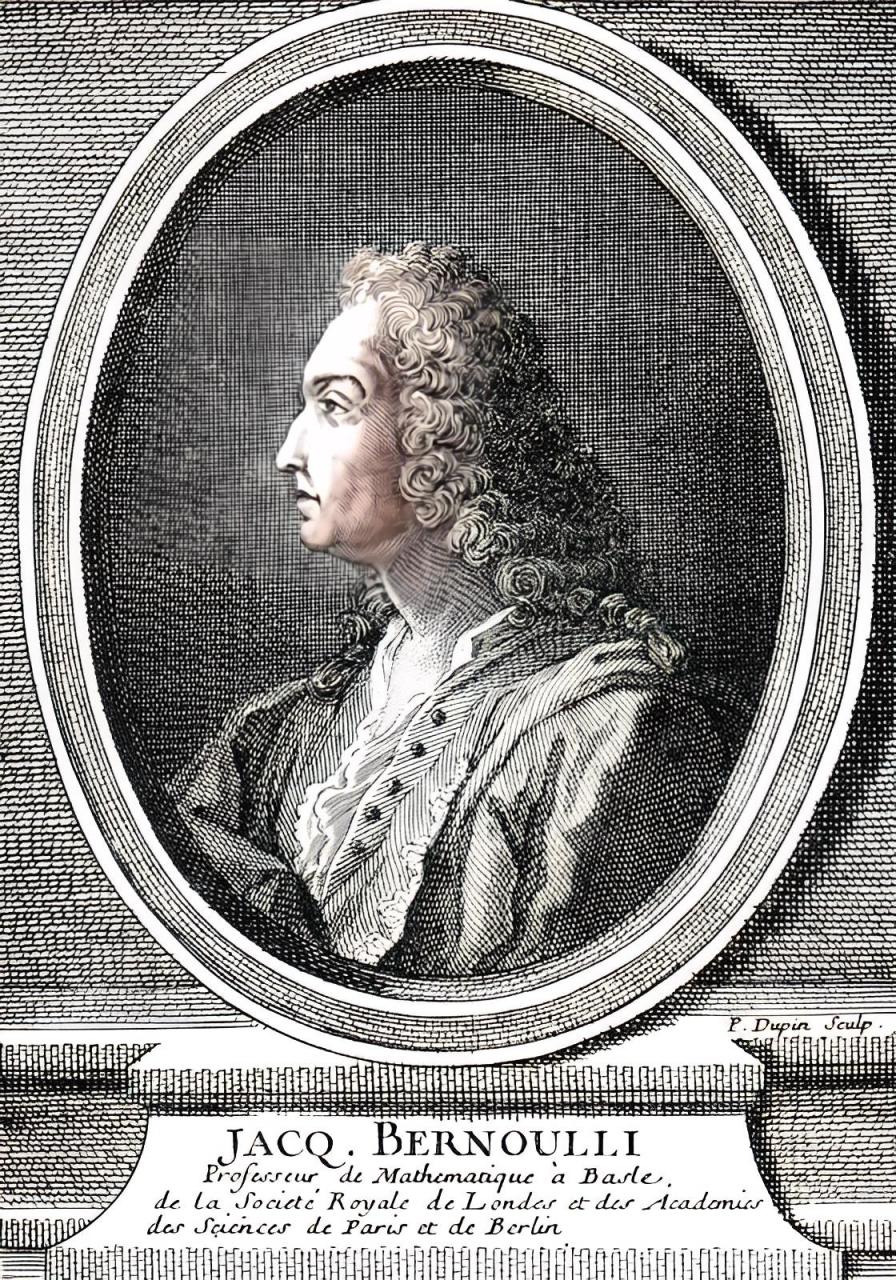
The brothers Jean and Jacques maintained an intense correspondence with Leibniz as they all contributed articles to the same magazine, “Acta Eruditorum” (Notes of Scholars). Jacques is also the author of the classic “Art of Conjecture”, considered the oldest work on probability. Jean was the father of Nicolas, Daniel and Jean 11.
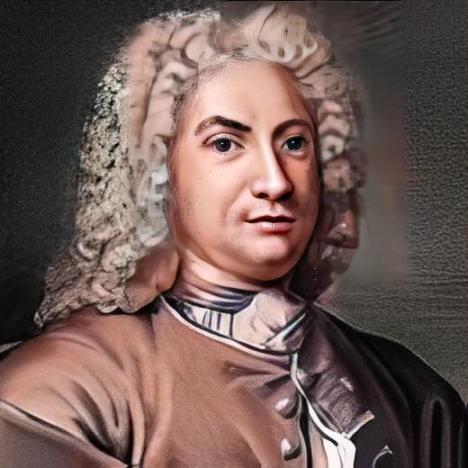
Nicolas was a professor of Mathematics in St. Petersburg and Daniel and Jean II were professors in Basel. Another Bernoulli. Nicolas II, cousin of these three, occupied Galileo’s place in Padua for some time.
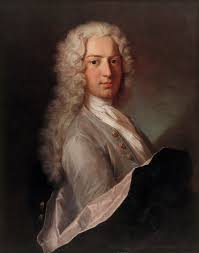
Of the younger generation, it was Daniel who stood out most with his results in hydrodynamics and probability. There were still other Bernoulli who achieved evidence in Mathematics, in the 18th century, living up to the family name.
Motivation
Let us consider, for example, the sets
$$A = \\{0, 1, 2, 3\\} \text{ e } B = \\{-1, 0, 1, 2, 3\\}$$and the following binary relations from A to B:
Binary Ratio 1
Let the binary relation be:
$$\mathcal{R}_1 = \\{(x, y) \in A \times B \text{ tal que } y=x+1\\}$$With $A = \\{0, 1, 2, 3\\}$ and $B = \\{-1, 0, 1, 2, 3\\}$ we have the solutions:
$$R_1 = \\{(0,1), (1,2), (2,3)\\}$$
For each element $x \in A,$ with the exception of 3, there is only one element $y \in B$ such that $(x, y) \in \mathcal{R}_1.$
For the element $3 \in A,$ there is no $y \in B$ such that $(3, y) \in \mathcal{R}_1.$
Binary Ratio 2
Let the binary relation be:
$$\mathcal{R}_2 = \\{(x, y) \in A \times B \text{ tal que } y^2=x^2\\}$$With $A = \\{0, 1, 2, 3\\}$ and $B = \\{-1, 0, 1, 2, 3\\}$ we have the solutions:
$$R_2 = \\{(0, 0), (1, 1), (1, -1),(2, 2), (3, 3)\\}$$
For each element $x \in A,$ with the exception of 1, there is only one element $y \in B$ such that $(x, y) \in \mathcal{R}_2.$
For element $1 \in A,$ there are two elements $1,-1 \in B$ such that $(1, 1), (1, -1)\in \mathcal{R}_2.$
Binary Ratio 3
Let the binary relation be:
$$\mathcal{R}_3 = \\{(x, y) \in A \times B \text{ tal que } y=x\\}$$With $A = \\{0, 1, 2, 3\\}$ and $B = \\{-1, 0, 1, 2, 3\\}$ we have the solutions:
$$R_3 = \\{(0, 0), (1, 1), (2, 2), (3, 3)\\}$$
For every element $x \in A,$ without exception, there is only one element $y \in B$ such that $(x, y) \in \mathcal{R}_3.$
Binary Ratio 4
Let the binary relation be:
$$\mathcal{R}_4 = \\{(x, y) \in A \times B \text{ tal que } y=(x-1)^2 -1\\}$$With $A = \\{0, 1, 2, 3\\}$ and $B = \\{-1, 0, 1, 2, 3\\}$ we have the solutions:
$$R_4 = \\{(0, 0), (1, -1), (2, 0), (3, 3)\\}$$
For every element $x \in A,$ without exception, there is only one element $y \in B$ such that $(x, y) \in \mathcal{R}_4.$
Binary Ratio 5
Let the binary relation be:
$$\mathcal{R}_5 = \\{(x, y) \in A \times B \text{ tal que } y=2 \\}$$With $A = \\{0, 1, 2, 3\\}$ and $B = \\{-1, 0, 1, 2, 3\\}$ we have the solutions:
$$R_5 = \\{(O, 2), (1,2), (2, 2), (3, 2)\\}$$
For every element $x \in A,$ without exception, there is only one element $y \in B$ such that $(x, y) \in \mathcal{R}_5.$
The relations $\mathcal{R}_3, \mathcal{R}_4,\mathcal{R}_5$ that present the particularity:
- “for every $x \in A$ there is only one $y \in B$ such that $(x, y)$ belongs to the relation”.
- are given the application name of $A$ in $B$ or function defined in $A$ with images in $B.$
Function definition
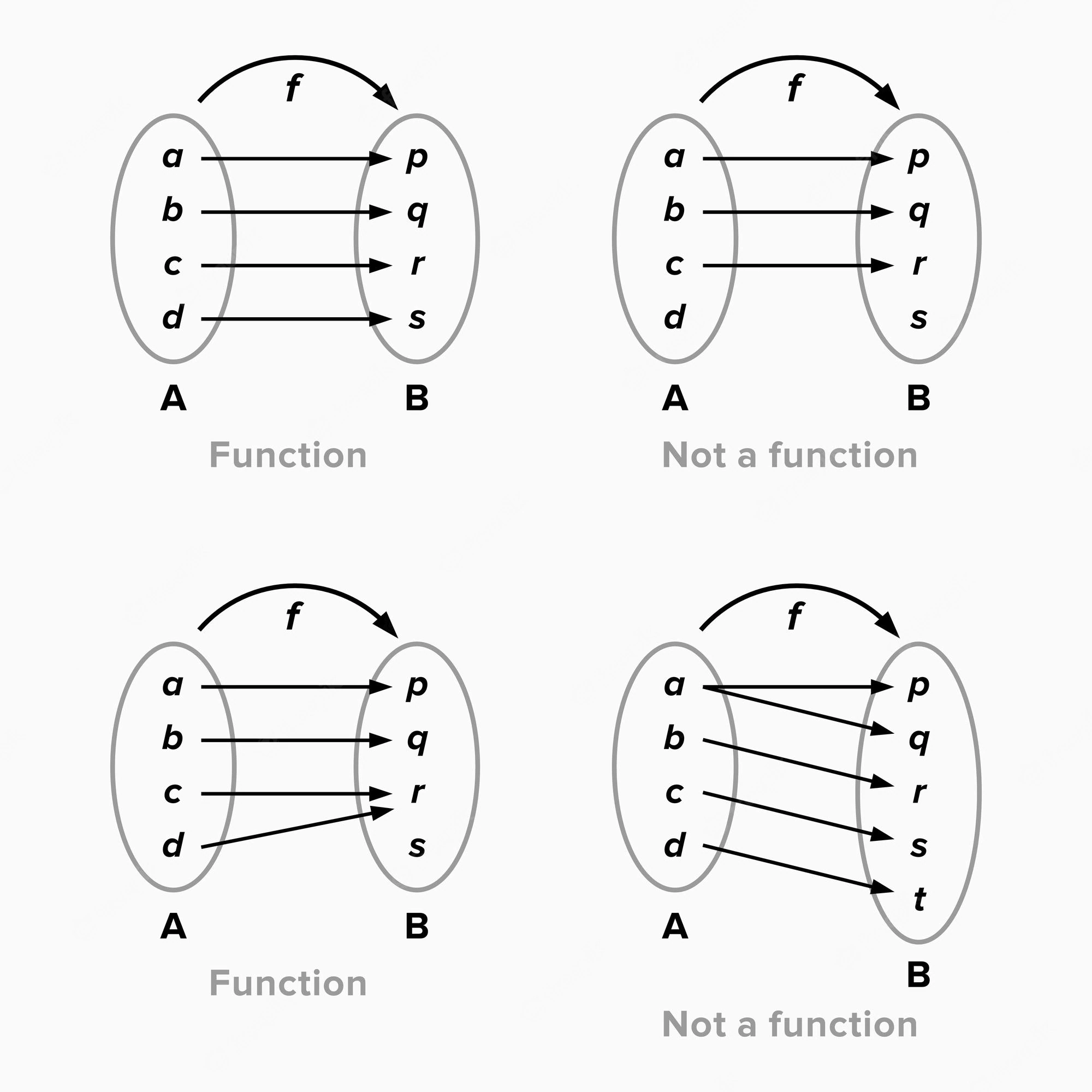
Definition (function): Given two non-empty sets $A$ and $B$, a relation $f$ of $A$ in $B$ is given the application name of $A$ in $B$ or function defined in $A$ with images in $B$ if, and only if, for every $x \in A$ there is only one $y \in B$ such that $(x, y) \in f.$
Condition for the function definition to be valid is given below:
-
it is necessary that every element $x \in A$ participates in at least one pair $(x, y) \in f,$ that is, every element of $A$ must serve as an arrow starting point.
-
it is necessary that each element $x \in A$ participates in only a single pair $(x, y) \in f,$ that is, each element of $A$ must serve as the starting point of a single arrow.
A relation f is not an application (or function) if it does not satisfy one of the conditions dictions above:
- if there is an element of $A$ from which no arrow starts;
- if there is an element of $A$ from which two or more arrows depart.
Function notation
Every function is a binary relation of $A$ to $B$, therefore, every function is a set of ordered pairs.
Generally, there is an open sentence $y = f(x)$ that expresses the law by which, given $x \in A$, $y \in B$ is determined such that $(x, y) \in f$,
Then
$$f = \\{(x, y) x \in A, y \in B ~~ e ~~ y = f(x)\\}.$$This means that, given the sets $A$ and $B,$ the function $f$ has the correspondence law $y = f(x)$.
To indicate a function $f,$ defined in $A$ with images in $B$ according to the correspondence law $y = f(x)$, we will use one of the following notations.
| Notation 1 | Notation 2 | |
|---|---|---|
| $f: A \rightarrow B\quad$ | or | $ f: A \xrightarrow{f} B$ |
| $x \mapsto f(x)$ | $x \mapsto f(x)$ |
Examples
-
$f: A \rightarrow B$
$x \mapsto 2x$
is a function that associates each $x$ of $A$ with a $y$ of $B$ such that $y = 2x$
-
$f: \mathbb{R} \rightarrow \mathbb{R}$
$x \mapsto x$
is a function that takes for each $x$ of $\mathbb{R}$ a $y$ of $\mathbb{R}$ such that $y = x$
-
$f: \mathbb{R} \rightarrow \mathbb{R}$
$x \mapsto x$
is a function that matches each $x \in \mathbb{R}$ with a $y \in \mathbb{R}$ such that $y = x.$
If $(a, b) \in f$, as we said previously, the element $b$ is called a by the application or $f$ in the element a and we indicate:
$f(a) = b$
that if lẽ “$f$ of $a$ is equal to $b$”.
Example
Let the function
$f: \mathbb{R} \rightarrow \mathbb{R}$
$x \mapsto 2x + 1$ then
a) the image of $0$ by the application $f$ is $1,$ that is:
$f(0) = 2 • 0 + 1 = 1$
b) the image of $-2$ by applying $f$ is $-3,$ that is:
$f(-2) = 2 • (-2) + 1 = -3$
c) similarly
$f(\frac{1}{2}) = 2~•~ \frac{1}{2} + 1 = 2$
$f(\sqrt{2}) = 2 • \sqrt{2} + 1$
$f(0,7) = 2 • 0,7 + 1 = 2,4$

Exercises
Exercise 1
What is the notation of the following functions from $\mathbb{R}$ to $\mathbb{R}$?
a) f associates each real number with its opposite
b) g associates each real number with its cube
c) h associates each real number with its square minus 1
d) k associates each real number with the number 2
Exercise 2
Let $f$ be the function of $\mathbb{R}$ in $\mathbb{R}$ defined by $f(x) = x^2 - 3x + 4$. Calculate:
a) $ f(2)$
b) $f(-\frac{1}{3})$
c) $f(-\sqrt{3})$
d) $f(1-\sqrt{2})$
Exercise 3
Let $f$ be the function of $\mathbb{Z}$ in $\mathbb{Z}$ defined by $f(x) = 3x - 2.$ Calculate:
a) $f(2)$
b) $f(-3)$
c) $f(0)$