
Euler's Eyes
2022-09-08
Function Discovery
In this post, we will address one of the most important subjects in mathematics. Function is one of the scariest subjects for children, especially in high school.

Discourse on the Method (Discours de la Methode)
How are we going to start the speech?
According to Leibniz and Euler:
- Creating implies transforming what exists;
- God created everything and everyone.
This way, he would have done his Work optimally.
If the answer is affirmative, then any element of nature (physis) is provided with reasoning (methode).

| René Descartes | Method Discourse |
|---|---|
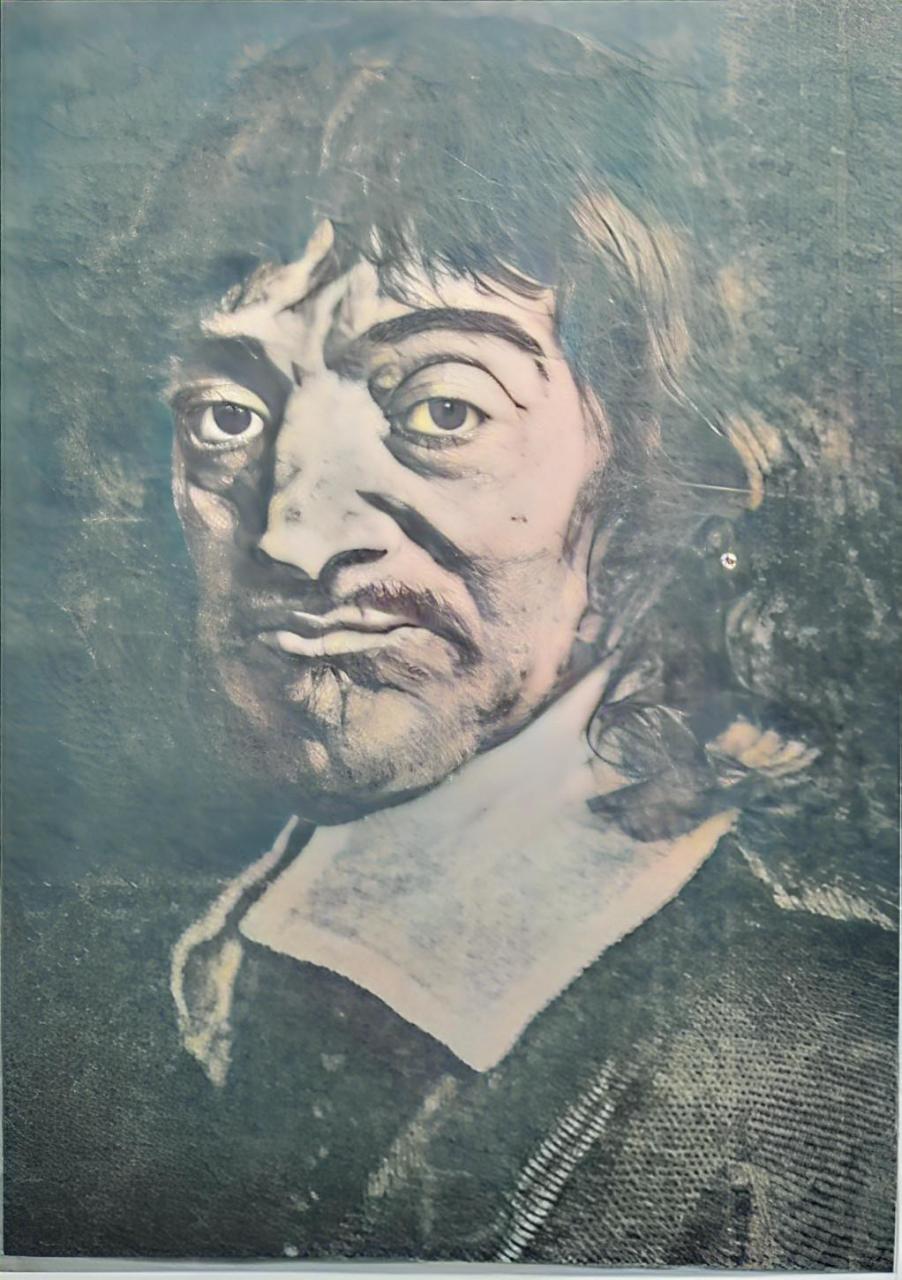
|
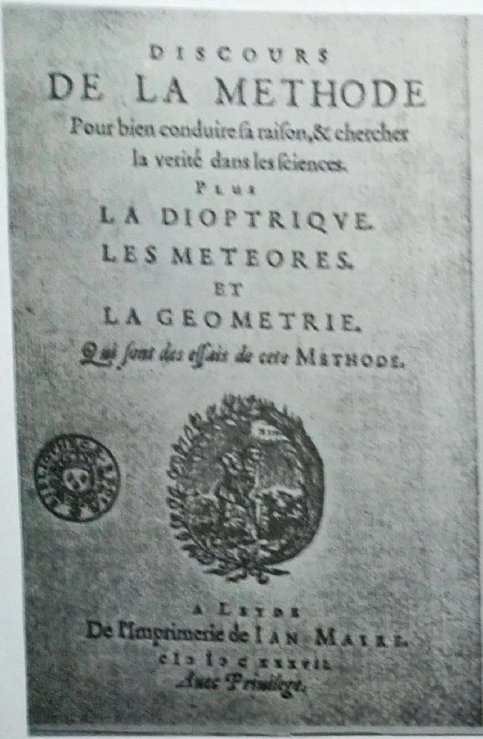
|
Functions (Functus)
From Latin functus (function) comes from the past participle of the verb fungor, which is derived from fungi, which can be interpreted as:
- carrying out an activity.
- talk about what happens.
- or action of fulfilling a duty.

The word defunctus is one that no longer performs the function of speaking. In Portuguese, a person who dies is a deceased person or someone who has lost their vital function.

The word functus was used in Mathematics in the year 1968, in the letters exchanged by Gottfried Wilhelm Leibniz and Jean Bernoulli.
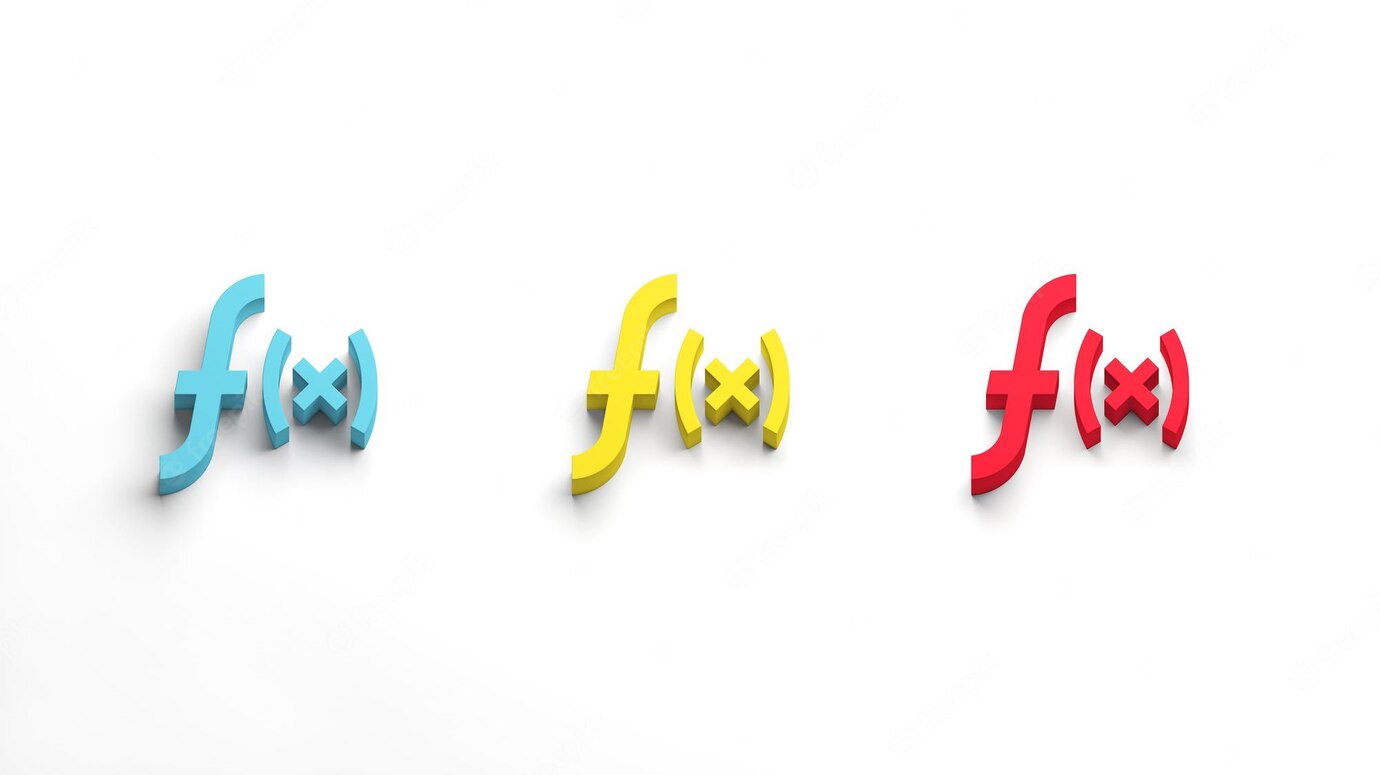
Leonhard Euler, in 1734, in the magazine Comment Petropol. ad Anneslabeled a function by
$$f(x)$$in which
“ \(f(x)\) denote functionem quamcunque ipsus x ”
“ \(f(x)\) denotes a function for any x ”
History of Mathematical Symbol
| Annus | Authoris | Follow Notae | Opuseris Relations |
|---|---|---|---|
| 1637 | René Descartes |
|
Discours de la Méthode (La Géometrie) |
| 1967 | James Gregory | Quantities | Vera Circuli et Hiperbolae Quadratura |
| 1671 | Isaac Newton | fluent | Methodus Fluxionum et Serierum Infinitorum |
| 1673 | Gottfried Wilhelm Leibniz | functus | Math. Schriften 5, 266 |
| 1694 | Jean Bernoulli | N | Acta Eruditorum - pg. 437 |
| 1695 | Jacob Bernoulli | $$\genfrac{ \langle }{ \rangle }{0pt}{}{p}{q}$$ | Acta Eruditorum - pg. 553 |
| 1697 | Jean Bernoulli | $$\zeta x$$ | Acta Eruditorum - pg. 115 |
| 1698 | Gottfried Wilhelm Leibniz |
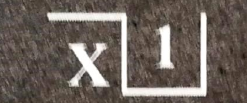
|
Commercium Philosophicum et Mathematicum |
| 1704 | Isaac Newton | $$x,y,z ~\text{fluent}$$ | Quadratura Curvarum |
| 1704 | Leonhard Paul Euler | $$f(x)$$ | Comment Petropol. ad Annes |
| 1759 | Joseph Louis Lagrange | $$Z(x)$$ | Miscellanea Taurinensia - vol.I |
| 1845 | Adrien Marie Legendre | $$\phi:(x)$$ | Elements of Geometry |
| 1893 | Giuseppe Peano | $$y=f(x)$$ | Lezion Di Analisi Infinitesimali Vol. 1 |
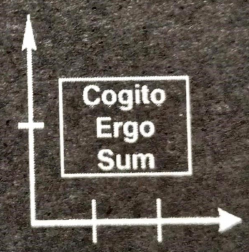
COGITO ERGO SUM (I Think Therefore I Exist)
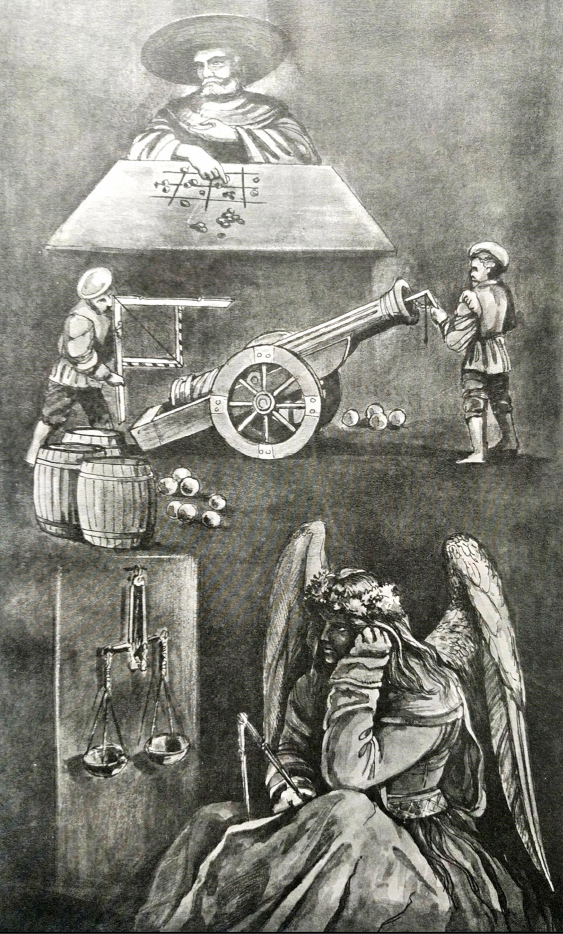
On the battlefields, René Descartes began to observe the launch of projectiles through cannons and began to make some relationships in the Cartesian plane. This Cartesian plan was related between the act of listening (audire) and the act of speaking (fabulari).

| AUDIRE (listen) DISTANCE | FABULARI (speak) ANGULUS |
|---|---|
| 200 metrumi | 30 degrees |
| 300 metrumi | 32 degrees |
| 400 metrumi | 35 degrees |
| 500 metrumi | 38 degrees |
| 600 metrumi | 42 degrees |
| 700 metrumi | 45 degrees |
| 800 metrumi | 52 degrees |
| 900 metrumi | ????????? |
| DOMINUS (Lord) | FUNCTION (Ministry) |
Representation of the Cogito Ergo Sum (I Think Therefore I Exist)
As previously stated, the act of listening and speaking represent what we today call a function. In this way, René Discards used an ear as a symbol.
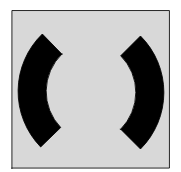
Function to speak twice what you hear
- Say what you hear twice;
- We can observe that the symbology (semiotically active language of an ear).
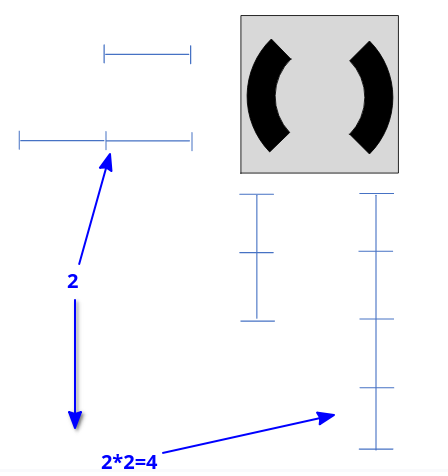
Symbolic and semantic representation
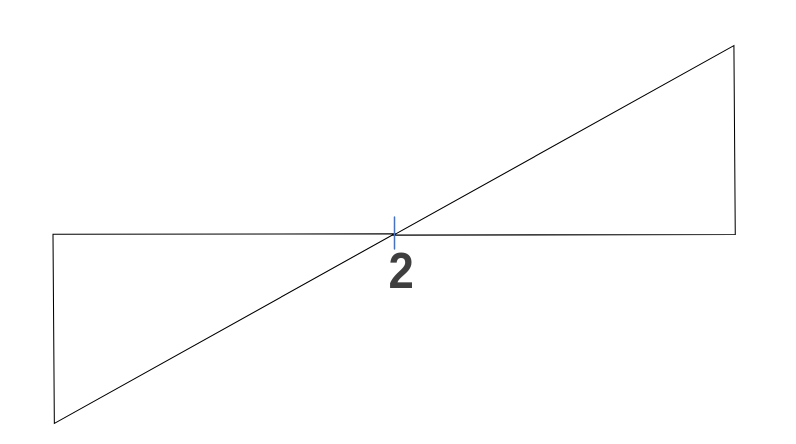
$$f = 2~(~)$$
Graphical representation
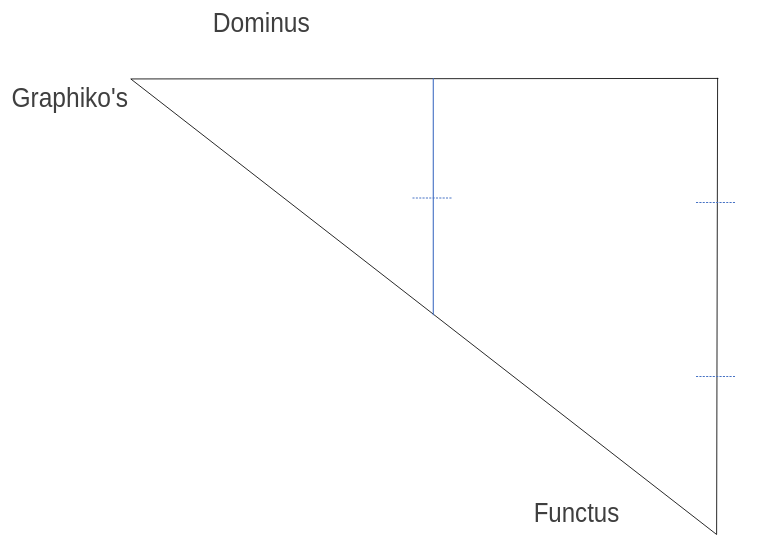
Máthema (Mathematics) grapfiko’s (graph)
$$f = (~) - 2$$
$$f = [(~) - 1] ~~ [(~) - 3] $$

Cogito Erog SumMetamorphosed into functus X dominus is a representation of the human brain, which can, with reasoning (methode), understand God’s perfect creations (exactus):
- Simply decode (máthema) the traits (gráphiko’s) of nature (phýsis).
That’s it for now, wait for the next posts.