Euler's Eyes
2026-10-24
Trigonometric ratios in the right triangle
Let’s prove three properties that relate the measurements of the sides to the measurements of the angles of a right-angled triangle. They link the trigonometry of the cycle, which we have studied so far, to the trigonometry of triangles, where it all began.
The story
It is said that Tales of Miletus (6th century BC) measured the height of the Great Pyramid of Egypt by comparing its shadow with the shadow of a stick: at the same instant, the Sun forms the same angle with both objects, and the ratio between height and shadow is the same for both. This is exactly the idea of this chapter — once an angle is fixed, the ratio between two sides of the right triangle is fixed — although, for Thales, there were still no names or tables for these ratios. The story came to us from much later authors, such as Diogenes Laertius and Plutarch.
The right triangle in books. Between the Baghdad shadow tablet and the modern tablets, the right triangle with their names was drawn and redrawn:
- c. 850Habash al-Hasib (Ahmad ibn Abdallah) uses shadows and half-strings in his astronomy manuscripts.
- 1220Leonardo of Pisa (Fibonacci), in Practica Geometry, applies chords and triangles to the measurement of land.
- 1551Rheticus, in Canon doctrinae triangulorum, defines the six functions by the sides of the right triangle.
- 1558Francesco Maurolico edits the Spherical of Menelaus, with spherical tables and triangles.
- 1620Edmund Gunter, in Canon triangulorum, introduces co-sinus and co-tangens.
Sources: Tales (MacTutor) · Diogenes Laertius, Lives of Illustrious Philosophers, I.27 · Aristotle, Politics, I.11.
In everyday life
- Height of a building with your cell phone. Clinometer apps measure the angle to the top. At 30 m from the building, with $40^\circ$, the height above the eyes is $30\operatorname{tg} 40^\circ \approx 25{,}2$ m.
- Plane landing. The final descent is made at about $3^\circ$: 10 km from the runway, the plane is $10\,000\operatorname{tg} 3^\circ \approx 524$ m high.
- Land slope. Surveyors and engineers classify land by the tangent of the slope, in percentage, to decide where it can be built.
Theory
Sine, cosine and tangent of an acute angle
Let us consider the right-angled triangle $ABC$ in $A$, a circle with unit radius centered at the vertex $B$ and a system $uOv$ with origin in $B$ and the axis $u$ on the side $\overline{BA}$. Let $P$ be the point where the hypotenuse $\overline{BC}$ cuts the circle, $P_1$ be the projection of $P$ on the axis $u$ and $T$ be the point where the straight line $BC$ cuts the tangent line to the circle at $I = (1, 0)$.
TeoremaTrigonometric ratios
In a triangle $ABC$ right-angled in $A$:
$$\operatorname{sen}\hat{B} = \frac{b}{a} = \frac{\text{cateto oposto}}{\text{hipotenusa}}$$$$\cos\hat{B} = \frac{c}{a} = \frac{\text{cateto adjacente}}{\text{hipotenusa}}$$$$\operatorname{tg}\hat{B} = \frac{b}{c} = \frac{\text{cateto oposto}}{\text{cateto adjacente}}$$View the demos
In the center cycle $B$, the point $P$ is the image of the arc $\hat{B}$: then $PP_1 = \operatorname{sen}\hat{B}$, $BP_1 = \cos\hat{B}$ and $IT = \operatorname{tg}\hat{B}$, with $BP = BI = 1$.
1) $\triangle BP_1P \sim \triangle BAC$ (the angle $\hat{B}$ is common and both have a right angle), therefore $\dfrac{CA}{BC} = \dfrac{P_1P}{BP}$, that is, $\dfrac{b}{a} = \dfrac{\operatorname{sen}\hat{B}}{1}$.
2) Same similarity, $\dfrac{BA}{BC} = \dfrac{BP_1}{BP}$, that is, $\dfrac{c}{a} = \dfrac{\cos\hat{B}}{1}$.
3) $\triangle BIT \sim \triangle BAC$, therefore $\dfrac{CA}{BA} = \dfrac{TI}{BI}$, that is, $\dfrac{b}{c} = \dfrac{\operatorname{tg}\hat{B}}{1}$.
Complementary angles
Like $\hat{A} + \hat{B} + \hat{C} = 180^\circ$ and $\hat{A} = 90^\circ$, we have $\hat{B} + \hat{C} = 90^\circ$: the acute angles are complementary. The side opposite to $\hat{C}$ is the one adjacent to $\hat{B}$, and vice versa; that’s why
$$\operatorname{sen}\hat{C} = \cos\hat{B} = \frac{c}{a}$$$$\cos\hat{C} = \operatorname{sen}\hat{B} = \frac{b}{a}$$$$\operatorname{tg}\hat{C} = \frac{c}{b} = \frac{1}{\operatorname{tg}\hat{B}}.$$It is the same property of the complementary arcs of chapter IV, now read in the triangle.
Proportionality
From the three properties it follows that, having fixed an acute angle $\hat{B}$, if we mark on one of its sides the points $A_1$, $A_2$, $A_3$, … and drive through them the perpendiculars $\overline{A_1C_1}$, $\overline{A_2C_2}$, $\overline{A_3C_3}$, …, we will have
$$\operatorname{sen}\hat{B} = \frac{A_1C_1}{BC_1} = \frac{A_2C_2}{BC_2} = \frac{A_3C_3}{BC_3} = \cdots$$$$\cos\hat{B} = \frac{BA_1}{BC_1} = \frac{BA_2}{BC_2} = \cdots $$$$\operatorname{tg}\hat{B} = \frac{A_1C_1}{BA_1} = \frac{A_2C_2}{BA_2} = \cdots$$That is: fixed $\hat{B}$, the side opposite $\hat{B}$ and the hypotenuse are directly proportional; the same goes for the adjacent leg and the hypotenuse, and for the two legs. The interactive figure from chapter opening allows you to verify this numerically.
Angles of 30°, 45° and 60° from triangles
Two well-known triangles give, without any tables, the trigonometric ratios of the angles of $30^\circ$, $45^\circ$ and $60^\circ$.
equilateral triangle. The height $AH$ is also median, then $BH = \frac{\ell}{2}$, and by Pythagoras $AH = \sqrt{\ell^2 - \frac{\ell^2}{4}} = \frac{\ell\sqrt{3}}{2}$. In the right triangle $ABH$, the angle at $B$ measures $60^\circ$ and the angle at $A$ measures $30^\circ$:
$$\operatorname{sen} 60^\circ = \cos 30^\circ = \frac{\ell\sqrt{3}/2}{\ell} = \frac{\sqrt{3}}{2}, \qquad \cos 60^\circ = \operatorname{sen} 30^\circ = \frac{\ell/2}{\ell} = \frac{1}{2},$$$$\operatorname{tg} 60^\circ = \frac{\ell\sqrt{3}/2}{\ell/2} = \sqrt{3}, \qquad \operatorname{tg} 30^\circ = \frac{\ell/2}{\ell\sqrt{3}/2} = \frac{\sqrt{3}}{3}.$$Half the square. The diagonal measures $\sqrt{\ell^2 + \ell^2} = \ell\sqrt{2}$ and forms $45^\circ$ with the sides:
$$\operatorname{sen} 45^\circ = \cos 45^\circ = \frac{\ell}{\ell\sqrt{2}} = \frac{\sqrt{2}}{2}, \qquad \operatorname{tg} 45^\circ = \frac{\ell}{\ell} = 1.$$AtençãoThe side doesn't matter
In all accounts, $\ell$ cancels out: it is the proportionality of the previous topic. The same values appear in chapter V from the polygons inscribed in the cycle. Also check the fundamental relationship: $\operatorname{sen}^2 45^\circ + \cos^2 45^\circ = \frac{2}{4} + \frac{2}{4} = 1$.
Application: the path of light
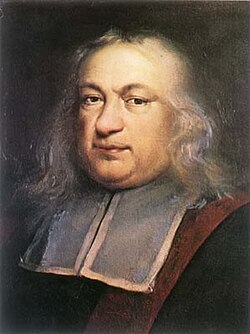
Light that reflects off a mirror or passes from air to water changes direction, and right-angled triangle trigonometry explains how. In 1662, Pierre de Fermat proposed that light follows, between two points, the path that takes less time.
- Reflection. In the same medium the speed is constant, so the shortest time is the shortest path $SM + MT$. With $S$ at a height $a$ from the mirror, $T$ at a height $b$ and $M$ at a distance $x$ from the foot of $S$ (in total distance $\ell$), the path is $\sqrt{x^2 + a^2} + \sqrt{(\ell - x)^2 + b^2}$. At least $\dfrac{x}{SM} = \dfrac{\ell - x}{MT}$ is valid, and these ratios are the sines of the angles with the vertical: $\operatorname{sen} i = \operatorname{sen} r$, that is, the angle of incidence is equal to the angle of reflection.
- Refraction. In water, light is slower ($v_2 < v_1$), and time is $\dfrac{SM}{v_1} + \dfrac{MT}{v_2}$. The least happens when
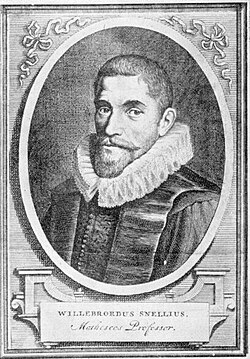
Snell’s law. It had already been enunciated by the Persian Ibn Sahl around 984, rediscovered by the Dutch Willebrord Snellius in 1621 and published by Descartes in 1637; Fermat was the first to deduce it from a minimum principle. (The exact calculation of the minimum uses derivatives; here it is enough to see, in the figure, that time is shorter exactly when the two ratios coincide.)
The exercises in this section are numbers 331 to 351 from chapter list.