
Euler's Eyes
2026-10-11
Introduction: convexity and half-planes
A straight line divides the plane into two sides. A figure is convex when it has no “indentations”. The two ideas go together.
Who discovered
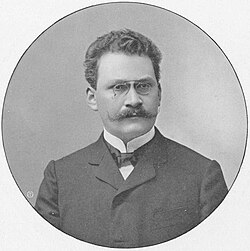
The first to carefully define a convex figure was Archimedes of Syracuse (c. 287–212 BC), in the work On the sphere and the cylinder, where he uses curves “concave to the same side” to compare perimeters. The separation of the plane by a straight line was formalized by Moritz Pasch in 1882: his axiom says that a straight line that enters a triangle on one side must exit on the other. At the end of the 19th century, Hermann Minkowski made convexity an area of mathematics.


The story
Archimedes needed convexity for a concrete problem: proving that the perimeter of a polygon inscribed in a circle is smaller than its own, and that of a circumscribed one, larger. With this he surrounded the value of π between $3\tfrac{10}{71}$ and $3\tfrac{1}{7}$.
Pasch’s axiom resolves another issue: Euclid never proved that a straight line separates the plane into two sides. He simply drew and saw. From Pasch onwards, “being on the same side of a straight line” began to have a precise definition — the half-plane —, which will be used to define the interior of an angle.

In everyday life
- Lenses. Convex lenses, such as those in magnifying glasses and glasses for hyperopia, concentrate light; the concave ones spread it.
- Elastic on nails. A loose elastic band around several nails forms the smallest convex figure that contains them — the “convex hull”, used in computer graphics.
- Sides of a street. The street divides the neighborhood into two half-planes: the even numbers on one side and the odd numbers on the other.
- Electronic games. Detecting collisions is much faster with convex shapes, which is why characters are surrounded by invisible convex “boxes”.
Sources: Archimedes (MacTutor) · Pasch (MacTutor) · Minkowski (MacTutor).
Theory and constructions
Watch the video lesson on convex regions and half-planes and then follow the theory.
Definiçãoconvex region
A set of points $\Sigma$ is convex (or is a convex region) if, and only if, any two distinct points $A$ and $B$ of $\Sigma$ are endpoints of a segment $\overline{AB}$ contained in $\Sigma$, or if $\Sigma$ is unitary, or if $\Sigma$ is empty.
A region that is not convex is a concave region.
For example, a straight line, a plane and a segment are convex: in all of them, the segment that joins any two points is within the set. A region shaped like an “L”, a star or a waning moon is concave: there are two points in it whose segment escapes the region.



PostuladoPostulate of separation of points on a plane
A straight line $r$ from a plane $\alpha$ separates this plane into two sets of points $\alpha^{\prime}$ and $\alpha^{\prime\prime}$ such that:
- $\alpha^{\prime} \cap \alpha^{\prime\prime} = \varnothing$, and both sets do not contain points from $r$;
- $\alpha^{\prime}$ and $\alpha^{\prime\prime}$ are convex;
- if $A \in \alpha^{\prime}$ and $B \in \alpha^{\prime\prime}$, then the segment $\overline{AB}$ intersects the straight line $r$.
DefiniçãoDemiplane
Each of the sets $\alpha^{\prime}$ and $\alpha^{\prime\prime}$ is an open half-plane. The sets $r \cup \alpha^{\prime}$ and $r \cup \alpha^{\prime\prime}$ are semiplane. The line $r$ is the origin of each of them, and $\alpha^{\prime}$ and $\alpha^{\prime\prime}$ are opposite half-planes.