
Euler's Eyes
2026-10-11
Segment congruence
Two segments are congruent when one can be “placed” on top of the other. It’s the geometric way of saying they are the same size — without needing a graduated ruler.
Who discovered
Euclid dealt with the topic at the beginning of the The Elements (c. 300 BC). His common notion 4 says that “things that coincide with each other are equal”, and the propositions I.2 and I.3 show how to transport a segment and how to cut, from a larger segment, a piece equal to a smaller one. The most curious thing is the tool: Euclides only admits a compass that “closes” when it leaves the paper and, even so, proves that it is possible to copy distances.

The story
In Greek geometry, lengths were not compared with numbers. Two segments were equal, larger or smaller, and this was decided with a ruler without marks and a compass. Adding segments was placing them one after the other; taking one from the other meant overlapping and seeing what was left.
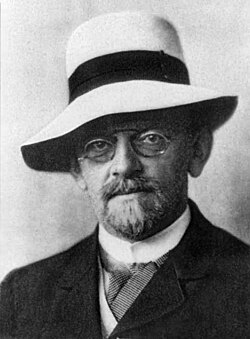
This way of working has an advantage: the results are valid for any unit of measurement, even for lengths that are not exact multiples of any unit — a problem that the Greeks knew well. In the axiomatics of Hilbert (1899), segment congruence became a primitive term, with its own axioms.
In everyday life
- Dry point compass. Woodworkers and locksmiths copy a measurement from one piece to another without reading numbers — it’s the I.2 proposition in the workshop.
- Sewing patterns. Stitching the fabric following the pattern ensures that the two sleeves are congruent.
- Replacement parts. A “standard” screw fits any machine because the measurements are congruent with those of the original part.
- Cut several equal boards. The carpenter measures the first one and uses the board itself as a template for the others.
Sources: Elements, proposition I.2 · Elements, proposition I.3 · Euclid (MacTutor).
Theory and constructions
The congruence of segments (symbol $\equiv$) is a primitive notion. Intuitively, congruent segments “have the same size”: one can be carried over the other. It obeys the postulates:
PostuladoSegment congruence
- Reflective: every segment is congruent to itself: $\overline{AB} \equiv \overline{AB}$.
- Symmetric: if $\overline{AB} \equiv \overline{CD}$, then $\overline{CD} \equiv \overline{AB}$.
- Transitive: if $\overline{AB} \equiv \overline{CD}$ and $\overline{CD} \equiv \overline{EF}$, then $\overline{AB} \equiv \overline{EF}$.
- Transport of segments: given a segment $\overline{AB}$ and an origin ray $A^{\prime}$, there is a single point $B^{\prime}$ on this ray such as $\overline{A^{\prime}B^{\prime}} \equiv \overline{AB}$.
Carrying is what we do with a compass: we open the compass to the size of a segment and mark that size from another point.
Segment comparison
Given $\overline{AB}$ and $\overline{CD}$, we transport $\overline{CD}$ to the ray $\overrightarrow{AB}$ and obtain a point $P$ with $\overline{AP} \equiv \overline{CD}$. There are three possibilities:
| Position of $P$ | Conclusion |
|---|---|
| $P$ is between $A$ and $B$ | $\overline{AB}$ is greater than $\overline{CD}$: $\overline{AB} > \overline{CD}$ |
| $P$ matches $B$ | $\overline{AB}$ is congruent to $\overline{CD}$: $\overline{AB} \equiv \overline{CD}$ |
| $B$ is between $A$ and $P$ | $\overline{AB}$ is less than $\overline{CD}$: $\overline{AB} < \overline{CD}$ |
Adding segments
DefiniçãoSum, multiple and submultiple
Given $\overline{AB}$ and $\overline{CD}$, we take the adjacent segments $\overline{RP} \equiv \overline{AB}$ and $\overline{PT} \equiv \overline{CD}$ on an origin ray $R$. The segment $\overline{RT}$ is the sum of $\overline{AB}$ and $\overline{CD}$:
$$\overline{RT} = \overline{AB} + \overline{CD} \qquad\text{e também}\qquad \overline{RT} = \overline{RP} + \overline{PT}.$$The segment $\overline{RS}$, sum of $n$ segments congruent to $\overline{AB}$, is multiple of $\overline{AB}$ according to $n$: $\overline{RS} = n \cdot \overline{AB}$. In this case, $\overline{AB}$ is submultiple of $\overline{RS}$ second $n$.