Euler's Eyes
2026-10-11
Properties of trapezoids
The trapezoid has a pair of parallel sides — and is the shape hidden in many ramps, rooftops, and pockets.
Who discovered
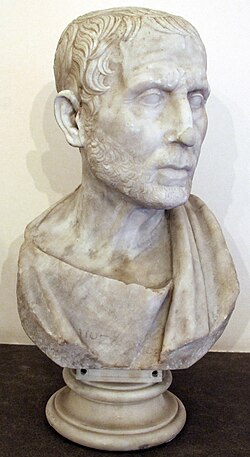
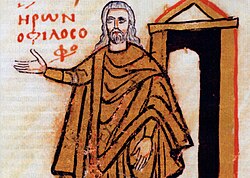
The modern meaning of the word comes from Posidonius (1st century BC) and Proclus (5th century AD): he records that Posidonius separated quadrilaterals with a pair of parallel sides from those that had none. For Euclid, trapezoid was any quadrilateral that was not a square, rectangle, rhombus or parallelogram. The area of the trapezoid — the average of the bases times the height — appears in the works of Heron of Alexandria (1st century AD).

The story
The same idea of base averaging is found in a method that has reached modern calculus: the trapezoid rule, which approximates the area under a curve by dividing it into trapezoidal bands. It is used in engineering and computers to calculate areas that do not have a simple formula.
In 2016, the historian Mathieu Ossendrijver showed that Babylonian astronomers, between 350 and 50 BC, already used trapezes to calculate the distance traveled by Jupiter in the sky — a reasoning that Europe would only rediscover in the 14th century.
In everyday life
- Canals and ditches. The cross-section of irrigation canals is trapezoidal, so that the sloping banks do not collapse.
- Roofs and gables. The side slopes of many roofs are trapezoids.
- Steps and ramps. The side profile of a ramp with a landing forms a trapezoid.
- Irregular land area. Surveyors divide land into strips and add up the trapezoid areas, as in the trapezoid rule.
Sources: Proclus (MacTutor) · Heron of Alexandria (MacTutor) · Ossendrijver, Science (2016).
Theory and constructions
Propriedadeany trapezoid
In any trapezoid $ABCD$ with bases $\overline{AB}$ and $\overline{CD}$, the angles adjacent to each non-base side are supplementary: $\hat{A} + \hat{D} = \hat{B} + \hat{C} = 180^{\circ}$ (internal collaterals between parallels).
TeoremaIsosceles trapezoid
- The angles of each base of an isosceles trapezoid are congruent: $\hat{C} \equiv \hat{D}$ and $\hat{A} \equiv \hat{B}$.
- The projections of the non-base sides onto the larger base are congruent.
- The diagonals of an isosceles trapezoid are congruent.
View the demos
- Through the vertices $A$ and $B$ of the smaller base, we draw perpendiculars to the larger base, with feet $A^{\prime}$ and $B^{\prime}$. We have $AA^{\prime} = BB^{\prime}$ (distance between parallels). The right triangles $AA^{\prime}D$ and $BB^{\prime}C$ are congruent due to the special case (side and hypotenuse $AD = BC$), therefore $\hat{C} \equiv \hat{D}$ and $A^{\prime}D = B^{\prime}C$. As $\hat{A}$ and $\hat{B}$ are supplementary to $\hat{D}$ and $\hat{C}$, so is $\hat{A} \equiv \hat{B}$.
- In triangles $ADC$ and $BCD$: $AD = BC$, $\hat{D} \equiv \hat{C}$ and $\overline{DC}$ common. By LAL, they are congruent and $AC = BD$. Hence also $A\hat{C}D \equiv B\hat{D}C$: the triangles $PCD$ and $PAB$ ($P$ = meeting of the diagonals) are isosceles.