Euler's Eyes
2026-10-26
The life of John von Neumann
Timeline
- 1903Born on 28 December in Budapest, the son of a banker.
- 1913His father receives a title of nobility; the son becomes “von Neumann”.
- 1921Finishes the Lutheran gymnasium in Budapest, where he studied alongside Eugene Wigner.
- 1923Publishes, at 19, his definition of ordinal numbers.
- 1926Diploma in chemical engineering in Zurich and doctorate in mathematics in Budapest.
- 1927Becomes the youngest Privatdozent at the University of Berlin.
- 1928Publishes the minimax theorem, the basis of game theory.
- 1930Moves to Princeton. In 1933 he is one of the first professors of the Institute for Advanced Study.
- 1932Publishes the Mathematical Foundations of Quantum Mechanics.
- 1943Begins working at Los Alamos, on the atomic bomb project.
- 1944Publishes, with Oskar Morgenstern, the Theory of Games and Economic Behavior.
- 1945Writes the EDVAC report, which describes the stored-program computer.
- 1946With Stanisław Ulam, develops the Monte Carlo method.
- 1952The IAS computer comes into operation.
- 1955Appointed to the Atomic Energy Commission. Discovers he has cancer.
- 1957Dies on 8 February, in Washington, aged 53.
- He is born on 28 December, the son of a banker. He studies at the Lutheran gymnasium, where Eugene Wigner is a schoolmate.
- He studies chemistry, at his father’s insistence, while enrolled for a doctorate in mathematics in Budapest.
- He graduates in chemical engineering at the Polytechnic. He attends classes by George Pólya, who would say he was the only student he was ever afraid of.
- He works with David Hilbert on the foundations of mathematics and of the new quantum mechanics.
- The university’s youngest Privatdozent. In 1928 he publishes the minimax theorem.
- Professor at the university and, from 1933, at the Institute for Advanced Study, alongside Einstein and Gödel. There he builds the IAS computer.
- Consultant to the atomic bomb project. With Ulam, he creates the Monte Carlo method.
- Member of the Atomic Energy Commission. He dies of cancer on 8 February 1957, at Walter Reed Hospital.
- 1903–1921 · Budapest
- 1921–1923 · Berlin
- 1923–1926 · Zurich
- 1926–1927 · Göttingen
- 1927–1930 · Berlin
- 1930–1957 · Princeton
- 1943–1955 · Los Alamos
- 1955–1957 · Washington
A Budapest boy
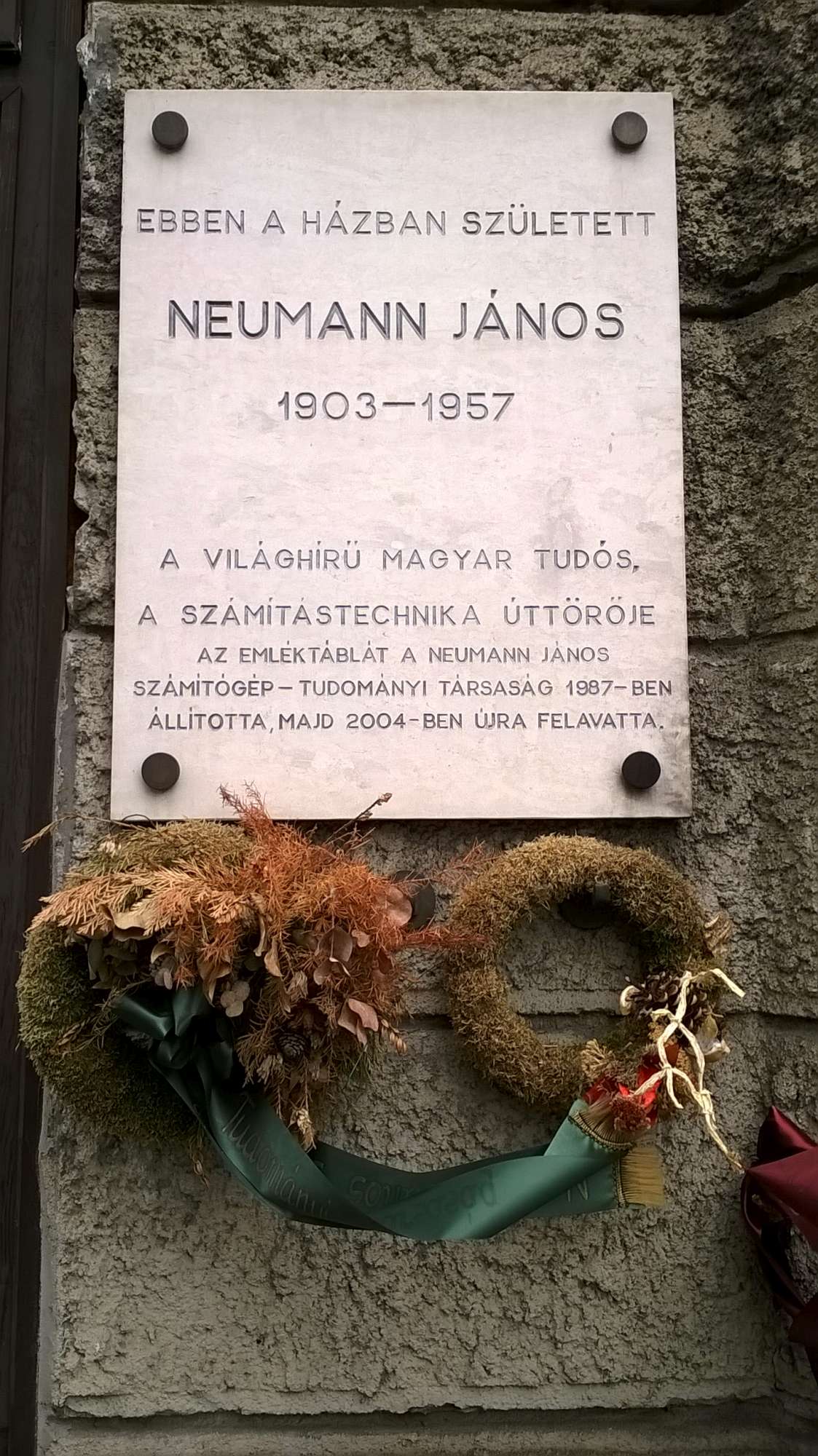
Neumann János Lajos was born on 28 December 1903 in Budapest, then one of the richest and most cultured cities in Europe. His father, Max Neumann, was a successful banker, and in 1913 he received a title of nobility from the Austro-Hungarian emperor: hence the “von” his son would use in the West.
The childhood stories sound like legend. It is said that at six he divided eight-digit numbers in his head and chatted with his father in ancient Greek, that by eight he had read calculus, and that he amused visitors by reading a page of the telephone directory and reciting the names and numbers from memory. Exaggerated or not, they show the impression he made.
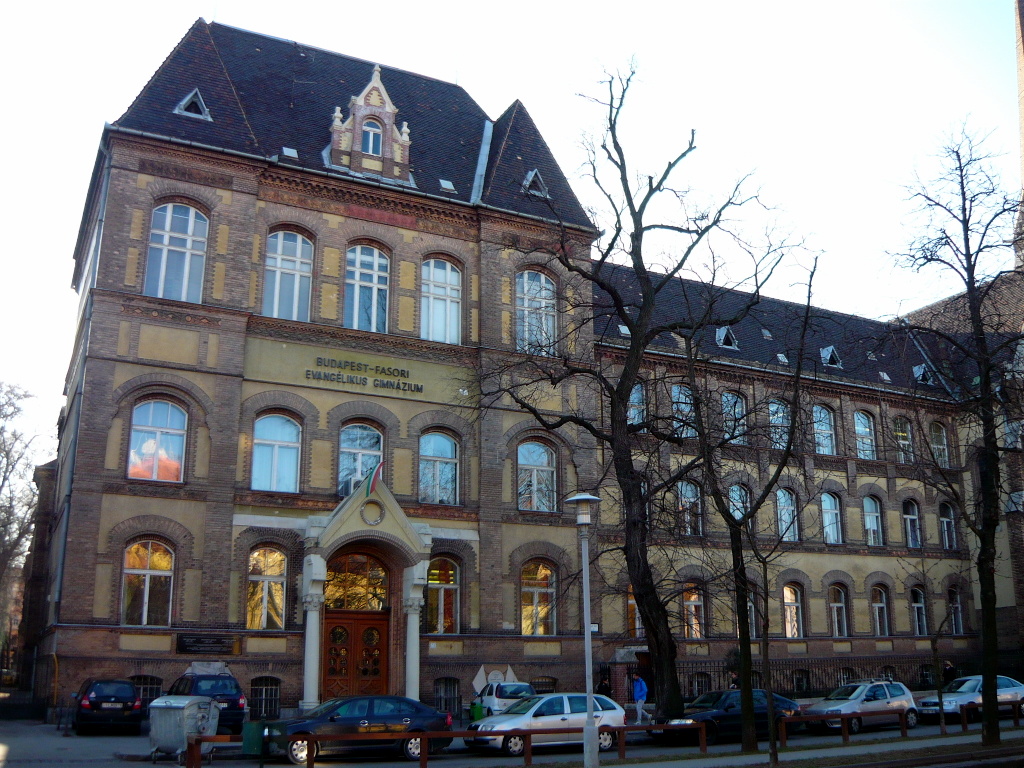
He studied at the Lutheran gymnasium of Budapest, the Fasori, one of the most demanding schools in the country. His mathematics teacher, László Rátz, soon realised that the boy needed more than the school could offer and sent him to university professors. One year ahead of him was Eugene Wigner, who would win the Nobel Prize in Physics in 1963 and who would say, years later, that he had never known a mind as quick as his schoolmate’s.
Chemist and mathematician at once
His father thought mathematics had no future and wanted an engineer for a son. Von Neumann did both. Between 1921 and 1926 he studied chemical engineering in Berlin and then at the Polytechnic in Zurich, while enrolled for a doctorate in mathematics in Budapest, where he turned up only for the exams. In 1926 he had a chemistry diploma and a doctorate on the foundations of set theory. At 19 he had already published the definition of ordinals that is still used today.
In 1926–1927 he went to Göttingen to work with David Hilbert, who was trying to put the whole of mathematics on solid foundations and was interested in the new quantum mechanics. There von Neumann began to write quantum theory in the language of Hilbert spaces. In 1927 he became the youngest Privatdozent at the University of Berlin, and in 1928 he published the minimax theorem, which founded game theory.
Princeton
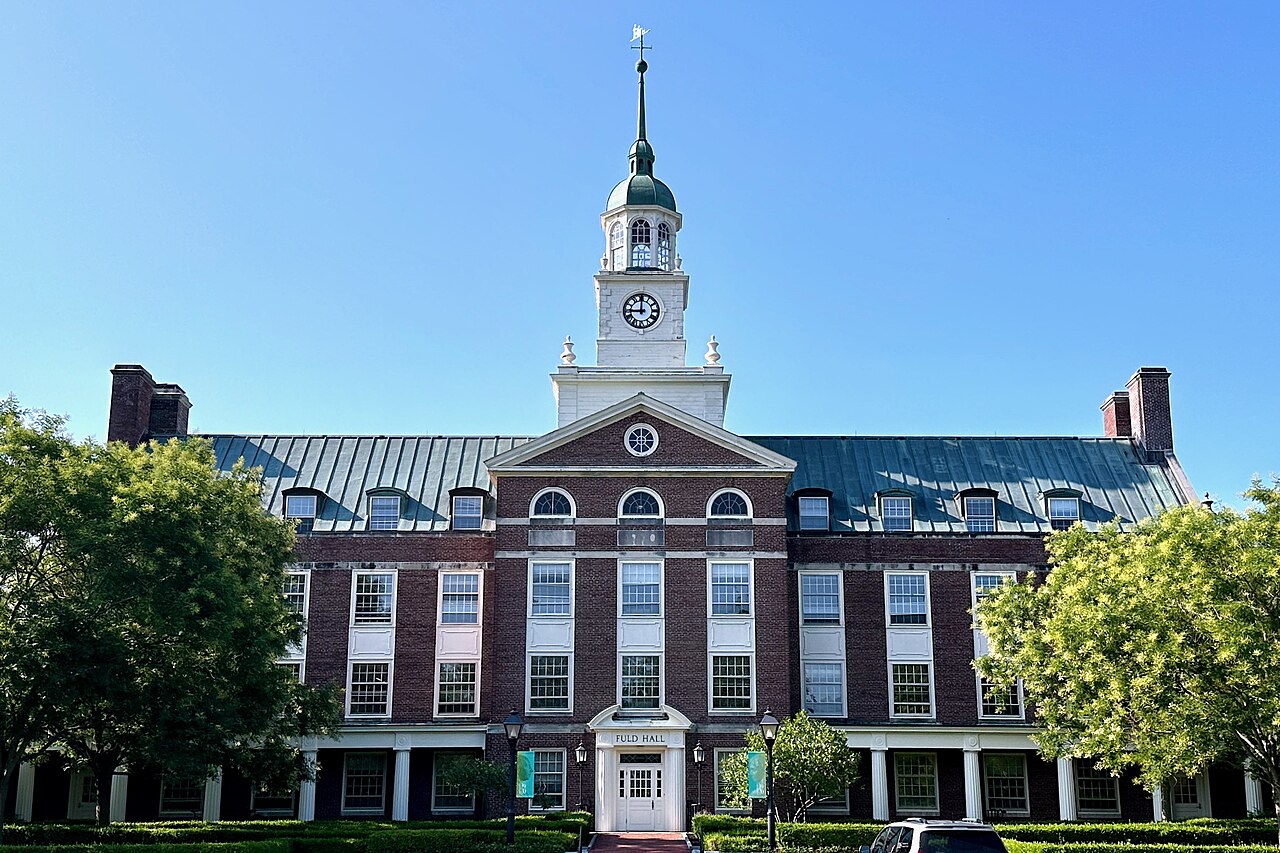
In 1930 Princeton University invited von Neumann and Wigner. Three years later, when the Nazis came to power and began expelling Jewish professors from German universities, von Neumann was one of the first permanent members of Princeton’s new Institute for Advanced Study, alongside Albert Einstein, Kurt Gödel and Hermann Weyl. He was 29.
In Princeton, “Johnny”, as everyone called him, was the opposite of the absent-minded genius. He wore a suit on every occasion, threw parties that went on into the small hours, told risqué jokes, liked to work amid noise and drove so badly that he changed cars often. He married twice: Mariette Kövesi, mother of his only daughter, Marina, who would become an important economist, and later Klára Dán, who would be one of the first computer programmers.
The war and Los Alamos
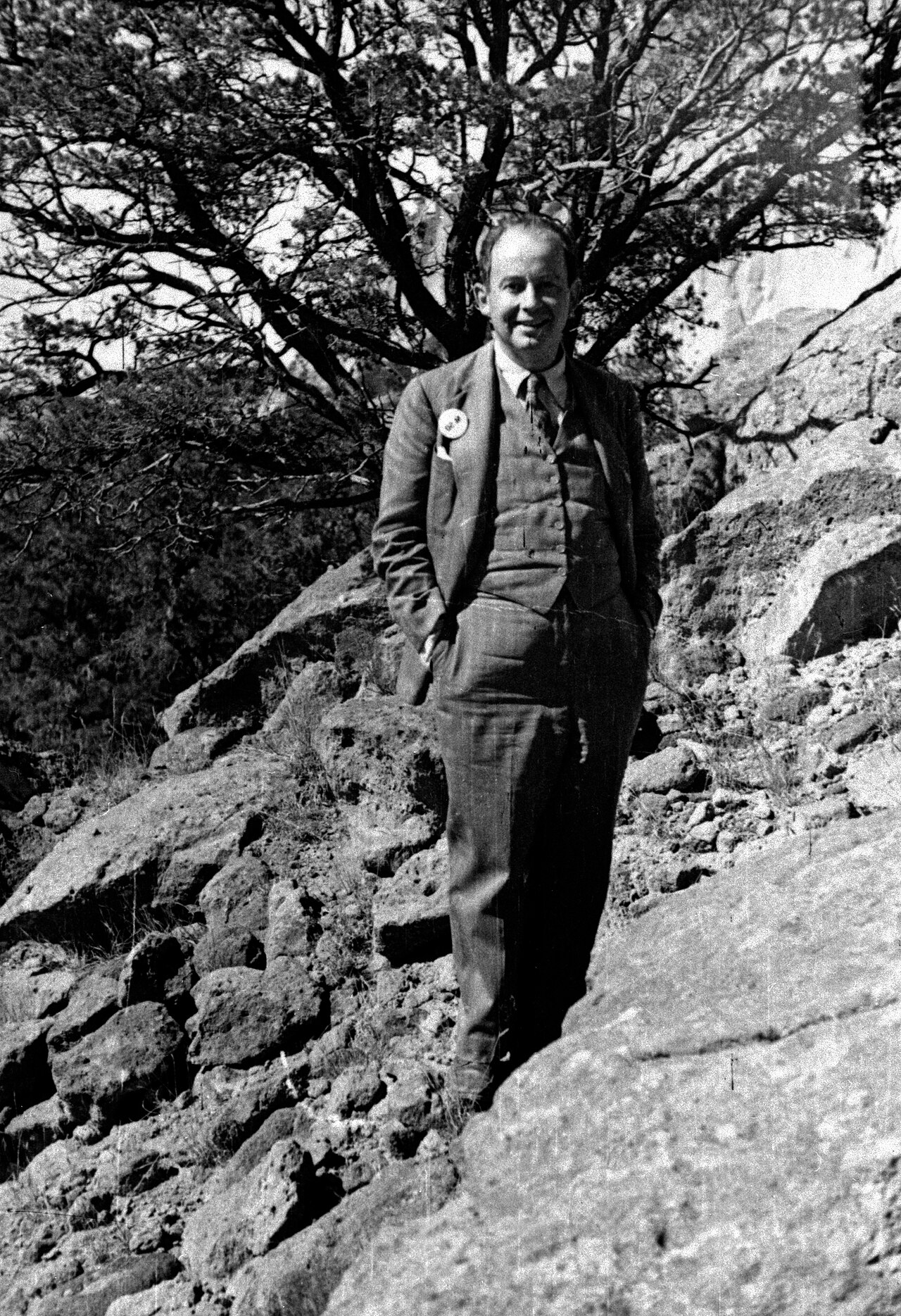
Von Neumann became an American citizen in 1937 and, with the war, began advising the army and the navy on problems of explosions and shock waves. In 1943 he was called to Los Alamos, in New Mexico, where the atomic bomb was being built. His best-known contribution was to the plutonium bomb: it needed a sphere of explosives that, detonated at the same moment at many points, would compress the core evenly, and von Neumann helped to calculate the design of these explosive “lenses”. The calculations were so long that they got him interested in the new calculating machines.
Computers
In 1944, on a railway platform, von Neumann met Herman Goldstine by chance, who told him about the ENIAC, the electronic computer being built at the University of Pennsylvania. Within weeks von Neumann was there. In 1945 he wrote the report on the EDVAC, the ENIAC’s successor, which describes the structure of almost every computer since, and in the same year he wrote one of the first sorting programs, merge sort.
After the war he persuaded the Institute, against the wishes of many pure mathematicians, to build its own computer. The IAS machine ran from 1952, and copies of its design were built in several countries. On it and on the ENIAC ran the first Monte Carlo calculations and the first weather forecast made by computer, in 1950.
The last years
In the 1950s von Neumann was one of the most influential scientists in the American government. He took hard-line positions in the Cold War and took part in the hydrogen bomb and intercontinental missile programmes. In 1955 he was appointed to the Atomic Energy Commission. In the same year he discovered he had cancer, which spread quickly.
He went on working as long as he could, in a wheelchair and then at Walter Reed Hospital in Washington, where soldiers guarded the door in case he revealed secrets in delirium. He was preparing the lectures he was due to give at Yale on The Computer and the Brain, and never gave them. He died on 8 February 1957, aged 53. The book came out unfinished the following year.
Exercise: the fly's series
Sum the series von Neumann is supposed to have summed. On the first leg, the fly and the cyclist coming towards it approach each other at $15 + 10 = 25$ km/h, starting 20 km apart. Show that the legs form a geometric progression and sum them.
The first leg lasts $\frac{20}{25} = 0.8$ h, and the fly covers $12$ km. In that time the cyclists have closed $0.8 \times 20 = 16$ km, leaving $4$ km, one fifth of the initial distance. Each leg is therefore $\frac15$ of the previous one: $12 + \frac{12}{5} + \frac{12}{25} + \cdots = \dfrac{12}{1 - \frac15} = 15$ km.
Exercise: a short life
Von Neumann lived from 1903 to 1957. How old was he when he published ordinals (1923), minimax (1928) and the EDVAC report (1945)?
About 19, 24 and 41 (his birthday was on 28 December, so for almost all of 1923 he was still 19). The three works are in fields with nothing to do with one another: logic, economics and computer engineering.
Sources: Norman Macrae, John von Neumann (1992) · Ananyo Bhattacharya, The Man from the Future (2021) · von Neumann’s biography, MacTutor · Stanisław Ulam, “John von Neumann 1903–1957”, Bulletin of the AMS (1958).
All topics on John von Neumann · Ordinals: numbers made of empty sets →