
Euler's Eyes
2026-10-11
Relative positions of two circles
Two circles can be secant, tangent, one inside the other or far apart. The distance between the centers decides which is the case.
Who discovered
The basic cases are in The Elements of Euclid (c. 300 BC): two distinct circles intersect at a maximum of two points (proposition III.10), and, when they touch, the point of contact is on the straight line that joins the centers (III.11 and III.12). A century later, Apollonius of Perga proposed the most famous problem on the subject: given three circles, draw a fourth tangent to all of them.


The story
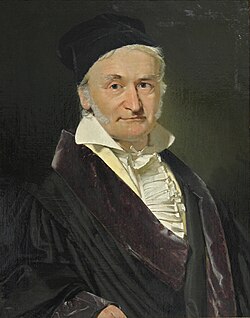
Apollonius’s book on tangencies was lost. In 1600, the Frenchman François Viète reconstructed a solution with a ruler and compass, and the problem began to be studied by Newton, Euler and Gauss. In general there are eight solutions.



Apollonius’s problem returned to the scene in the 20th century: finding a point from the distances to three known stations is linked to it, and radio localization techniques use this reasoning.
In everyday life
- Gears and pulleys. Interlocking sprockets are modeled by tangent circles; the distance between the axes is the sum of the radii.
- Olympic rings and Venn diagrams. Secant circles represent sets with elements in common.
- Waves in the water. Two stones thrown into a lake produce circular waves that intersect at two points.
- Location of cell phones. Knowing the distance to two antennas, the device is at one of the two points where the circumferences intersect; a third antenna dispels the doubt.
Sources: Elements, proposition III.10 · Apollonius (MacTutor) · Viète (MacTutor).
Theory and constructions
ResumoTwo circles
Being $\lambda_1(O_1, r_1)$ and $\lambda_2(O_2, r_2)$, with $r_1 > r_2$, and $d$ the distance between the centers:
| condition | position |
|---|---|
| $d < r_1 - r_2$ | $\lambda_2$ internal to $\lambda_1$ (if $d = 0$, concentric) |
| $d = r_1 - r_2$ | internal tangents |
| $r_1 - r_2 < d < r_1 + r_2$ | secants (two common points) |
| $d = r_1 + r_2$ | external tangents |
| $d > r_1 + r_2$ | external |