Euler's Eyes
2026-10-30
The life of Pierre-Simon Laplace
Timeline
- 1749Born on 23 March in Beaumont-en-Auge, Normandy, the son of a cider merchant.
- 1765Enters the University of Caen to study theology.
- 1768Goes to Paris with a letter of recommendation to d’Alembert.
- 1770Becomes professor of mathematics at the Military School in Paris.
- 1773Is elected to the Academy of Sciences, at the third attempt.
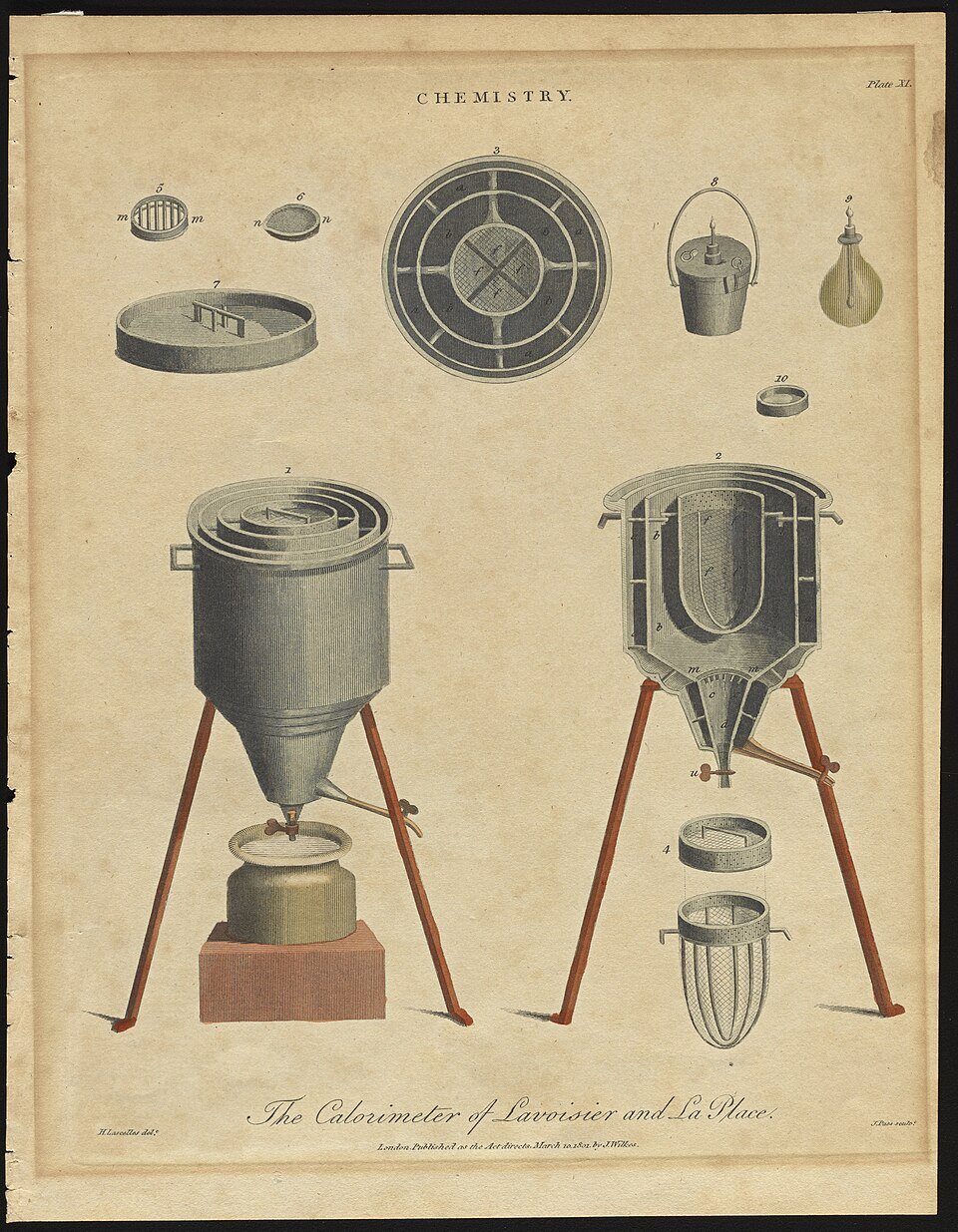
- 1783Publishes with Lavoisier the memoir on heat and the ice calorimeter.
- 1785Examines the cadet Napoleon Bonaparte. Explains the great inequality of Jupiter and Saturn.
- 1788Marries Marie-Charlotte de Courty de Romanges.
- 1793Leaves Paris during the Terror.
- 1796Publishes the Exposition of the System of the World.
- 1799The first two volumes of Celestial Mechanics appear. He is Minister of the Interior for six weeks.
- 1806Becomes a count of the Empire.
- 1812Publishes the Analytic Theory of Probabilities.
- 1814Publishes the Philosophical Essay on Probabilities.
- 1817Receives the title of marquis from Louis XVIII.
- 1827Dies in Paris on 5 March.
- He is born on 23 March 1749, the son of a cider merchant. He studies at the town’s Benedictine school.
- He enters the University of Caen to study theology. Two teachers, Gadbled and Le Canu, discover his talent for mathematics.
- He arrives in Paris with a letter for d’Alembert, who finds him a post as professor at the École Militaire. In 1785 he examines the young Napoleon.
- During the Terror he leaves Paris with his family and takes refuge some 50 km from the capital. He returns after Robespierre’s fall.
- He teaches at the École Normale, leads the Bureau des Longitudes, is Minister of the Interior for six weeks and then a senator and chancellor of the Senate, which meets at the Luxembourg.
- He buys a country house next to that of the chemist Berthollet. The Society of Arcueil, a circle of young scientists, meets there.
- He dies in Paris on 5 March 1827 and is buried at Père-Lachaise. In 1888 his remains are moved to the family mausoleum in Normandy.
- 1749–1765 · Beaumont-en-Auge
- 1765–1768 · Caen
- 1769–1793 · Paris
- 1793–1794 · Melun
- 1795–1814 · Paris
- 1806–1827 · Arcueil
- 1888 · Saint-Julien-de-Mailloc
A boy from Normandy
Pierre-Simon Laplace was born on 23 March 1749 in Beaumont-en-Auge, a Normandy village surrounded by apple orchards. His father, also named Pierre, lived in some comfort from the cider trade; his mother, Marie-Anne Sochon, came from a family of prosperous farmers. Little is known of his childhood, and Laplace himself, once famous, spoke little of it.
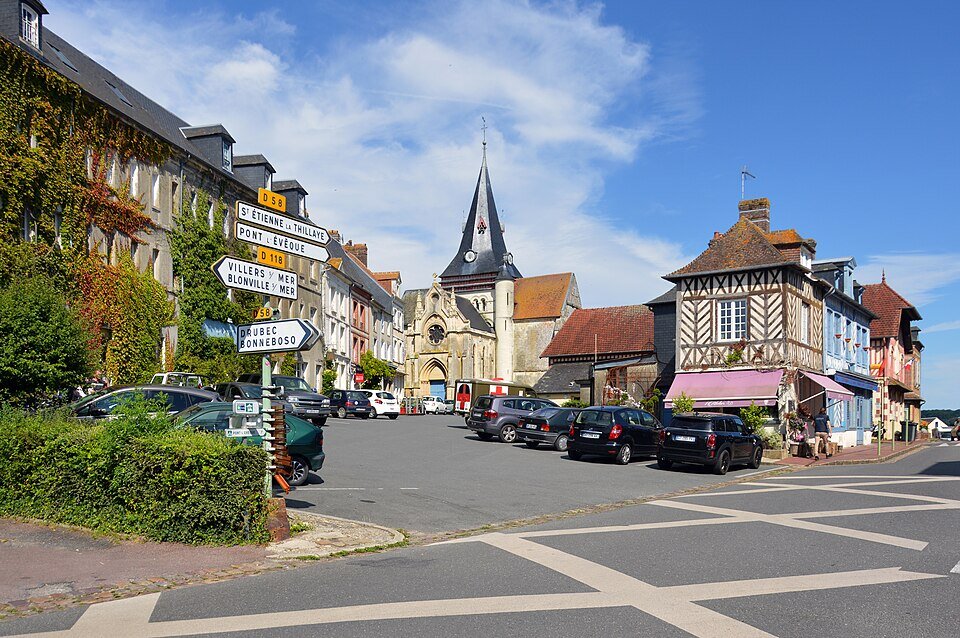
From seven to sixteen he studied as a day pupil at the village school run by Benedictine monks. The natural path was the Church, and at sixteen he entered the University of Caen to study theology. There two professors, Christophe Gadbled and Pierre Le Canu, saw that the young man had a rare talent for mathematics. After two years in Caen, without taking a degree, Laplace gave up the ecclesiastical career.
The letter to d’Alembert
At nineteen, Laplace left for Paris carrying a letter from Le Canu to Jean le Rond d’Alembert, the most influential mathematician in France. The story goes that d’Alembert paid little attention to the letter, and that the young man then wrote to him himself, on the principles of mechanics; impressed, d’Alembert is said to have replied that a recommendation was unnecessary, since Laplace had introduced himself better on his own. The story has reached us in different versions, but the outcome is certain: d’Alembert began to guide the young man’s studies and found him a job.
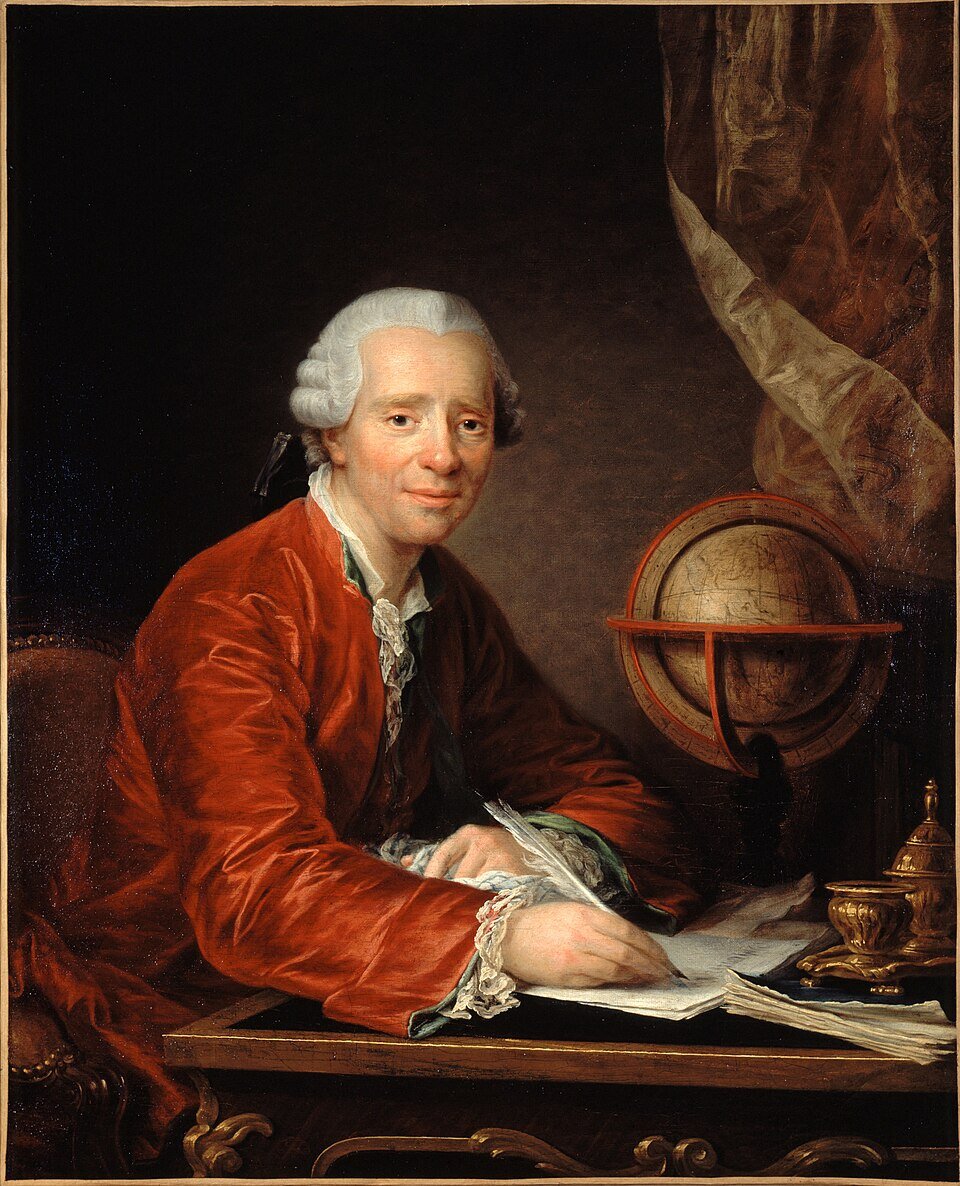
By 1770 Laplace was professor of mathematics at the Military School in Paris, where the king’s officers were trained. That same year he presented his first paper to the Academy of Sciences. Over the next three years he sent the Academy one memoir after another, on differential equations, probability, celestial mechanics. He was turned down in 1771 and in 1772, when older candidates were preferred, and was finally elected on 31 March 1773, at 24.
Lavoisier’s ice
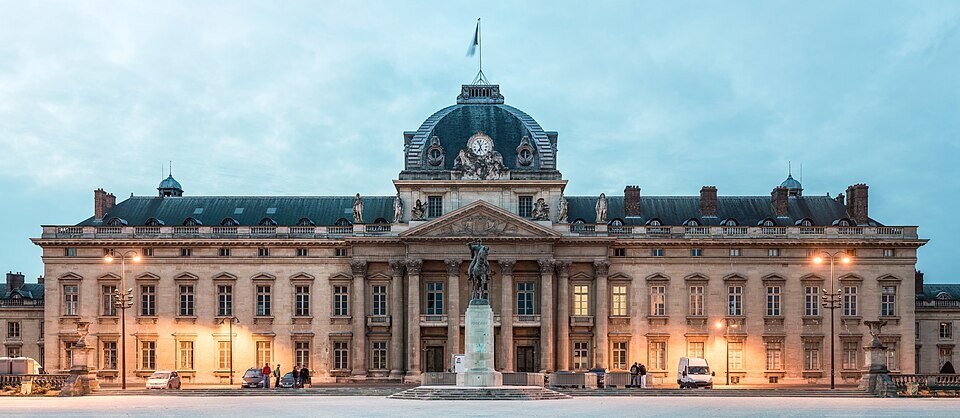
Laplace did not only calculate. In the early 1780s he worked with the chemist Antoine Lavoisier on an ingenious device, the ice calorimeter. The idea was to measure heat by the amount of ice melted: an animal or a chemical reaction sat at the centre, surrounded by layers of ice, and the water that ran off was weighed. With it the two showed, among other things, that the breathing of a guinea pig produces roughly the same heat as burning the charcoal that releases the same amount of carbon dioxide: breathing is a slow form of combustion. The Memoir on Heat came out in 1783.
Napoleon’s examiner
In 1784 Laplace was appointed examiner of the royal artillery corps. On his 1785 list was a sixteen-year-old Corsican cadet, Napoleon Bonaparte, who passed. The two would meet again many times. That same year Laplace solved one of the great puzzles of astronomy, the inequality of Jupiter and Saturn, and rose in rank at the Academy.
In 1788, at 39, he married the nineteen-year-old Marie-Charlotte de Courty de Romanges. They had two children: Charles-Émile, born in 1789, who would become a general, and Sophie-Suzanne, who died in childbirth in 1813.
The Revolution
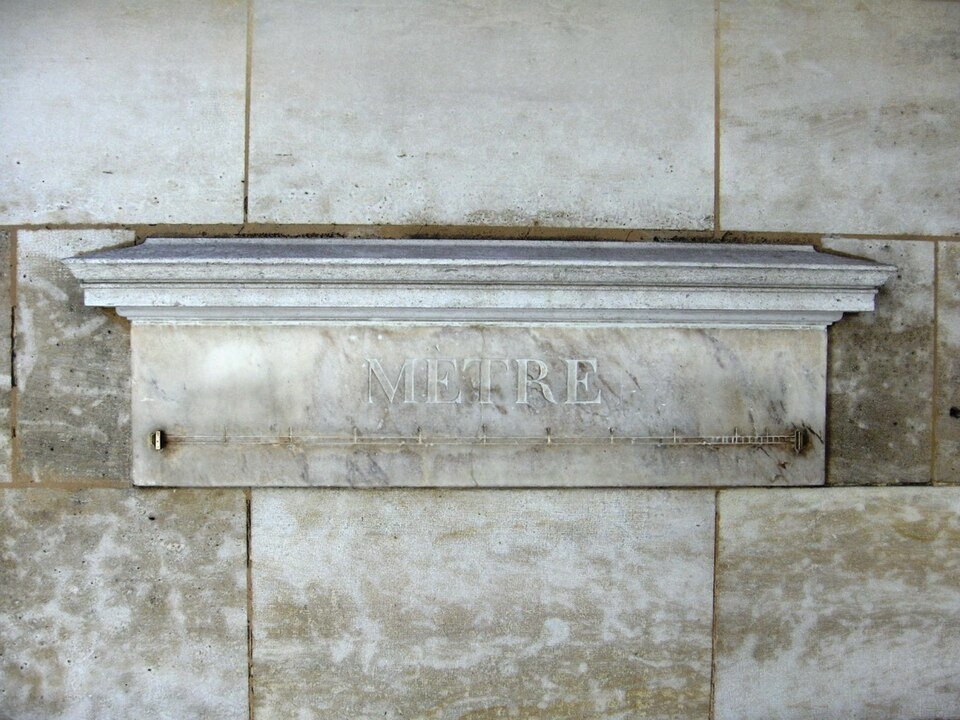
The French Revolution made science a matter of state. In 1790 Laplace joined the Academy’s commission charged with creating a rational system of weights and measures, which would result in the metre: one ten-millionth of the distance from the pole to the equator. But in 1793 the Convention dissolved the academies, and the Terror began sending scientists to the guillotine. Laplace was removed from the commission and left Paris with his family, taking refuge some fifty kilometres from the capital. Lavoisier, his friend from the calorimeter, was guillotined in May 1794. Laplace returned only after the fall of Robespierre, in July of that year.
1795 brought the years of reconstruction. Laplace taught at the newly created École Normale, which lasted only a few months but had famous lectures, among them his own on probability, and helped found the Bureau des Longitudes, in charge of astronomy and navigation. In 1796 he published the Exposition of the System of the World, a book without formulas for the general public, in which the nebular hypothesis and the dark stars appear.
Six weeks as a minister
In November 1799, after the coup that brought him to power, Napoleon appointed his former examiner Minister of the Interior. The experiment lasted six weeks. Years later, in exile on Saint Helena, Napoleon summed the case up cruelly: Laplace “sought subtleties everywhere, had only problematic ideas, and carried the spirit of the infinitely small into administration”.
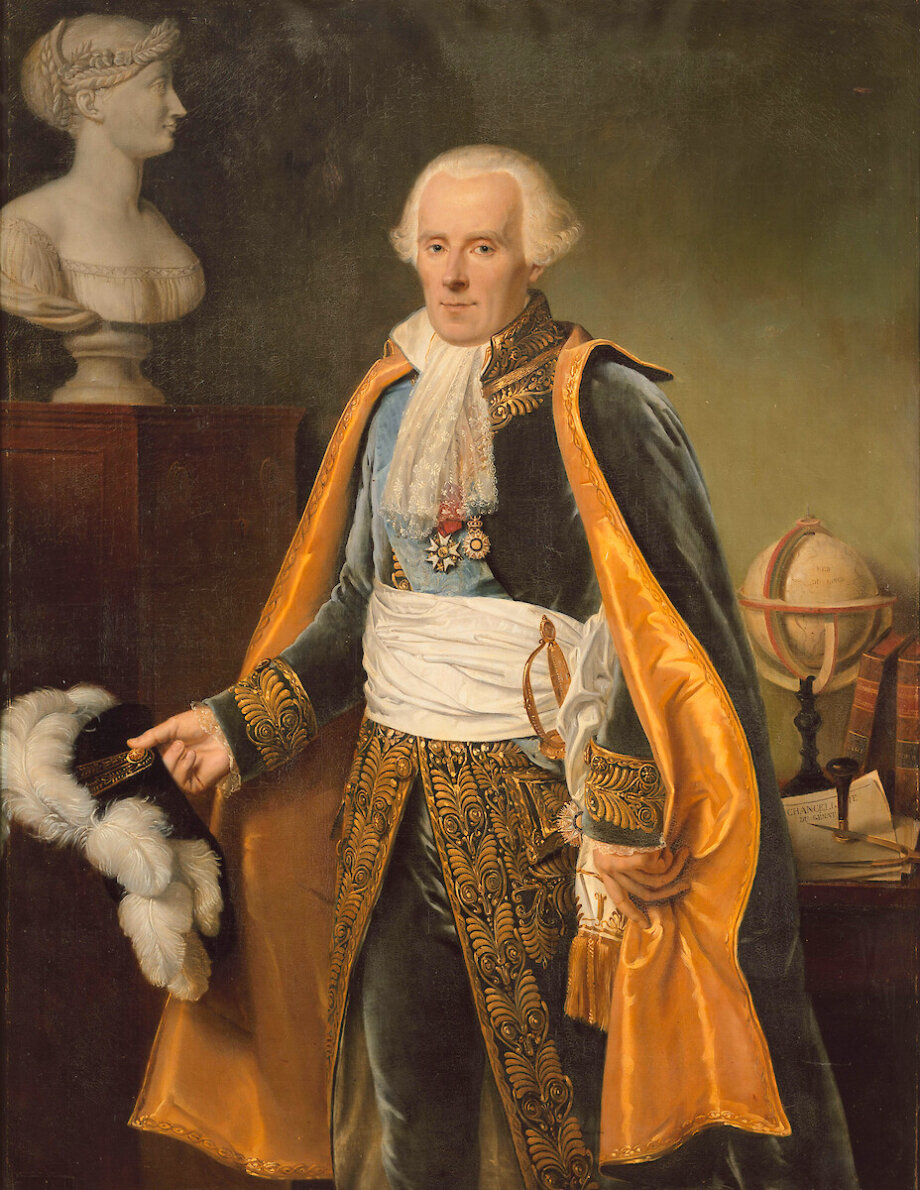
The consolation was generous. Laplace moved to the Senate, of which he became chancellor, received the Legion of Honour and in 1806 the title of count of the Empire. Between 1799 and 1805 the first four volumes of Celestial Mechanics came out; the fifth would come in 1825.
The Society of Arcueil
In 1806 Laplace bought a country house in Arcueil, south of Paris, next door to that of the chemist Claude Louis Berthollet. The two gathered there a circle of young scientists, the Society of Arcueil, which included Biot, Gay-Lussac, Arago and Poisson. Laplace used his influence to obtain posts and funds for his protégés, and they in turn carried his programme forward: to explain light, heat, capillarity and sound by forces between particles, as Newton had done with gravity.
It was also the time of the great works on chance: the Analytic Theory of Probabilities of 1812, dedicated to Napoleon, and the Philosophical Essay on Probabilities of 1814, a formula-free version of the 1795 lectures.
The marquis
Laplace knew how to change sides. In 1814 he voted in the Senate for Napoleon’s deposition; after the emperor’s final fall, Louis XVIII made him a peer of France and, in 1817, a marquis. The dedication to Napoleon disappeared from later editions of the Analytic Theory. In 1816 he entered the Académie Française. Many contemporaries found him an opportunist; the more generous recalled that he used his influence to protect science and scientists in violent times.
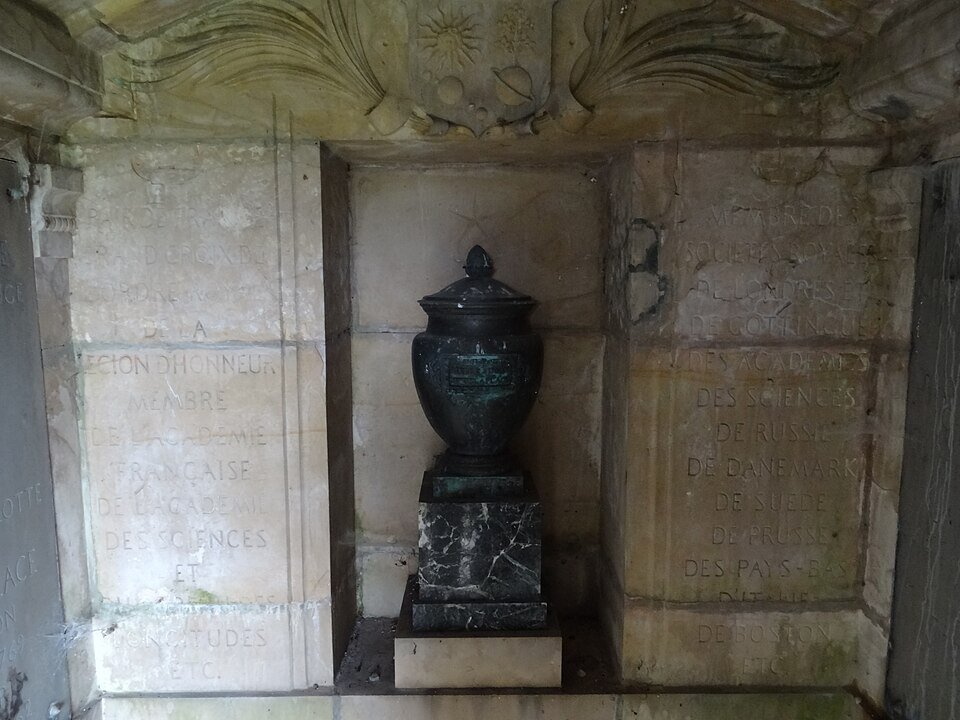
Laplace died in Paris on the morning of 5 March 1827, at 77. According to the accounts of those who were with him, his last words were: “What we know is little; what we do not know is immense.” He was buried in the Père-Lachaise cemetery; in 1888 his remains were taken to Normandy, to the mausoleum of the family’s descendants in Saint-Julien-de-Mailloc.
Exercise: his age at each title
Laplace was born in 1749, elected to the Academy in 1773, became a count in 1806 and a marquis in 1817. How old was he on each occasion, and how much time separates his election to the Academy from the title of marquis?
The election was on 31 March 1773, eight days after his birthday: he had just turned 24. In 1806 he was 57; in 1817, 68. From the Academy to the marquisate, $1817 - 1773 = 44$ years passed.
Exercise: the original metre
The metre was defined in 1791 as one ten-millionth of the distance from the North Pole to the equator, measured along a meridian. By that definition, what would the circumference of the Earth through the poles be?
From the pole to the equator is a quarter of a meridian, that is, $10\,000\,000$ m $= 10\,000$ km. The whole meridian has four quarters: 40 000 km. The value measured today is about 40 008 km; the difference comes from small errors in the eighteenth-century survey.
Sources: Charles Coulston Gillispie, Pierre-Simon Laplace, 1749–1827: A Life in Exact Science (1997) · Roger Hahn, Pierre Simon Laplace, 1749–1827: A Determined Scientist (2005) · biography of Laplace, MacTutor · Joseph Fourier, Éloge historique de M. le Marquis de Laplace (1829).
All topics on Pierre-Simon Laplace · Jupiter, Saturn and the stability of the Solar System →