You will publicly ask Jacobi or Gauss to give their opinion, not on the truth, but on the importance of these theorems. After that there will, I hope, be people who will find it profitable to decipher all this mess.
— Évariste Galois, letter to Auguste Chevalier (29 May 1832)
Évariste Galois (1811–1832) failed the entrance examination of the École Polytechnique twice, saw three of his papers lost or rejected by the Paris Academy of Sciences, was expelled from college, was imprisoned twice for political reasons and died in a duel at the age of 20. On the night before, he wrote a friend a letter summarising his discoveries.
Those discoveries answered once and for all the question that had occupied Lagrange and Abel: which equations can be solved by radicals? To answer it, Galois invented a new idea, that of a group. Nobody understood it while he lived. Today groups are in particle physics, in the chemistry of crystals, in the Rubik’s cube and in the cryptography that protects payments on the internet.
In this track we tell Galois’s life and redo, with all the calculations, five of his discoveries.
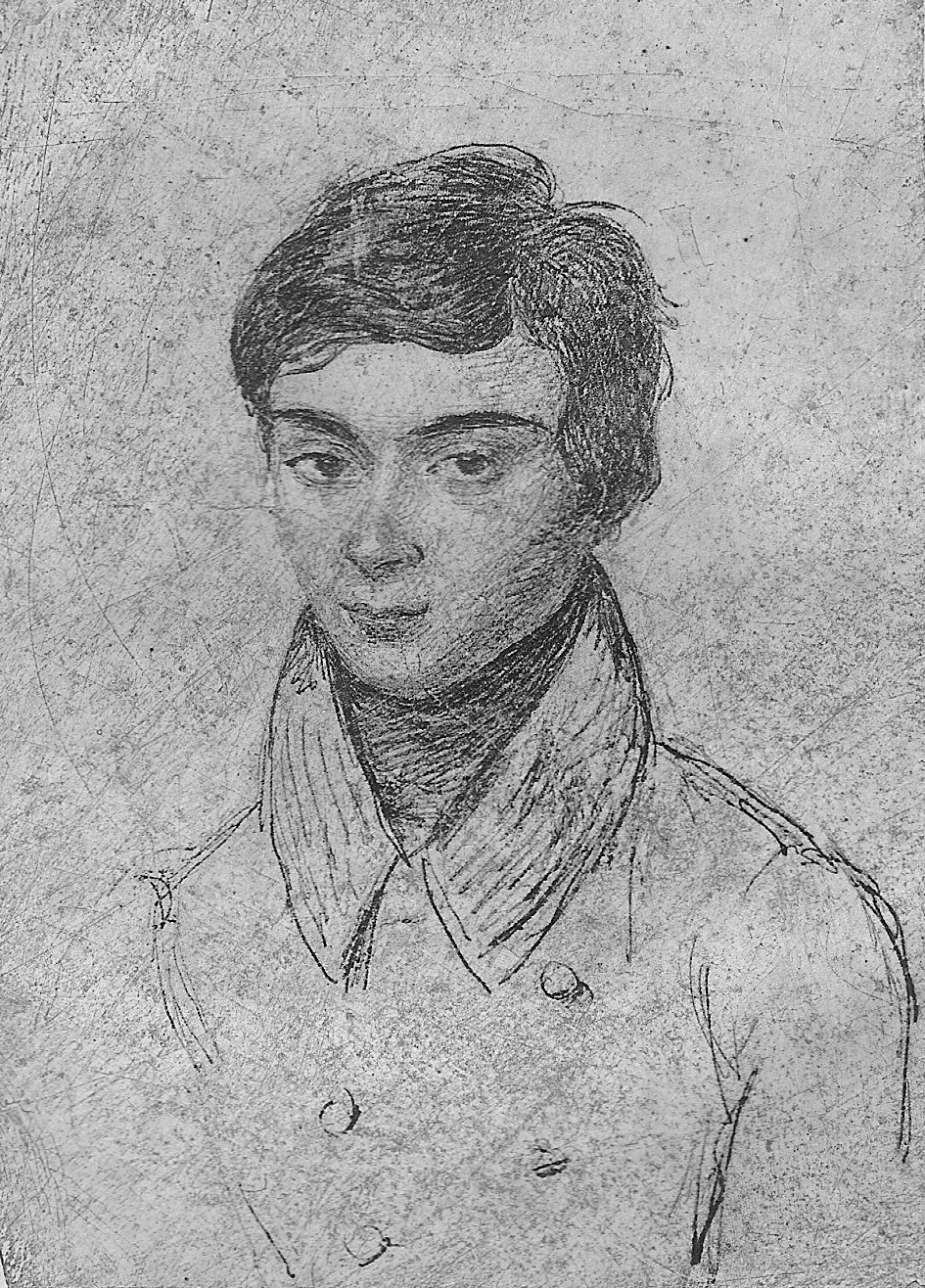
Who he was
Évariste Galois
- Nascimento
- 25 October 1811, Bourg-la-Reine, France
- Morte
- 31 May 1832, Paris
- Origem
- France
- Áreas
- Algebra, theory of equations, group theory and finite fields
Reading guide
Biography
Discovery and proof
- Shuffling the roots: the group of an equation
- What a group is: the six symmetries of the triangle
- When an equation can be solved by radicals
- Galois imaginaries: finite fields
- Doubling the cube and trisecting the angle: the impossible constructions