Of all the principles that can be proposed for this purpose, I think there is none more general, more exact, or easier to apply than the one that consists in making the sum of the squares of the errors a minimum.
— Adrien-Marie Legendre, Nouvelles méthodes pour la détermination des orbites des comètes (1805)
Adrien-Marie Legendre (1752–1833) is a name that turns up in almost every branch of mathematics: the Legendre polynomials of physics, the Legendre symbol of number theory, the Legendre transform of mechanics and thermodynamics, the Gauss–Legendre quadrature of computer programs. But who was Legendre?
He was a wealthy Parisian whom the French Revolution left poor. He learned mathematics at the Collège Mazarin, taught at the École Militaire alongside Laplace, helped to measure with triangles the distance between the observatories of Paris and Greenwich, sat on the committees that created the metre and directed, with Prony, the computation of the largest tables of logarithms made up to that time. He wrote the geometry book that, for more than a century, taught geometry in France, in the United States and in Brazil.
His research had two great passions, number theory and elliptic integrals, and in both he had the bad luck of crossing paths with younger geniuses: Gauss in the first, Abel and Jacobi in the second. Legendre came out of his priority disputes with Gauss wounded, and saw his great treatise go out of date soon after it was printed. But the questions he asked, and the way he organised them, are still at the centre of mathematics.
In this series we tell the story of Legendre’s life and rework, with the calculations in full view, seven of his ideas.
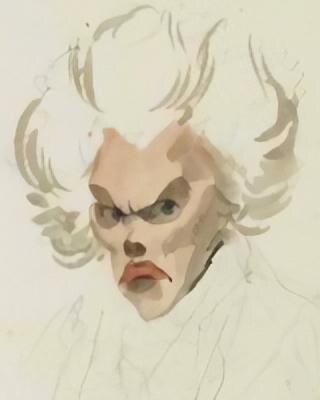
Who he was
Adrien-Marie Legendre
- Nascimento
- 18 September 1752, Paris, France
- Morte
- 10 January 1833, Paris, France
- Origem
- France
- Áreas
- Number theory, elliptic functions, geodesy, geometry, statistics
Reading guide
Biography
Discoveries and proofs
- The attraction of spheroids and the Legendre polynomials
- Spherical triangles and the measurement of the Earth
- The Elements of Geometry and the parallel postulate
- Quadratic reciprocity and the Legendre symbol
- How many primes are there up to x
- The method of least squares
- Forty years of elliptic integrals