
Euler's Eyes
2022-08-14
Theorems
In previous posts we talked about postulates and axioms, without a formal demonstration of results. Here we begin the concepts of formal demonstration, for this, we present some fundamental concepts to begin the topic.

Concepts
The first very important concept in mathematics is definition.
Definition: is a statement that describes the meaning of a mathematical term.
Proposition
In previous posts we defined this concept, but now, we present it in a simpler way:
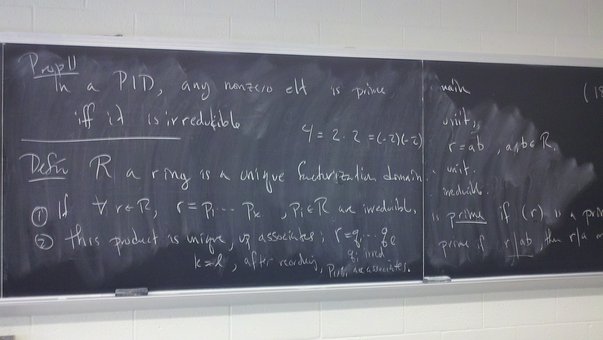
Proposition: is a declarative sentence.
- If it is simple, it is something that has meaning in itself.
- If it is true in all logical possibilities, it is said to be a Tautology.
- If it is true in all logical possibilities, it is said to be a Tautology.
- There is no other possibility, besides the previous ones.
Argument
The following definitions are equally important for good results construction.
Argument: is a finite sequence $n+1$ propositions:
- Set of hypotheses: $\mathcal{H} = \\{H_1, H_2, \dots, H_n\\}$
- Thesis: $T$, which is a consequence of the hypotheses.

Conjecture
Conjecture: is a proposition that has not been demonstrated to date nor refuted.
In this way, the conjecture is a proposition that has not been demonstrated so far, however, it needs to be demonstrated to turn a result into a theorem.

Theorems
A very important concept is that of Theorem, which is a logical proposition, that is, it is a tautology. A result, in tautology mathematics, that matters most are those that use conditional and/or biconditional connectives.
Theorem: is a proposition guaranteed by a proof.

Demonstrating a result is basically putting together a dissertation essay. For this we work with truth tables and with this, we show that the proposition is in fact a tautology.
In the previous post, we saw that axioms and postulates are facts accepted without proof.
From now on, to demonstrate a result, we will use preliminary results such as:
- Lemmas: is a result whose purpose is to be used to demonstrate a greater result.
- Propositions: is a result whose purpose is to be used to demonstrate a greater result.
As stated, these tautologies are used to demonstrate larger results as theorems and corollaries.
Corollary
Corollary: is a theorem that can be established directly from the proven theorem.
More specifically, when a theorem helps to easily conclude other statements, this result is called a corollary of the theorem.
Implication and Bi-implication logically
With concepts of tautology, we have seen so far that when we define $p$ and $q$ propositions and $p \rightarrow q$ a tautology, we say:
- $p \rightarrow q$ is an implication.
- $p \Rightarrow q$ is a logical implication.
Likewise, let $p$ and $q$ be propositions and $p \leftrightarrow q$ be a tautology, we say:
- $p \leftrightarrow q$ is a bi-implication.
- The latter means that $p$ and $q$ are logically equivalent.
- $p \Leftrightarrow q$ is a logical bi-implication.
- The latter means that $p$ and $q$ are equivalent.

Therefore, with these concepts we can propose the following result:
Theorem for logical implication
Theorem: Let $p, q$ and $r$ be propositions. Then:
- Reflective: $p\Rightarrow p$
- Transitive: $(p\rightarrow q) \wedge (q\rightarrow r) \Rightarrow (p\rightarrow r)$
- Simplification: $p \wedge q \Rightarrow p$
- Addition: $p \Rightarrow p \vee q $
- Modus Ponens (in Latin means “the way that affirms by affirming”): $(p \wedge (p \rightarrow q)) \Rightarrow q$
- Modus Tollens (in Latin means “mode that negates by negation”): $(p \rightarrow q)\sim q \Rightarrow \sim p$
- Reduction ad absurdum (in Latin it means “reduction to absurdity”): $(\sim p \rightarrow (q \wedge \sim q)) \Rightarrow p$
- Symmetry: $(p \leftrightarrow q) \Rightarrow (q \leftrightarrow p) $
- Transitive: $(p \leftrightarrow q) \wedge (q \leftrightarrow r)\Rightarrow (p \leftrightarrow r) $
- Disjunction: $(p \leftrightarrow q) \wedge \sim p \Rightarrow q $
Demonstration: Just apply the truth table.
Theorem for logical bi-implication
Theorem: Let $p, q$ and $r$ be propositions. Then:
- Reflective: $p\Leftrightarrow p$
- Double negation: $\sim (\sim p)\Leftrightarrow p$
- Negation of the conjunction - Morgan’s Law: $(p \wedge p)\Leftrightarrow (\sim p \vee \sim q)$
- Denial of disjunction - Morgan’s Law $\sim (p \vee p)\Leftrightarrow (\sim p \wedge \sim q)$
- Negation of conditional $\sim (p\rightarrow q) \Leftrightarrow (p \wedge \sim q)$
- Negation of the biconditional $\sim (p\leftrightarrow q) \Leftrightarrow (p \wedge \sim q) \vee (\sim p \wedge q)$
- Commutativity of $\vee$: $(p\vee q) \Leftrightarrow (q\vee p)$
- Commutativity of $\wedge$: $(p\wedge q) \Leftrightarrow (q\wedge p)$
- Associativity of $\vee$: $(p\vee q)\vee r \Leftrightarrow p\vee (q\vee r)$
- Associativity of $\wedge$: $(p\wedge q)\wedge r \Leftrightarrow p\wedge (q\wedge r)$
- Distributivity: $p \vee (q\wedge r) \Leftrightarrow (p\vee q)\wedge (p\vee r)$
- Distributivity: $p \wedge (q\vee r) \Leftrightarrow (p\wedge q)\vee (p\wedge r)$
- Biconditional: $(p\leftrightarrow q) \Leftrightarrow (p \rightarrow q) \wedge (q \rightarrow p)$
- Positive counter $(p\rightarrow q) \Leftrightarrow (\sim p \rightarrow \sim q)$
- Idempotences $(p\vee p) \Leftrightarrow p$ and $(p\wedge p) \Leftrightarrow p$
- Transitivity $(p\Leftrightarrow q)$ and $(q\Leftrightarrow r)$ $\Leftrightarrow (p\Leftrightarrow r)$
Demonstration: Just apply the truth table.