
Euler's Eyes
2022-10-03
Introduction to Real Numbers
The first model for real numbers was proposed by the Greeks, from Pythagoras to Euclid. The beginning of everything came with irrational numbers, like $\sqrt{2}$ and $\pi$.
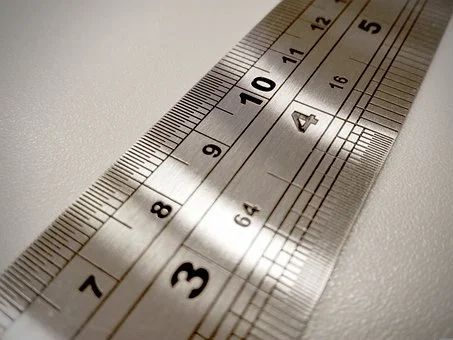
Evolution of number concepts
In this book for children we begin the construction of the entire sequence until the introduction to real numbers. We start with concepts of counting and measuring with natural numbers, which is the starting point for building the number line.
The Greeks expressed the study of numbers through geometric shapes, with flat geometry. Its applications were seen in Greek buildings seen to this day.
Geometry as an algebraic concept began to be developed by René Descartes, which years later was deepened by Sir Isaac Newton and Gottfried Wihelm Leibniz with differential calculus.
The construction of real numbers
To get to the real numbers, throughout the posts, we created sequences of numerical sets as in the following figure:

Natural numbers
The first numerical set we worked on was the set of natural numbers. It was one of the most used in antiquity, due to the need for counting. The set of natural numbers is given by:
$$\mathbb{N} = \\{ 1 , 2 ,3, 4, 5, 6, 7 ,\dots\\}$$
Whole numbers
As said in the integer posts, the need for negative numbers was the main motivation for building this set. The expansion of the set was composed of the natural numbers and the numbers opposite to it. For $n\in \mathbb{N}$ we have:
$$\mathbb{Z} = \\{-n\\}\cup \\{0\\}\cup \\{n\\} = \\{\dots, -5,-4,-3,-2,-1,0,1,2,3,4,5,\dots\\}$$
Rational numbers
The next set of numbers that emerged were rational numbers, with the famous fractions. These sets are still widely used today, with proportions, ratios, rates, percentages, among others.
$$\mathbb{Q} = \left\\{ \dfrac{p}{q}, \quad \text{com p e q inteiros e q diferente de zero} \right\\}$$
Irrational numbers
The Greeks were the first to discover numbers that did not have the previous properties. First with the Pythagorean constant $\sqrt{2}$ and then the Archimedes constant $\pi$. Later Leonhard Euler named the number $e$ in honor of Napier, Baron de Marchiston, but with Euler’s initial.
$$\mathbb{I} = \\{\dots, \sqrt{2}, \sqrt{3}, \pi, e,\dots\\}$$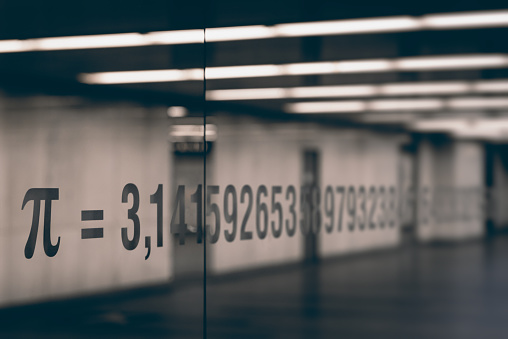
Real numbers
Most applications are used with real numbers, such as measurements in general, such as mass, temperature, length, among others. It was constructed with the holes contained in the sets of rational numbers. This can be written as:
$$\mathbb{R} = \mathbb{Q}\cup \mathbb{I}$$
All the usual operations apply to real numbers. In the next post we will talk about fundamental properties.