
Euler's Eyes
2022-09-19
Introduction to Irrational Numbers
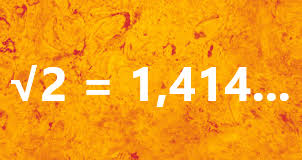
In this group of posts the objective is to present non-rational numbers, which we call irrational. For this it is important to talk about the Pythagorean constant $\sqrt{2}$. Until the emergence of this constant, the Pythagorean school followed in the footsteps of the Sumerians, Plato’s academy, Alexandria’s school, among others.
Historical definition of the Square Root
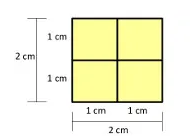
In introductory posts, we saw concepts of square root, which is nothing more than the side of the square.
The word
- square root
In Latin it represents
- side of the square
For example, we take $\sqrt{4}=2$, the answer is in modules. This is information that has been lost over time, that is, we have become a sterile notation. The reader will see that the Semiotically active notations are those that evolved for the advancement of mathematics.

The square root from the perspective of the Latin language (Latin)
radix quadratum 4 aequalis 2
Which we translate as:
the side of the square of area 4 is equal to 2
As stated, the information was lost over time:
radix quadratum 4 aequalis 2
rad quad 4 aq 2
ra qua 4 aq 2
r q 4 aq 2
Suddenly the r swallows the number:
$$ \sqrt{4}=2$$a
Pythagoras constant
The first irrational number to appear in history was $\sqrt{2}$ with the Sumerians, who were the first to inhabit Mesopotamia, long before the Babylonians. They were already known and calculated their numerical value, known as the Sumerian tablet. Below we have a video that tells a little of this story.
Sumerian Tablet
The Sumerian tablet is represented by a square with two diagonals and three numbers written in the system in the base 60. The Sumerian number is constructed as follows:
- the number before the dot and comma (;) is an integer
- the following numbers are separated by a comma (,)
- all parts are divided by 60
For example:
$$0;30 = \dfrac{0}{60} + \dfrac{30}{60} = 0 + \dfrac{1}{2} = 0.5$$
Sumerian constant and ratio
The Sumerians used what we now call the Pythagorean theorem, before Pythagoras.
Be
$$a=\\{0;30\\}_{60}$$$$b=\\{1;24,51,10\\}_{60}$$$$c=\\{0;42,25,35\\}_{60}$$The Sumerians discovered that multiplying $a~.~b$ is equal to $c$.
Mirabilis Abbreviation Pythagoras
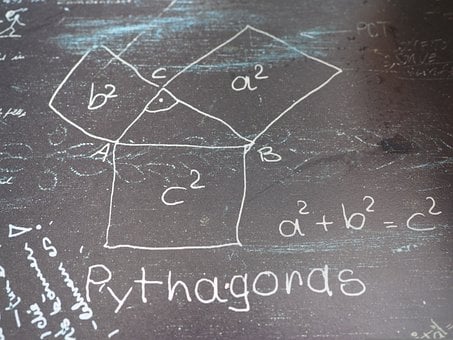
With the diagonal of the square, Pythagoras arrived at one of the most important results in geometry, group theory and linear algebra.
So, we have to
$$\sqrt{2} \approx \\{1;24,51,10\\}_{60} = 1 + \frac{24}{60} + \frac{51}{60} + \frac{10}{60} \approx 1,414212966296$$
Diagonal Logo $ = c=\dfrac{\sqrt{2}}{2}.$
In any square it is valid:
$$\dfrac{\text{diagonal} }{\text{lado} } = \dfrac{\dfrac{\sqrt{2} }{2} }{\dfrac{1}{2} }= \text{constante } = \sqrt{2}$$
A is not rational.
Pythagorean constant not rational by Aristotle
Aristotle, the great Greek philosopher, demonstrated the non-rationality of $\sqrt{2}$. The technique used by Aristotle is to write a whole number as even and odd numbers.
This concept was explained a lot in the post on odd and even numbers. We remember:
Pair
$$n= 2q $$Odd
$$n = 2q + 1$$for some $q$ an integer.
The next step is to obtain some results that help show that $\sqrt{2}$ is irrational.
Proposition 1: The square of every odd number is odd.
Demo:
In fact, let $p = 2q + 1$ be an odd number. Remember the scale? With that, let’s use this technique. We just square both sides and use the notable squares.
Therefore, $p^2$ is an odd integer.
$\square$
Proposition 2: The square of every even number is even.
Demo:
Let $p=2q,$ be $p$ odd. From the proposition 1 we have that its square $p^2$ is odd, $p^2 = (2q)^2 = 4q^2 = 2 (2q^2) = 2t$ for $t$ integer, which is even (absurd).
Therefore, $p$ is even.
$\square$
With these two results we can prove that $\sqrt{2}$ is not rational.
Theorem 1: By Aristotle $\sqrt{2}$ is not rational.
Demo:
In fact, suppose absurdly that $\sqrt{2}$ is rational. Therefore, there are integers $p$ and $q$, with $q$ non-zero. And we can write it as:
$$c=\dfrac{p}{q} = \sqrt{2}$$When we square both sides we have
$$c^2 = 2, \quad \text{}{que é par} $$From the proposition 2 we have that $c$ is for, consequently we can assume that $p$ and $q$ are not both pairs.
- $\dfrac{\text{par} }{\text{par} }= \dfrac{2a}{2b} = \dfrac{a}{b} \neq 2$
- $\dfrac{\text{par} }{\text{ímpar} }= \dfrac{2a}{2b +1 } = 2 \left(\dfrac{a}{2b + 1}\right) \overset{a=2b+1}{=} 2$
From the fact that
$$\dfrac{p^2}{q^2}=2 \qquad \Rightarrow \qquad p^2=2q^2 \qquad (\star)$$From this we have that $p^2$ is even, which implies $p$ is even. If p is even, we can write it as $p=2m.$
When substituting in $\star$ we have:
Therefore, $q^2 = 2m^2$ is also even, which is absurd.
Therefore, $\sqrt{2}$ is not rational.
$\square$