Metrical geometry is thus a part of descriptive geometry, and descriptive geometry is all geometry.
— Arthur Cayley, A sixth memoir upon quantics (1859)
Arthur Cayley (1821–1895) wrote 966 papers, more than any other mathematician of his century except Cauchy. His name is on the Cayley–Hamilton theorem of linear algebra courses, on Cayley’s theorem in group theory, on Cayley’s formula for counting trees, on Cayley graphs, on the Cayley transform, on the Cayley numbers, as the octonions are sometimes called. But who was Cayley?
He was an Englishman who spent his childhood in St Petersburg, came first at Cambridge and, not wishing to be ordained, had to leave the university. For fourteen years he worked as a lawyer in London, drafting property deeds, and in his spare time wrote some 250 mathematical papers. In one of them, from 1858, he treated matrices for the first time as objects that can be added and multiplied. In another, from 1854, he defined a group by its multiplication table, without caring what its elements were.
At forty-two he accepted a much smaller salary to return to Cambridge as a professor, and stayed there until he died. He was a quiet and generous man, a mountaineer, a watercolourist, a reader of novels in several languages, and the closest mathematical friend of James Joseph Sylvester, with whom he built the theory of invariants.
In this series we tell the story of Cayley’s life and rework, with the calculations in full view, six of his ideas.
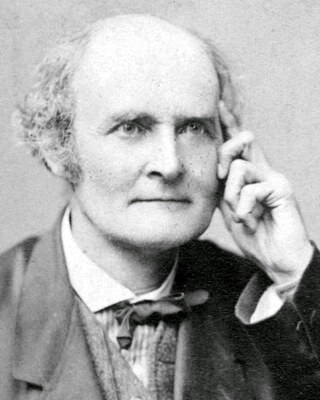
Who he was
Arthur Cayley
- Nascimento
- 16 August 1821, Richmond, England
- Morte
- 26 January 1895, Cambridge, England
- Origem
- United Kingdom
- Áreas
- Algebra, matrices, group theory, invariants, geometry, graphs
Reading guide
Biography
Discoveries and proofs
- The algebra of matrices
- The Cayley–Hamilton theorem
- Abstract groups and the Cayley table
- How many trees are there
- The octonions
- Projective geometry is all geometry