
Euler's Eyes
2026-10-11
Distance between two points
The distance between two points is the length of the segment that joins them — the shortest path between them.
Who discovered
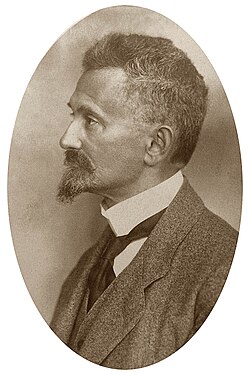
The idea is intuitive and old; what has an author is its use and its generalization. Around 240 BC, Eratosthenes of Cyrene calculated the distance around the Earth by comparing shadows in Siena and Alexandria. In 1906, the Frenchman Maurice Fréchet realized that three properties were enough — never negative distance, symmetric and obeying the triangular inequality — to talk about “distance” between any objects. In 1914, Felix Hausdorff called this structure metric space.


The story
Eratosthenes, director of the Library of Alexandria, knew that in Siena, on the longest day of the year, the midday sun illuminated the bottom of the wells. On the same day, in Alexandria, a pole cast a shadow corresponding to 1/50 of a complete turn. As the distance between the cities was about 5 000 stadiums, the Earth’s circumference would measure about 250 000 stadiums — a value close to the real one, depending on the size of the stadium adopted.
Fréchet’s generalization showed that the geometry of distance is valid far beyond the plane. Today we measure the “distance” between words, images and even DNA sequences using the same three rules.
In everyday life
- “In a straight line” on the map. Applications show the distance in a straight line and, separately, the distance along the path; the first is always less than or equal.
- Running apps. The watch adds up the distances between recorded GPS points every second.
- Taxi distance. In a city with square blocks, the real route includes horizontal and vertical sections — another “distance” that obeys Fréchet’s rules.
- Spelling checker. Suggests the word that is the shortest “distance” (fewer letters changed) from the one you typed.
Sources: Eratosthenes (MacTutor) · Fréchet (MacTutor) · Hausdorff (MacTutor).
Theory and constructions
DefiniçãoDistance
Given two distinct points $A$ and $B$:
- the geometric distance between them (indicated by $d_{A,B}$) is the segment $\overline{AB}$ or any segment congruent to it;
- the metric distance between them is the measurement (the length) of the segment $\overline{AB}$.
If $A$ and $B$ coincide, the geometric distance is zero and the metric distance is zero.