
Euler's Eyes
2026-10-11
Midpoint
Finding the exact middle of a segment is one of the oldest and most used constructs in geometry.
Who discovered
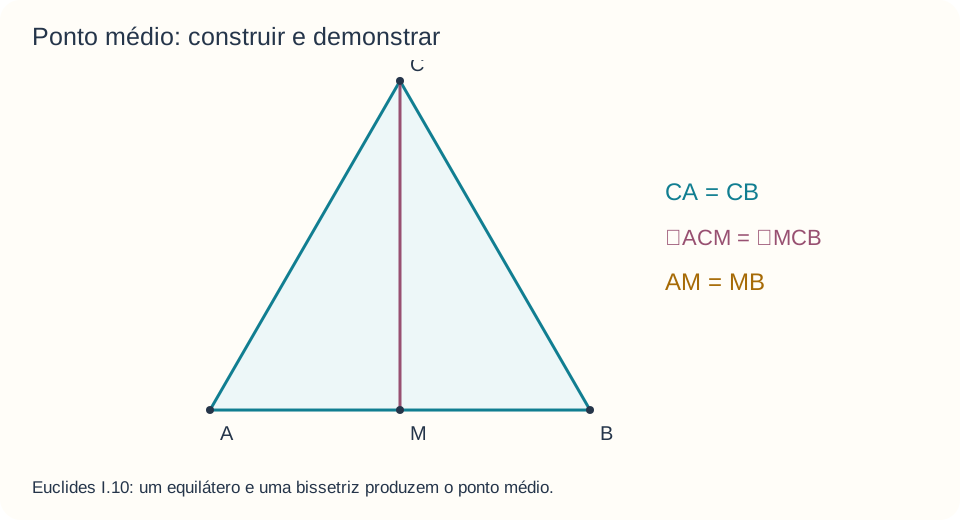
The oldest construction we know is in The Elements by Euclid (c. 300 BC), in proposition I.10: “cut a given finite straight line in half”. Euclid raises a equilateral triangle over the segment, divides the top angle in half and proves, by congruent triangles, that the division falls exactly in the middle. Much later, the Danish Georg Mohr (1672) and the Italian Lorenzo Mascheroni (1797) showed that you can find the midpoint just with a compass, without a ruler.

The story
For Euclid, finding the midpoint was not measuring and dividing by two: it was constructing a point and proving that it divides the segment into equal parts. The proof uses previous results — the equilateral triangle (I.1), the angle bisector (I.9) and the LAL case of congruence (I.4) —, a good example of how the The Elements chain propositions.
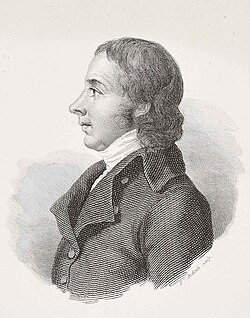
Mascheroni’s book, Geometry of the Compass, was dedicated to Napoleon Bonaparte, who liked geometry; The challenge of dividing a circle into four equal arcs with just a compass became known as “Napoleon’s problem”.
In everyday life
- Hang a picture. The nail goes at the midpoint of the width of the wall or the furniture below it.
- Fold in half. Folding a sheet, napkin or towel finds the midpoint without any measurement.
- Meeting in the middle of the road. Two people leaving different cities and wanting to walk the same distance look for the middle point of the road.
- Seesaw. The support is in the middle of the board so that it remains balanced without anyone on top.
Sources: Elements, proposition I.10 · Mascheroni (MacTutor) · Mohr (MacTutor).
Theory and constructions
DefiniçãoMidpoint
A point $M$ is midpoint of segment $\overline{AB}$ if and only if $M$ is between $A$ and $B$ and $\overline{AM} \equiv \overline{MB}$.
TeoremaUniqueness of the midpoint
A segment has a single midpoint.
Demonstration (by absurdity)
- Suppose that $X$ and $Y$, distinct, are both midpoints of $\overline{AB}$. Then $AX = XB$ (1) and $AY = YB$ (2).
- Case 1: $X$ is between $A$ and $Y$. Then $AY > AX$ and, since $Y$ is between $X$ and $B$, $XB > YB$. Adding: $AY > AX = XB > YB$, that is, $AY > YB$ — which contradicts (2).
- Case 2: $Y$ is between $A$ and $X$. Likewise, $AX > AY = YB > XB$, that is, $AX > XB$ — which contradicts (1).
- Both cases lead to absurdities. Therefore, the midpoint of $\overline{AB}$ is single.
The existence of the midpoint will be proven later, with the construction of perpendicular bisector (chapter 6).