Free mathematics · from the basics to olympiads

See mathematics
through Euler's eyes

Step-by-step explanations, solved exams and the history behind each idea. All free.
  • 501articles and solutions
  • 4languages
  • 100%free
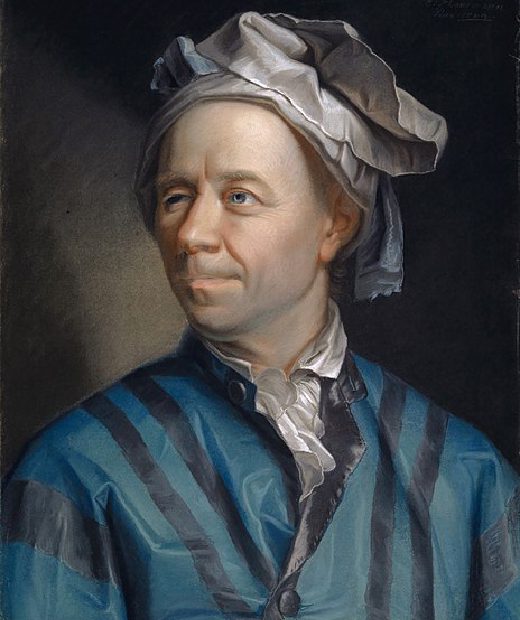
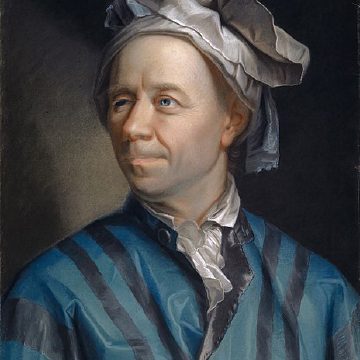
Leonhard Euler
eiπ + 1 = 0 Leonhard Euler (1707–1783)

Start here

Pick a track. Each one gathers explanations and solved exercises, from the simplest to the most advanced.

Recent posts

The latest solutions and articles published on the site.
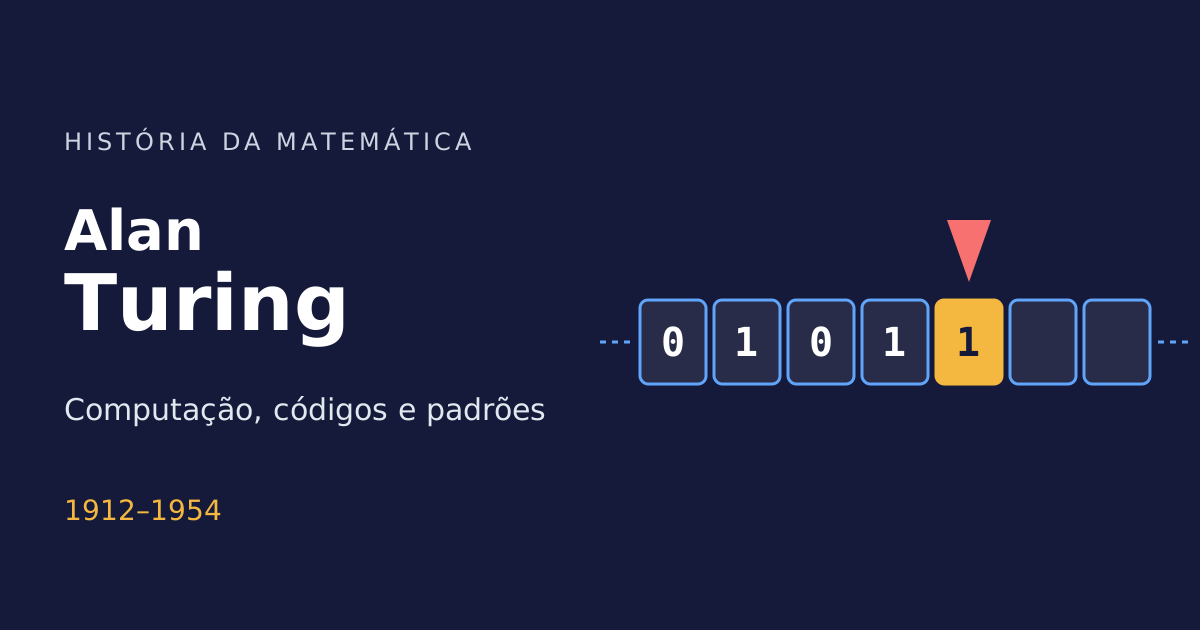
History of Mathematics · Alan Turing: the machine that thinks on tape

Image credits

Historical images and photographs All of them come from Wikimedia Commons. We use the thumbnails provided by Commons, with no editing beyond …

History of Mathematics · Alan Turing: the machine that thinks on tape

The legacy of Alan Turing

Turing believes machines think. Turing lies with men. Therefore machines do not think. — Alan Turing, letter to Norman Routledge (1952) The …

History of Mathematics · Alan Turing: the machine that thinks on tape

Morphogenesis: the leopard's spots in equations

An embryo starts as a ball of almost identical cells. Even so, it ends up with five fingers on each hand, stripes on a zebra and spots on a …

History of Mathematics · Alan Turing: the machine that thinks on tape

The imitation game: can a machine think?

I propose to consider the question, “Can machines think?” — Alan Turing, “Computing Machinery and Intelligence” (1950) So begins the paper …

History of Mathematics · Alan Turing: the machine that thinks on tape

Banburismus: weighing evidence in decibans

The bombe was fast, but not fast enough to test every rotor order of the naval Enigma. In 1940 Turing invented a pencil-and-paper method to …

History of Mathematics · Alan Turing: the machine that thinks on tape

The Enigma: 159 quintillion keys and one flaw

A three-rotor Enigma machine on display at the National Cryptologic Museum of the American security agency. At the top, the rotors; in the …

Leonhard Euler

Leonhard Euler · 1707–1783

Why “Euler's Eyes”?

Leonhard Euler was one of the most prolific mathematicians in history. Around 1738 he lost almost all sight in his right eye after years of cartography work for the Saint Petersburg Academy, and in 1766 a cataract was found in his left eye. Nearly blind, he kept going: about half of his work was written after that, often dictated from memory.

Read Euler, read Euler, he is the master of us all.

Pierre-Simon Laplace

The site’s name honours that way of seeing mathematics: clearly, even when the eyes fail. Here you will find step-by-step explanations and solved exams, written for people who are learning.

Android app

Study on your phone too

Euler's Eyes has a free app on Google Play. It opens straight into the content, takes very little space and gets every new solution published on the site automatically.
  • Full screen, no browser bar
  • Always in sync with the site, no re-downloads
  • Lightweight, about 2 MB
  • In Portuguese, English, Japanese and Chinese
Get it onGoogle Play