
Euler's Eyes
2022-11-11
Introduction to Sets
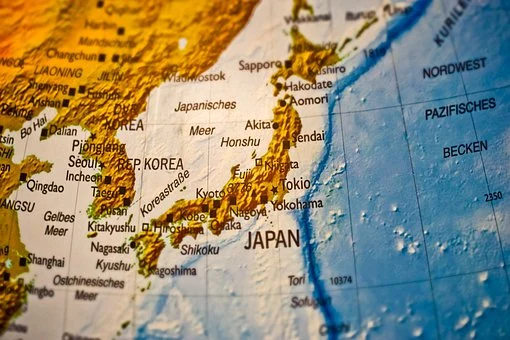
At this point in the posts, we will talk about sets as a collection of elements, which can be abstract or not. The abstract ones are those that are in the mathematical context, such as a set of odd integers, among others. The non-abstract ones are in everyday life, such as provinces in Japan, students at USP, among others.
Representation of a set
The representation of sets are given by capital letters such as:
- A
- B
- $\mathbb{Q}$
- $\mathbb{Z}$
- $\mathbb{N}$
- $\mathbb{R}$
- among others.
The elements of the sets will be enclosed in braces $\\{\\}$. Below we present some examples of sets.
- $A = \\{ \text{províncias do Japão}\\}$
- $B = \\{ \text{inteiros ímpares}\\}$

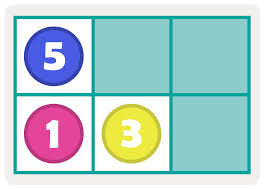
- $C = \\{ 1,3,5\\}$
- $D = \mathbb{N} = \\{\text{conjuntos dos números inteiros}\\}$

In the example 1 the most formal way to represent this set is to place the symbol such that, which can be used with the symbols:
- $|$
- $A = \\{ x | x\text{ é província do Japão}\\}$
- $;$
- $A = \\{ x ; ~ x\text{ é província do Japão}\\}$
- or writing such that.
- $A = \\{ x \text{ tal que } x\text{ é província do Japão}\\}$
The translation of the reading of these sets is done as follows:
- $A$ is the set of $x$ such that $x$ is a province of Japan.
Relevance
In relevance, the relationship between sets can be established as follows:
- if $x$ is an element and $A$ is a set.
- the expression $x \in A$ means:
- “$x$ belongs to $A$”
- “$x$ is in $A$”
The $x$ described previously is defined as element.
Example relevance
A book belongs to the library sets.

Definition (Element): Let be a set $A$ and $x$ such that $x\in A,$ then $x$ is said to be element. More specifically $x$ is an element of $A$ or $x$ belongs to $A$.
Empty Set
Definition: the set is said to be empty, denoted by $\emptyset$, the set that does not have any elements.
In fact, given any set $A,$ we have
$$\emptyset = \\{x \in A; x \neq x\\}.$$

These are the concepts to start studying sets. Wait for the next posts.