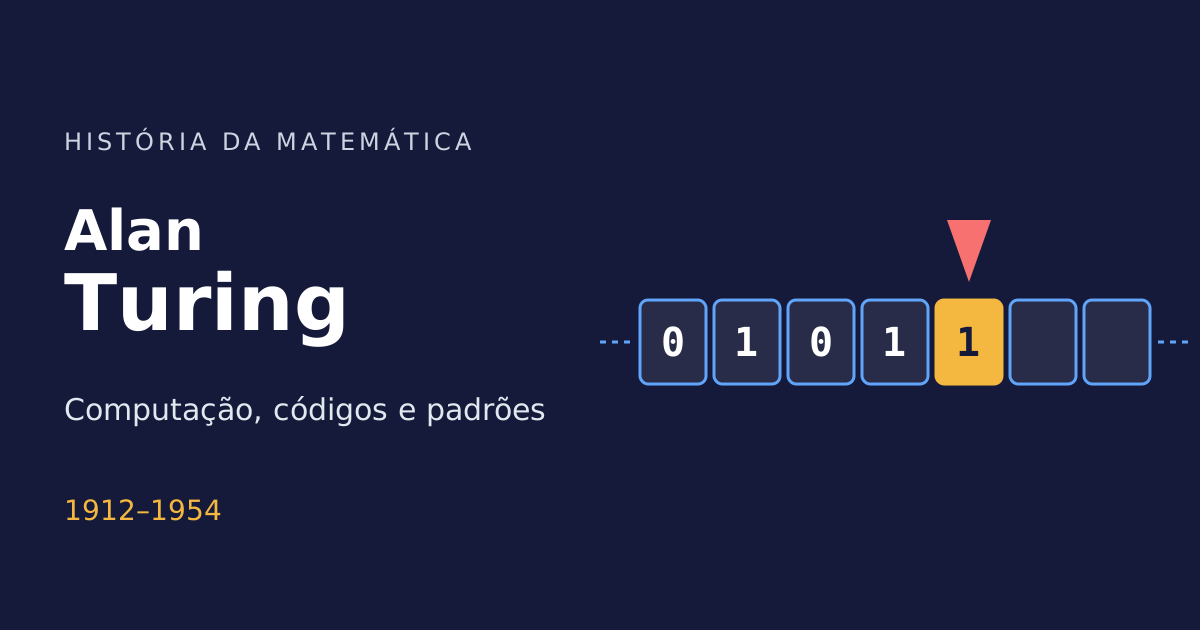
The life of Alan Turing
Timeline 1912Born on 23 June in London. His parents live in India. 1926Starts at Sherborne boarding school. 1930Christopher Morcom, his best friend, dies. 1931Enters King’s College, Cambridge. 1935Elected a fellow of King’s, aged 22. 1936Writes “On computable numbers”. Goes to Princeton. 1938Doctorate at Princeton. Returns to Cambridge. 1939Starts work at Bletchley Park, on breaking the Enigma. 1940The first electromechanical bombe comes into operation. 1945Moves to the National Physical Laboratory, where he designs the ACE. 1948Moves to the University of Manchester. 1950Publishes the paper on the imitation game. 1952Publishes the theory of morphogenesis. Convicted for homosexuality. 1954Dies on 7 June, in Wilmslow, aged 41. ◀ Previous Follow the journey Next ▶ 1912 LondonHe is born on 23 June in Maida Vale. His parents live in India, and he is brought up by a foster family in the south of England. 1926–1931 SherborneAt boarding school he meets Christopher Morcom, the friend whose death in 1930 leads him to think about the relation between mind and matter. 1931–1936 CambridgeHe studies at King’s College, becomes a fellow at 22 and writes “On computable numbers”. 1936–1938 PrincetonHe does his doctorate with Alonzo Church, who had reached the same result by another route. 1939–1945 Bletchley ParkDuring the war he heads the section that breaks the German naval Enigma and designs the electromechanical bombe. 1945–1947 TeddingtonAt the National Physical Laboratory he designs the ACE, a stored-program computer. 1948–1954 ManchesterHe programs one of the first computers, proposes the imitation game and studies morphogenesis. He dies in Wilmslow, near the city, on 7 June 1954. Enable JavaScript to see the map. The stages are listed below.
From London to Manchester, by way of Princeton and Bletchley Park. Map: © OpenStreetMap contributors